
Lead
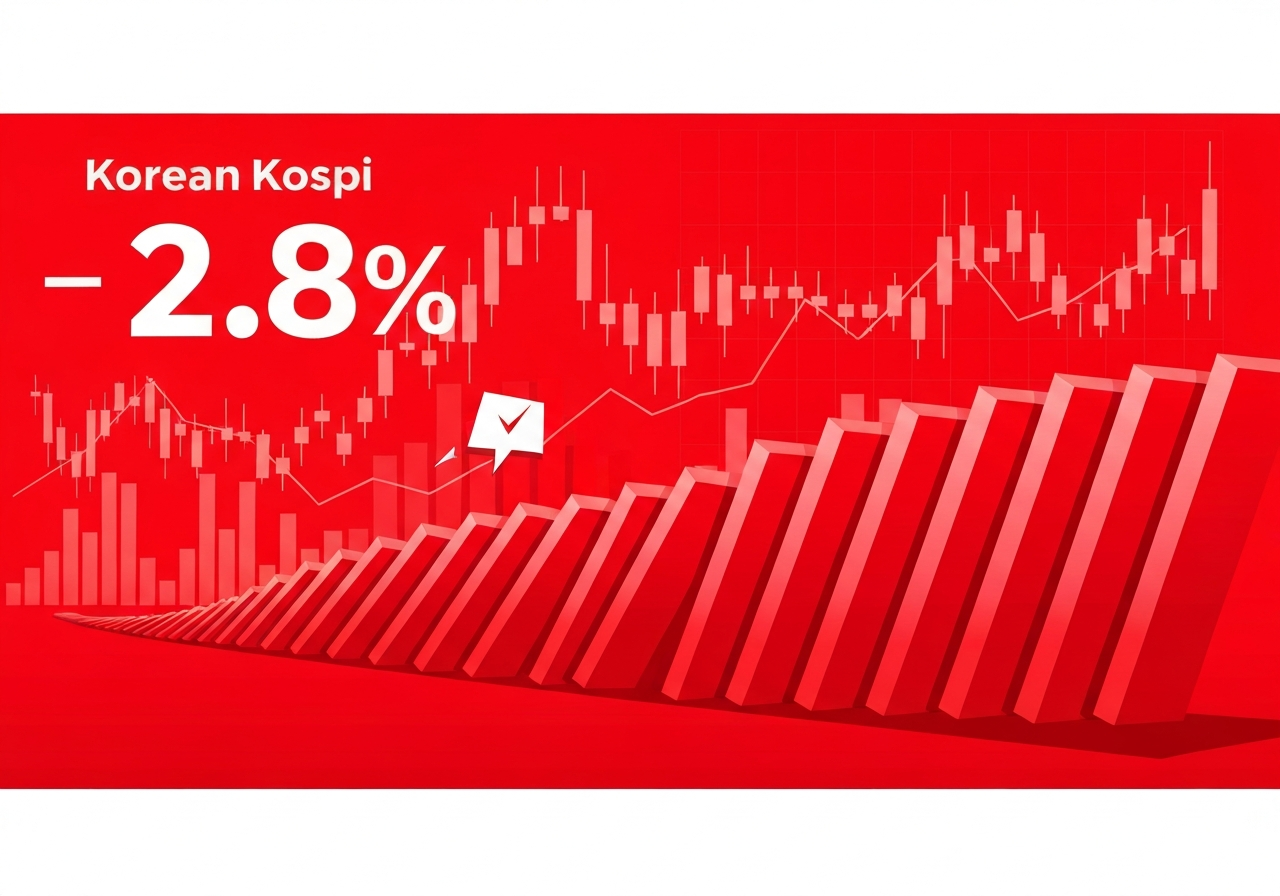
On Feb. 4–5, 2026, a global technology selloff swept into Asian markets as investors pared holdings amid concerns about elevated valuations and heavy corporate spending on artificial intelligence. MSCI’s gauge of Asian technology shares fell for the fifth time in six sessions, and broader Asian equities weakened. South Korea’s Kospi — a market closely tied to AI-related capital expenditure — plunged 2.8% on the move. Major names including Samsung Electronics Co. and SoftBank Group Corp. were notable losers while consumer and health-care sectors posted gains.
Key Takeaways
- MSCI’s Asian technology index declined for the fifth occasion in six sessions, signaling a sustained pullback in tech exposure across the region.
- South Korea’s Kospi fell 2.8% on Feb. 4–5, 2026, leading regional losses amid concentrated selling in AI-linked stocks.
- MSCI’s broader gauge of Asian stocks lost 1.4%, reflecting spillover from technology into wider markets.
- Large-cap names such as Samsung Electronics Co. and SoftBank Group Corp. were among the stocks that underperformed during the selloff.
- Consumer staples and health-care sectors bucked the trend, advancing as investors rotated toward perceived defensive areas.
- Market participants cited worries over lofty AI-related valuations and the scale of corporate AI investment as key drivers of the move.
- The selloff followed a sequence of global technology weakness that intensified investor risk-aversion in Asian trading hours.
Background
The recent weakness in Asian equities is part of a broader global reassessment of technology valuations that began in late January and intensified through early February 2026. Markets have been pricing in both the rapid pace of corporate AI spending and growing concern that projected revenue gains may not materialize quickly enough to justify lofty multiples. Major technology firms have been primary beneficiaries of investor enthusiasm for AI, concentrating market exposure in a handful of large-cap names.
South Korea’s Kospi is particularly sensitive to these dynamics because its market composition includes large manufacturers and chipmakers that are central to AI hardware and supply chains. Historically, periods of concentrated sector outperformance have produced sharper corrections when sentiment shifts. Institutional investors and quant funds that previously increased tech exposure amid the AI narrative are now trimming positions, amplifying price moves in benchmark-linked stocks.
Main Event
Trading on Feb. 4–5, 2026 saw a pronounced drop in technology shares across Asia as selling pressure mounted early in regional sessions. MSCI’s Asian technology gauge registered a fifth decline in six sessions, reflecting both headline-driven flows and active position reductions by funds. The Kospi’s 2.8% fall was the steepest among major regional indices and was driven in part by heavy losses in semiconductor-related names and conglomerates with large tech exposures.
Among individual movers, Samsung Electronics Co. and SoftBank Group Corp. featured among the losers, as demand for hardware-related stocks cooled and investor appetite for speculative high‑multiple bets waned. Conversely, sectors perceived as defensive — notably consumer staples and health care — attracted inflows, producing modest gains as risk-off sentiment grew. Broader measures of Asian equities were not immune: MSCI’s Asia-wide gauge dropped 1.4% on the session.
Liquidity conditions and index-linked fund rebalancing appeared to exacerbate price moves, with stop-losses and automated strategies adding to downward momentum in heavily weighted tech names. Market depth varied across markets, so the same headline-driven sell pressure produced outsized moves in smaller-cap tech names and more muted responses in well-traded defensive issues.
Analysis & Implications
The selloff underscores two interlinked market themes: concentrated exposure to AI-related narratives and the sensitivity of valuations to changes in expected earnings growth. When a narrative — in this case, AI-driven revenue and margin expansion — dominates positioning, any signal that growth may be slower or more costly can prompt rapid de-risking. That dynamic has translated to outsized swings in indices with significant tech weightings.
For South Korea, the Kospi’s steep move highlights country-specific vulnerability given its high share of technology and chipmaking firms. A prolonged correction could depress domestic wealth effects and weigh on investment sentiment, though defensive sectors may provide some offset. Policymakers and corporate managers will be watching for signs of broader economic spillovers if equity weakness persists.
At a regional level, a sustained re-rating of tech can reshape capital allocation across Asia. Institutional investors may rotate permanently toward more diversified or defensive exposures, reducing premiums for high-growth names. For companies, the immediate implication is heightened pressure to demonstrate near-term cash flows and clearer paths from AI investment to profit, rather than relying on long-term promise alone.
Finally, the market moves could influence central bank and fiscal views indirectly: large equity corrections that curb household wealth and business confidence might be factored into policy deliberations, particularly in emerging markets where equity holdings are more concentrated among retail investors.
Comparison & Data
| Index / Measure | Move (latest session) |
|---|---|
| Kospi | -2.8% |
| MSCI Asia (broad) | -1.4% |
| MSCI Asian technology gauge | 5th decline in 6 sessions |
| Notable companies (examples) | Samsung, SoftBank — under pressure |
These values illustrate the concentration of the pullback: the technology gauge’s repeated down sessions indicate persistent selling across the sector, while the Kospi’s sharper fall reflects its heavier tech weighting. The relative outperformance of consumer and health-care sectors suggests intra-market rotation rather than a uniform sell-off.
Reactions & Quotes
“Investors are trimming tech exposure as questions arise over how quickly AI spending will translate into profits,” market strategists observed.
Regional market strategist (industry commentary)
“Liquidity patterns and index-driven reallocations amplified the initial sell orders, especially in highly concentrated names,” traders noted on the floor.
Equity trader (market participant)
“Defensive sectors like consumer staples and health care often see inflows when headline risk spikes, and that rotation was apparent in the session,” analysts said.
Sell-side equity analyst
Unconfirmed
- No official confirmation that a single firm’s earnings update was the proximate trigger for the regional selloff; available reports point to a broader sentiment shift.
- Unclear whether index rebalancing by specific funds materially drove the magnitude of the Kospi’s intraday decline; trade-level data remain incomplete publicly.
Bottom Line
The Feb. 4–5, 2026 sessions mark a notable tech-led correction in Asian markets, driven by reassessments of AI-related valuations and the scale of corporate AI spending. The Kospi’s 2.8% drop and five declines in six sessions for MSCI’s Asian technology gauge underscore concentrated positioning risks when a single thematic narrative dominates portfolios.
Investors should watch whether this move is a short-lived sentiment correction or the start of a broader re-rating of tech multiples. Key indicators to monitor include upcoming earnings from large-cap tech firms, changes in fund flows, and any confirmation that corporate AI spending is translating into near-term profitability. For now, defensive sectors have provided some shelter, but markets remain sensitive to news that would shift the growth-versus-valuation calculus.
Sources
- Bloomberg — media report covering market moves and company impacts (news)