
Lead
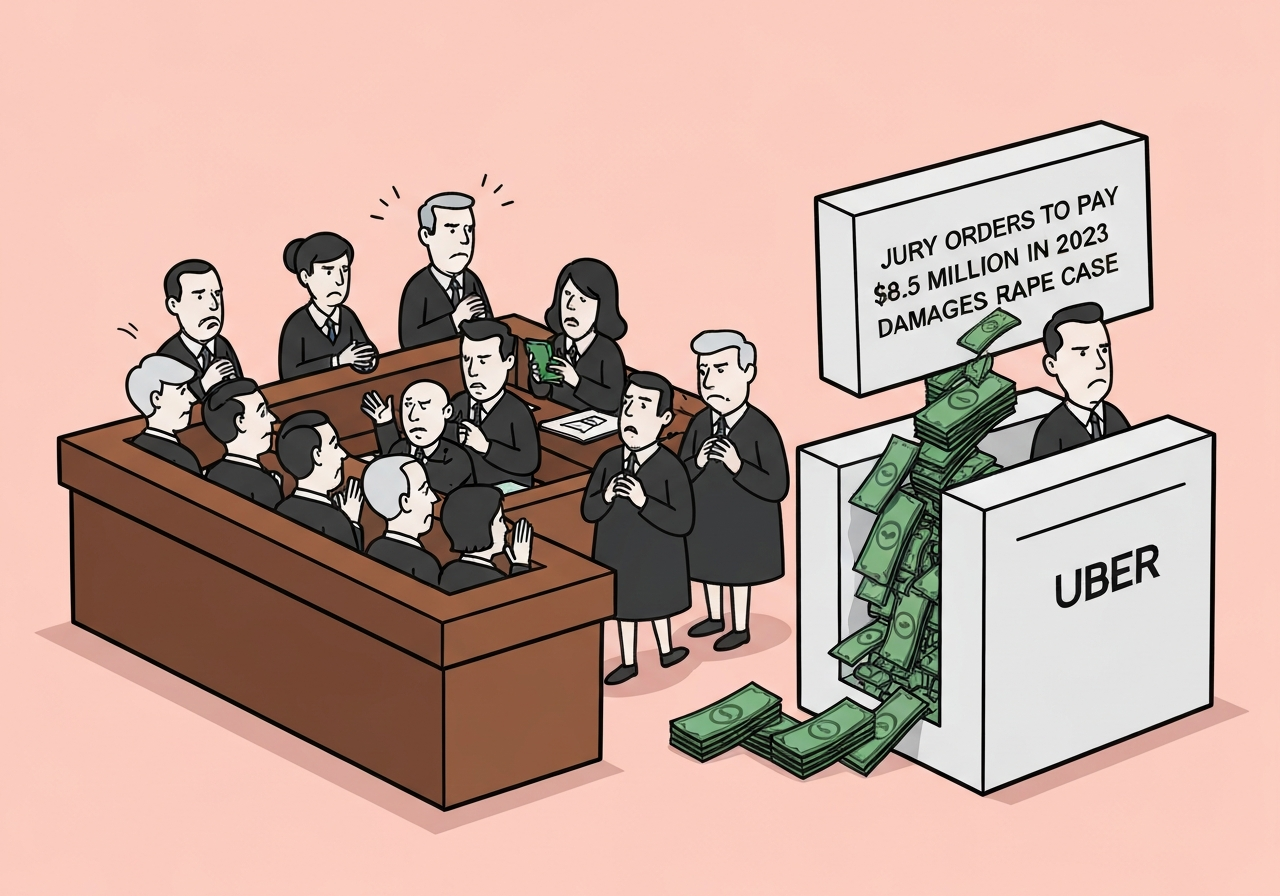
On Feb. 5, 2026, a federal jury in Phoenix found Uber liable and awarded $8.5 million to Jaylynn Dean, who said a driver raped her during a November 2023 ride from Tempe to a Phoenix-area hotel. The verdict rejected Uber’s long-held defense that drivers are independent contractors and that the company is not responsible for their misconduct. The case was tried as a bellwether, and the jury’s decision is likely to influence more than 3,000 pending lawsuits alleging sexual assault and other safety failures on Uber’s platform.
Key Takeaways
- The jury awarded Jaylynn Dean $8.5 million in damages on Feb. 5, 2026, following allegations she was raped by an Uber driver in November 2023.
- Ms. Dean’s legal team had sought $144 million in total damages; the jury’s award was a small fraction of that request.
- Jurors rejected Uber’s core defense that it is not liable for drivers’ misconduct because they are independent contractors.
- The decision was rendered in federal court in Phoenix and is being treated as a bellwether for roughly 3,000 related sexual-assault and misconduct suits nationwide.
- The jury did not find the company’s conduct to be so egregious as to justify punitive damages under the specific claims it considered.
- Uber successfully defended against some claims in the trial, including certain negligence and app-design allegations.
Background
Uber Technologies Inc. has long classified the people who drive using its app as independent contractors rather than employees, an arrangement that has been central to the company’s legal and regulatory strategy. That classification has been the subject of litigation and legislation in multiple jurisdictions, with implications for liability, benefits and safety obligations. Numerous plaintiffs and consumer advocates have argued that the company’s platform design and background-check practices have left riders exposed to risk.
The Phoenix trial was designated a bellwether, meaning it was selected to test legal theories and evidence that will be used across many cases. Bellwether trials are typically used to shape settlement negotiations and judicial rulings by providing a representative outcome on complex issues. Plaintiffs’ attorneys say the volume of pending suits—more than 3,000 alleging sexual misconduct or assault—makes an early federal decision particularly consequential.
Main Event
The trial centered on an incident that Ms. Dean said occurred in November 2023 after she left her boyfriend’s apartment in Tempe and took an Uber to a nearby hotel. She testified about the alleged assault on the witness stand, saying she pursued the lawsuit to prevent similar harms to other women. The jury found in her favor on the central claim of liability for the sexual assault and awarded compensatory damages totaling $8.5 million.
Uber maintained during the trial that it was not legally responsible for the driver’s actions because it does not employ drivers and that it had taken reasonable safety measures. The company succeeded in defeating several ancillary claims from Ms. Dean’s lawsuit, including certain negligence and app-defect allegations, which narrowed the scope of damages the jury was asked to consider.
Courtroom testimony and evidence focused on the company’s vetting procedures, rider-safety features and internal policies. Jurors were presented with expert testimony, timelines and accounts intended to show whether Uber’s platform design or practices created a foreseeable risk. While the jury concluded Uber bore responsibility in this case, it did not find the company’s conduct rose to the level that would support punitive awards under the claims adjudicated.
Analysis & Implications
This verdict could serve as a legal template for thousands of pending cases. By finding the company liable in a bellwether trial, jurors provided plaintiffs’ counsel with a pathway to argue that platform-level decisions and oversight failures can translate into corporate responsibility for individual acts by drivers. That could increase the leverage of plaintiffs in settlement talks and influence how courts assess platform liability going forward.
Financially, the $8.5 million award is modest compared with the $144 million sought by Ms. Dean’s lawyers, but it signals exposure to substantial aggregate liability when multiplied across thousands of suits. The ultimate fiscal impact will depend on whether other juries reach similar conclusions, how many cases settle, and whether higher courts narrow or expand the legal theories underlying liability.
The ruling also has regulatory and policy implications. State and federal regulators monitoring ride-hailing safety practices may press for tighter background checks, clearer accountability for platforms, or new mitigation requirements. Legislators who have debated driver classification and platform duties may cite this case as evidence in favor of stronger oversight or statutory reforms.
Comparison & Data
| Item | Figure |
|---|---|
| Verdict award | $8.5 million |
| Damages sought by plaintiff | $144 million |
| Alleged incident | November 2023 (Tempe to Phoenix hotel) |
| Pending related lawsuits | More than 3,000 |
The table above frames the numeric contours of the case: a single jury award that is significant for an individual plaintiff but small compared with the plaintiffs’ demand and the volume of related litigation. The bellwether result may influence settlement values, but systemic costs will become clearer only as more cases proceed or resolve.
Reactions & Quotes
Ms. Dean told the court she pursued the case to deter similar incidents and to push the company to improve rider safety. Her testimony was a central emotional element of the trial.
I want to make sure it doesn’t happen to other women. I’m doing this for other women who thought the same thing I did, that they were making the safe and smart choice — but that, you know, there are risks of being assaulted.
Jaylynn Dean (plaintiff testimony)
Uber’s position during the litigation emphasized its long-standing defense regarding driver status and responsibility for individual misconduct. The company also defended several specific claims successfully, limiting the jury’s ability to award punitive damages in this trial.
Uber has maintained that it is not liable for the misconduct of drivers on its platform because they are classified as independent contractors.
Uber (company position presented at trial)
Unconfirmed
- Whether Uber will file an appeal and the grounds on which it would seek reversal have not been publicly confirmed as of this report.
- It remains unclear how many of the more than 3,000 pending suits will adopt the same legal strategies or will proceed to trial rather than settling.
- Whether the verdict will prompt immediate changes in company policy, vetting procedures or platform design has not been independently verified.
Bottom Line
The Phoenix verdict represents a notable win for a plaintiff in a high-profile safety case against a major ride-hailing platform, and it provides a practical playbook for similar litigation. While the $8.5 million award does not match the far larger sum the plaintiff sought, the jury’s finding of company liability in a bellwether trial increases the legal pressure on Uber and could accelerate settlements or further trials.
Key developments to watch include any appellate filings, whether subsequent juries replicate this verdict, and whether regulators or the company itself respond with concrete safety reforms. Those outcomes will determine whether this decision marks a turning point in how courts and policymakers assign responsibility for platform safety.
Sources
- The New York Times — news report on the Phoenix federal trial and verdict