
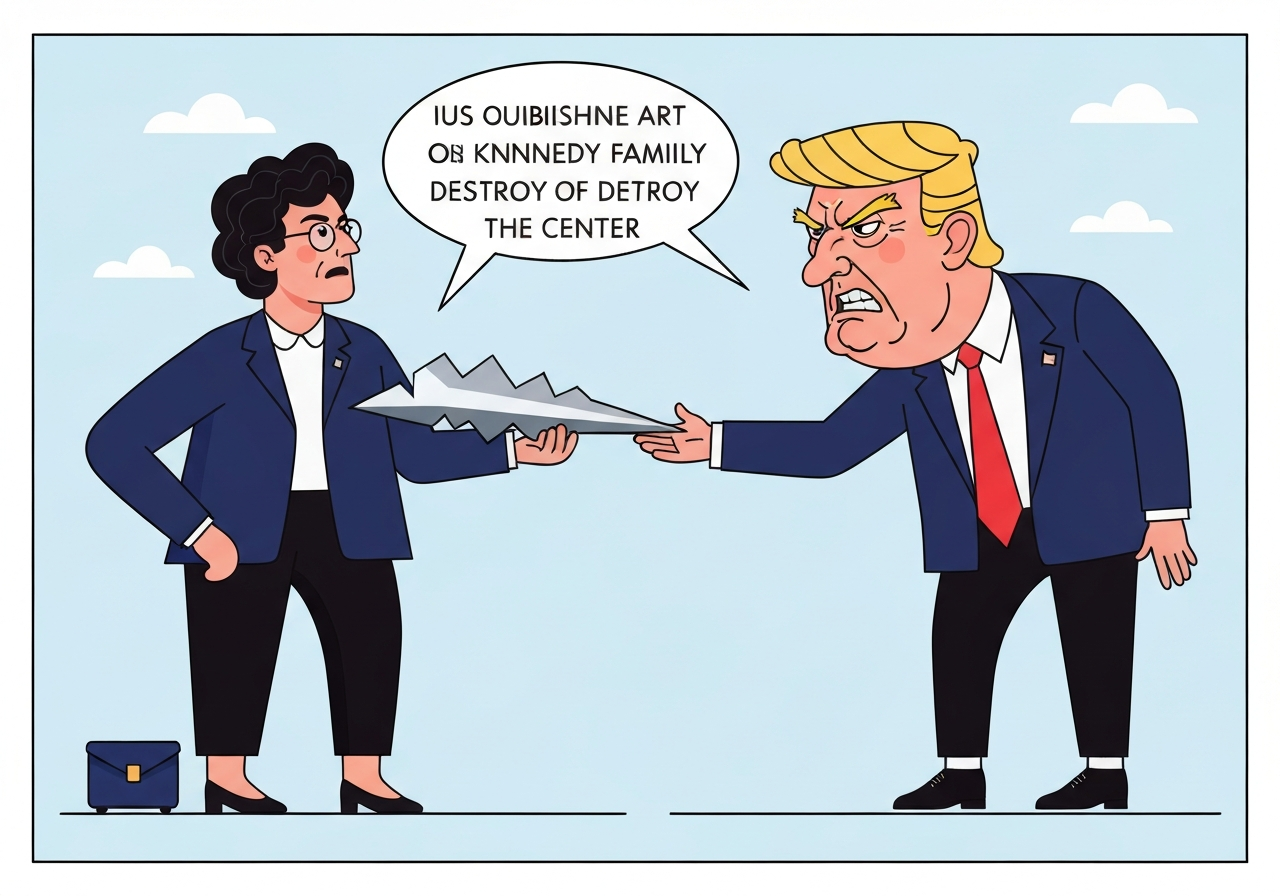
Lead: President Donald Trump, joined at a recent White House announcement by Health and Human Services Secretary Robert F. Kennedy Jr., used the occasion to praise RFK Jr. and to renew barbs at other members of the Kennedy family. Days earlier he announced plans to close the John F. Kennedy Center for the Performing Arts on July 4 for what he described as a two-year reconstruction. The decision comes amid artist cancellations, staff departures, and sharp public criticism from Kennedy relatives and arts figures.
Key Takeaways
- President Trump (79) announced plans to close the Kennedy Center on July 4 for a two-year rebuild, calling the facility “tired, broken, and dilapidated.”
- At the White House event he praised Health Secretary Robert F. Kennedy Jr. (72), who joined the announcement and has a well-documented history of vaccine skepticism.
- Several artists and staff have responded: composer Philip Glass withdrew the premiere of his Symphony No. 15 last week, and the center’s new programming head resigned within a week on the job.
- Family members including Jack Schlossberg (33), Caroline Kennedy and Joe Kennedy III publicly condemned the closure and criticized both the president’s motives and his recent comments about the Kennedys.
- The center recently hosted the premiere of the documentary Melania and has been the site of artist cancellations and protests related to perceived political takeover.
- Trump said the center will be rebuilt into a “new and beautiful Landmark” and promised a reopening he said would “rival and surpass” past events.
Background
The John F. Kennedy Center for the Performing Arts was established by Congress as a living memorial to President Kennedy and has long functioned as a major cultural institution in Washington, D.C. The center hosts national- and international-level performances and is funded through a mix of federal appropriations, private donations and earned revenue from ticket sales and rentals. Because of its federal memorial status, changes to its mission or name have prompted legal and political scrutiny in the past.
In recent months the venue became a flashpoint after programming and management shifts driven by allies of President Trump prompted several performers to cancel engagements. Those departures intensified scrutiny from arts leaders and members of the Kennedy family, who argued the center’s mission should remain nonpartisan. The White House’s stated timeline—shutting the facility July 4 for two years of reconstruction—escalates a dispute that had previously focused on programming decisions and public perception.
Main Event
On Thursday, at a White House event promoting a new discount-prescription website called TrumpRx, the president stood alongside Secretary Robert F. Kennedy Jr., Mehmet Oz and Joe Gebbia. Trump praised RFK Jr.’s participation, calling him an effective advocate for the initiative. Reporters were not invited to ask questions during the presentation.
During his remarks, Trump made pointed references to the Kennedy family, contrasting his praise for RFK Jr. with criticism of other relatives. Before the announcement, on Sunday, Trump posted on his social platform that he planned to close the Kennedy Center for “Construction, Revitalization, and Complete Rebuilding.” The closure date he announced publicly is July 4, with a two-year redevelopment timetable.
The center’s internal turmoil has been visible: celebrated composer Philip Glass withdrew the premiere of his Symphony No. 15 on account of the venue’s current leadership, and the center’s recently appointed programming head resigned after fewer than seven days. The center also hosted the premiere of the documentary Melania last month, an event attended by Trump supporters, which further inflamed critics.
Analysis & Implications
The president’s move to close and rebuild a federally designated memorial raises legal, political and cultural questions. Legally, alterations to a congressional memorial’s name or purpose can trigger oversight from Congress and potentially litigation from private or public stakeholders. Politically, the announcement is likely to deepen partisan divisions: supporters who back the president’s changes may view the renovation as corrective, while opponents see it as an attempt to appropriate a national institution for political branding.
Culturally, the departure of high-profile artists and management instability could erode the center’s programming credibility in the short term. Major artists and companies often schedule seasons years in advance; uncertainty about venue leadership and direction risks longer-term disengagement from key artistic partners and donors. That could translate into fewer premieres, touring acts, and loss of ticket revenue.
Internationally, the Kennedy Center has served as an American cultural showcase; a contentious makeover could affect diplomatic and soft-power programming. Foreign delegations and touring ensembles pay close attention to perceived politicization of cultural venues. If the center’s reputation shifts, organizers of state-level cultural diplomacy may seek alternative venues for high-profile events.
Comparison & Data
| Event | Timing | Immediate Impact |
|---|---|---|
| Philip Glass pulls Symphony No. 15 premiere | Last week | High-profile cancellation of a world premiere |
| New programming head resigns | Resigned within one week of hire | Leadership instability cited publicly |
| Melania documentary premiere at the center | Last month | Attendance by Trump supporters; raised controversy |
These incidents illustrate a rapid shift in the center’s standing among artists and cultural institutions. While not comprehensive, the table highlights the kinds of disruptions that preceded and likely contributed to the administration’s closure plan. Longer-term financial and programming impacts will depend on whether performers and donors return after any renovation.
Reactions & Quotes
“Bobby is back here. He’s so instrumental, he’s doing such a fantastic job.”
President Donald Trump (remarks at White House event)
This brief praise for RFK Jr. was followed by criticism of other Kennedy family members, a point underscored by subsequent posts and statements from the family.
“Trump can take the Kennedy Center for himself. He can change the name, shut the doors, and demolish the building. He can try to kill JFK—but JFK is kept alive by us…”
Jack Schlossberg (X post)
Schlossberg framed the closure as an attack on the memorial’s public purpose and urged political action to counter the president’s plan.
“I’ve determined that due to this change in schedule, it’s best for me to close this center down and rebuild a new center that will bear my name…”
Paraphrase of President Trump (Truth Social post)
Family members including Caroline Kennedy and Joe Kennedy III publicly criticized both the decision and its timing; Caroline has also criticized RFK Jr.’s vaccine positions as dangerous.
Unconfirmed
- Whether the administration has finalized architectural plans, demolition permits or contractor agreements for the two-year rebuild remains publicly unconfirmed.
- The precise legal pathway for a name change or repurposing of a federal memorial has not been detailed by the White House and may require congressional action.
- Attribution of the recent measles outbreak to Robert F. Kennedy Jr.’s advocacy has been claimed in social posts but is a contested assertion not established in this report.
Bottom Line
The president’s announcement to close and rebuild the Kennedy Center has elevated a cultural-management dispute into a national political controversy. The combination of high-profile cancellations, leadership turnover and public family rebukes has created a volatile environment around a federally designated memorial institution.
In the near term, expect legal questions, congressional scrutiny and continued public debate. The long-term outcome will hinge on whether stakeholders—artists, funders, lawmakers and the administration—reach accommodations that preserve the center’s role as a national cultural resource or whether the dispute fundamentally reshapes its mission and reputation.
Sources
- The Daily Beast (news report summarizing the White House event and reactions)
- John F. Kennedy Center for the Performing Arts (official site for institutional background and status)
- Truth Social (social platform used by the president for the original closure announcement)