
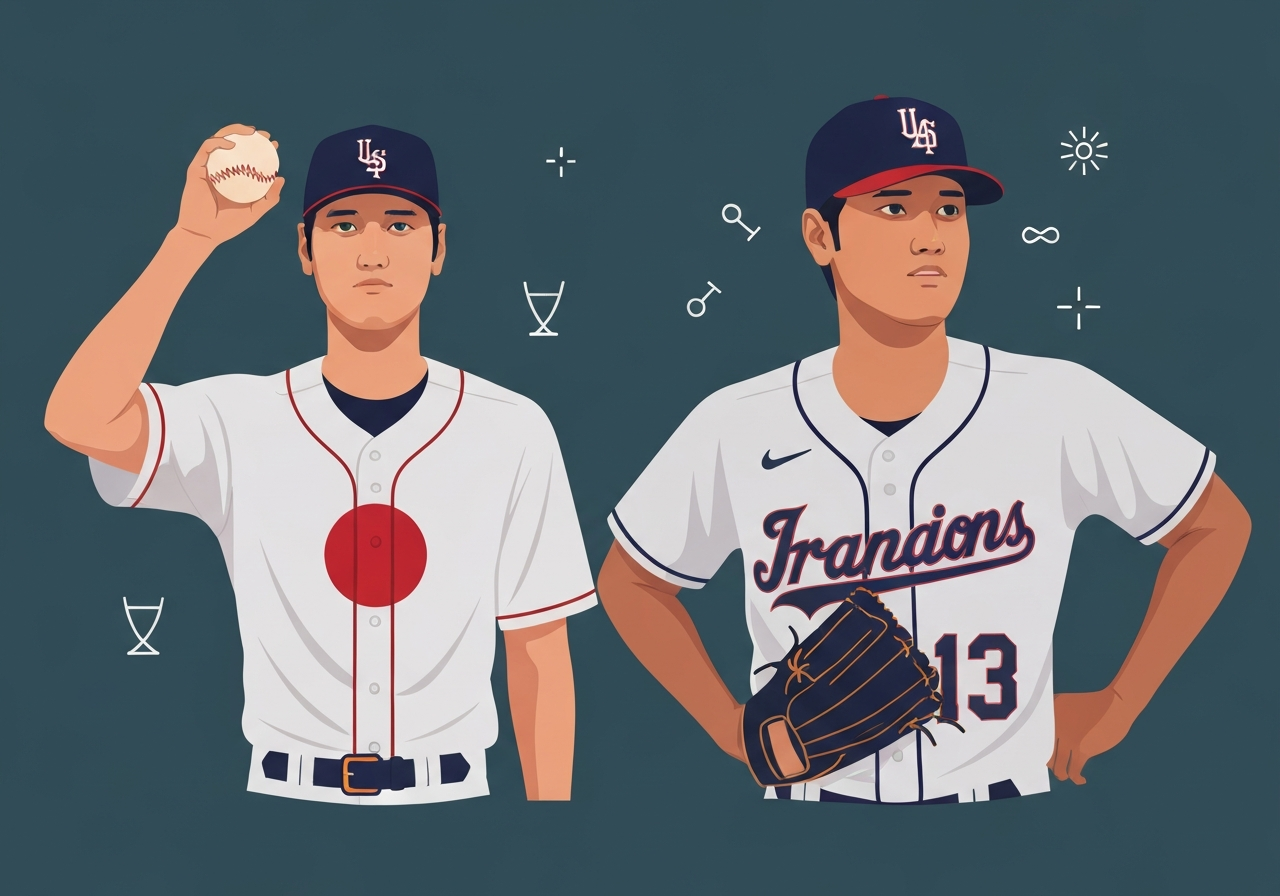
Lead: On Feb. 5, 2026, World Baseball Classic organizers unveiled full 20-team rosters that feature marquee names such as Aaron Judge, Shohei Ohtani and Juan Soto. The release lists 78 All-Stars and 190 major leaguers across the tournament fields and confirms deep lineups for several power nations. At the same time, high-profile absences driven by insurance and eligibility issues — notably Francisco Lindor, Carlos Correa and Javier Baez for Puerto Rico — have reshaped several teams. The mix sets up a tournament heavy on star power but also marked by policy-driven roster gaps.
Key Takeaways
- Rosters for the 20-team 2026 World Baseball Classic include 78 All-Stars and 190 current major leaguers, according to the official release on Feb. 5, 2026.
- Team USA fields what many observers call its deepest WBC roster yet, led offensively by Aaron Judge and with a pitching staff fronted by Tarik Skubal and Paul Skenes.
- Shohei Ohtani will participate for Japan as a designated hitter but is not expected to pitch for his country in this tournament.
- The Dominican Republic boasts a loaded lineup — Juan Soto, Julio Rodríguez and Fernando Tatís Jr. in the outfield, plus multiple established infield bats — and improved pitching under Cristopher Sánchez and Sandy Alcántara.
- Puerto Rico’s roster is missing Francisco Lindor and Carlos Correa due to insurance denials and lost Javier Báez to ineligibility after a positive drug test in 2023; Edwin Díaz returns after an ACL tear sustained in 2023.
- Insurance limitations also affected other countries: José Altuve and Miguel Rojas (Venezuela) and several Puerto Rican pitchers were left off rosters for coverage reasons.
- This edition is the first WBC to include all four reigning major award winners — two MVPs (Judge, Ohtani) and two Cy Young winners (Paul Skenes, Tarik Skubal).
Background
The World Baseball Classic, now in its sixth installment, continues to serve as the premier international tournament for professional baseball players. Since the WBC’s return in 2023, organizers and insurers have adapted policies in response to high-profile in-tournament injuries, prompting stricter underwriting standards for player contracts tied to WBC participation. Host duties this year include pool play in Puerto Rico, a location with deep baseball roots that expected a star-laden home team before several key omissions emerged.
Insurance issues trace to injuries that occurred during the 2023 event, which triggered reviews of how player contracts are protected while competing internationally. Tournament insurer NFP revised parameters that make it harder for players with extensive injury histories to receive full coverage, a change that has affected roster construction for multiple nations. Tournament organizers, national federations and clubs have negotiated participation terms under the new framework, balancing competitive goals against financial and medical risk.
Main Event
Team USA, which lost to Japan in the 2023 final, will go into the 2026 WBC with unprecedented depth. Aaron Judge leads an offense that includes Cal Raleigh, Bobby Witt Jr. and Bryce Harper; more crucially, the staff lists Tarik Skubal and Paul Skenes as its front-line starters, a pairing widely regarded among baseball analysts as the world’s top two starters. Even without Mike Trout — a player who was Team USA captain in 2023 and was reported early as unlikely to be insured — the U.S. pitching and position-player mix is regarded as historically strong for a WBC squad.
Japan’s roster features Shohei Ohtani as the designated hitter; sources say he was unlikely to receive insurance coverage to pitch given his history of two elbow surgeries. Yoshinobu Yamamoto and Hiromi Itoh will headline Japan’s pitching staff, and the roster contains multiple past MVPs from Nippon Professional Baseball, signaling a talent-rich squad designed to defend the 2023 title.
The Dominican Republic boasts perhaps the tournament’s most fearsome lineup, with Juan Soto, Julio Rodríguez and Fernando Tatís Jr. patrolling the outfield and power in the infield from Vladimir Guerrero Jr., Manny Machado and others. That offensive arsenal is balanced by an upgraded pitching corps that aims to avoid the early exit the country suffered in 2023. Venezuela will also be competitive despite the absence of José Altuve, carrying stars such as Ronald Acuña Jr., Eugenio Suárez and pitchers Pablo López and Ranger Suárez.
Mexico and Puerto Rico provide additional storylines: Mexico will feature Alejandro Kirk and Jonathan Aranda and includes Cuban-born outfielder Randy Arozarena, while Puerto Rico will field Edwin Díaz and Nolan Arenado but is missing multiple expected contributors due to insurance denials and an eligibility suspension for Javier Báez tied to a 2023 positive test. Managerial notes include Andruw Jones leading the Netherlands and Dusty Baker managing Nicaragua, both drawing attention for their profiles and leadership.
Analysis & Implications
Insurance underwriting has become a decisive off-field factor shaping which players can represent their countries. Teams that cannot insure veteran players with prior injuries or chronic designations have had to alter rosters, sometimes excluding household names despite their competitive desire to play. This introduces a new strategic layer for national federations, who must weigh the public relations and home-hosting expectations against financial exposure and club relations.
For competitive balance, the presence of high-caliber pitching elevates the tournament’s overall quality and could favor teams built around arms rather than purely offensive firepower. Team USA’s combination of elite starting pitchers and established hitters makes it a favorite on paper, but Japan and the Dominican Republic also field lineups and staffs capable of winning any given series. The emphasis on pitching depth could shift managerial tactics toward heavier bullpen usage and matchup-focused lineups.
Commercially, the WBC’s ability to attract global stars enhances TV and sponsorship value, but the insurance-driven absences highlight friction between player availability and risk management. Clubs and agents may push for broader protections or alternative compensation methods if insurer decisions continue to block marquee participation. Long-term, the tournament’s organizers and insurers may negotiate new models of coverage that balance player health, club contracts and federations’ needs.
Comparison & Data
| Metric | 2026 |
|---|---|
| All-Star selections on rosters | 78 |
| Current major leaguers on rosters | 190 |
| Participating teams | 20 |
The figures above signal the depth of professional experience assembled for this edition of the WBC. While direct 2023-to-2026 comparisons for each metric are not provided in the roster release, tournament organizers highlighted that this is the first WBC to feature all four reigning major award winners — two MVPs and two Cy Young winners — a notable milestone for talent concentration.
Reactions & Quotes
“We welcome a tournament featuring top international talent while continuing to prioritize player safety and contractual protections.”
World Baseball Softball Confederation (official statement)
“Players designated as chronic trigger deeper underwriting reviews, which has influenced coverage decisions this cycle.”
NFP (tournament insurer)
“On paper this is the deepest Team USA roster we’ve seen in WBC play, especially given the rotation strengths.”
MLB analyst (industry commentary)
Unconfirmed
- Reports that Mike Trout was “unlikely to be insured” early in the process come from unnamed sources and have not been confirmed by the player, his club or NFP.
- Sources indicating Shohei Ohtani would not have been insured to pitch are based on media reporting about his prior elbow surgeries; no public denial or confirmation from Ohtani’s representatives or the insurer has been released.
Bottom Line
The 2026 World Baseball Classic promises a high level of play, with elite position players and a particularly strong group of starting pitchers creating a competitive tournament landscape. Yet non-sporting factors — principally insurance and eligibility rules — materially altered several national rosters, diminishing some host-nation storylines and changing the calculus for fans and federations alike.
Looking ahead, the interplay between insurers, clubs and federations will remain a central storyline: federations may press for revised coverage models while clubs and agents seek to protect their assets. On the field, expect tight games driven by pitching depth, and a tournament in which conventional favorites must navigate both elite opposition and the lingering effects of off-field decision-making.