
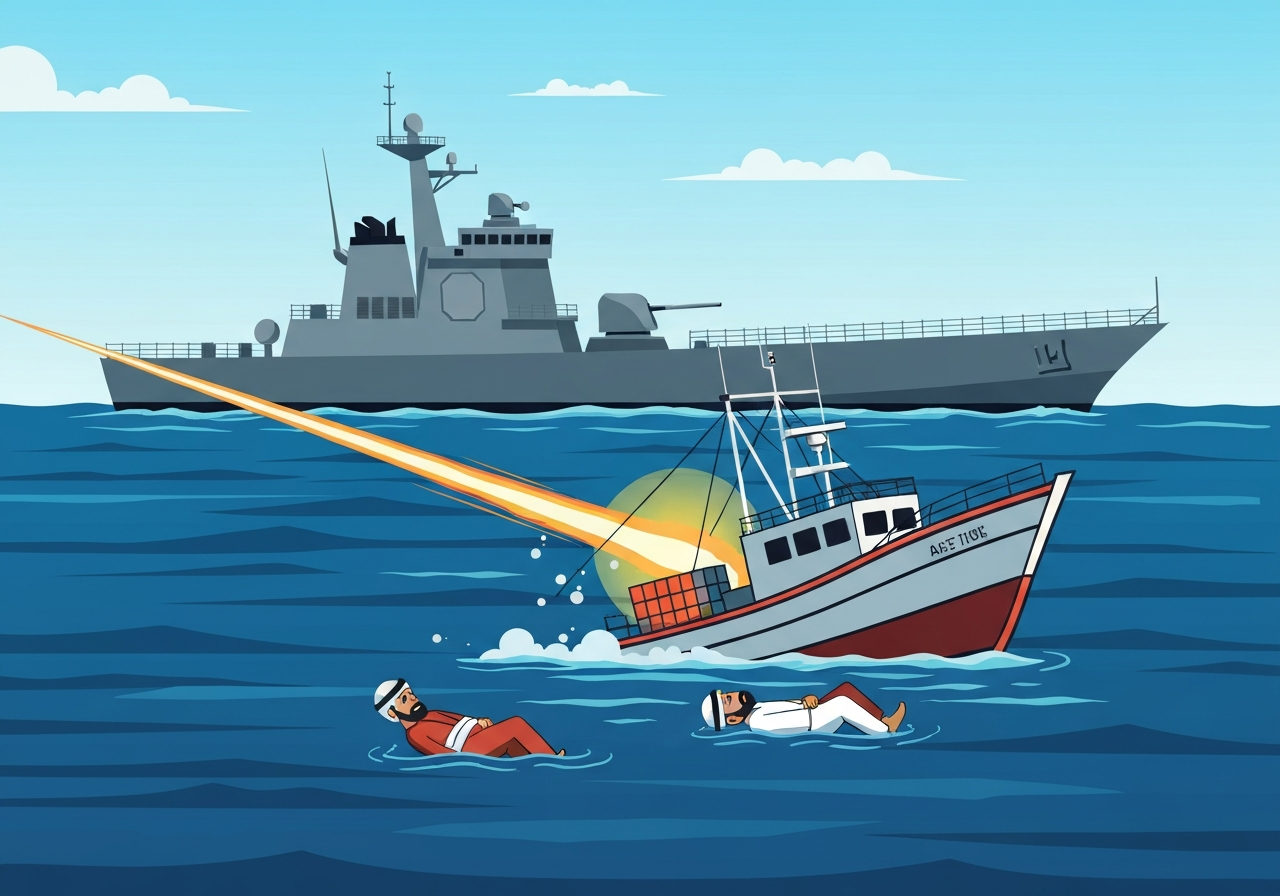
Lead: On Feb. 5, US Southern Command said a US military strike in the eastern Pacific killed two people after targeting a vessel it described as linked to designated terrorist organizations. The action, ordered by SOUTHCOM Commander Gen. Francis L. Donovan the same day he assumed command, left no US personnel harmed, according to the command. The strike is part of Operation Southern Spear, a campaign the administration says aims to curb narcotics shipments to the United States.
Key Takeaways
- On Feb. 5, Joint Task Force Southern Spear carried out a lethal strike in the eastern Pacific under orders from SOUTHCOM Commander Gen. Francis L. Donovan; SOUTHCOM reports two fatalities and no US casualties.
- At least 119 people have been killed in strikes on suspected drug boats since the operation began in September, the administration says.
- This Feb. 5 attack is the second confirmed strike this year; a January strike killed two people and left one survivor.
- The Trump administration has framed the campaign as a way to curtail narcotics flow and has described the US as engaged in an ‘armed conflict’ with drug cartels.
- Military officials have acknowledged gaps in on-board identification and limited public evidence tying each vessel to cartel activity or narcotics shipments.
- Congressional and legal scrutiny has focused on the operations’ lawfulness after earlier strikes, including a strike that killed survivors of a prior attack.
- Separately, US forces in early January moved Venezuelan leader Nicolás Maduro from Caracas to New York on criminal charges; he pleaded not guilty last month, per official reports.
Background
Operation Southern Spear began in September and has combined surface strikes and a substantial US military presence across the Caribbean and eastern Pacific. The administration frames the campaign as an interdiction effort to reduce illicit drug flows into the United States, a longstanding policy objective for multiple administrations. Before this campaign, US practice emphasized interdiction followed by criminal prosecution of suspected traffickers; the current approach uses offensive military strikes at sea.
The operation has generated intense questions in Congress and from legal experts about whether the strikes comply with domestic and international law. Multiple current and former military lawyers told reporters they view aspects of the campaign as potentially unlawful. Human rights groups and some lawmakers have urged prosecutions rather than lethal force when possible and pressed for clearer public evidence linking struck vessels to drug cartels.
Main Event
SOUTHCOM said the Feb. 5 strike was executed by Joint Task Force Southern Spear at the direction of Gen. Francis L. Donovan, who assumed command of SOUTHCOM that same day. The command’s public message characterized the targeted vessel as operated by ‘Designated Terrorist Organizations’ and confirmed two fatalities while reporting no injuries to US personnel.
The Feb. 5 action is the second documented strike of 2026. A January strike killed two people and produced one known survivor who was rescued. SOUTHCOM and other military briefings have acknowledged that personnel on board struck vessels are not always identified prior to engagement, which has complicated public evidence about affiliation with criminal networks.
The administration has positioned the strikes alongside a Caribbean force buildup as measures to stem drug shipments, and administration officials have reportedly pursued broader regional pressure that some internal communications tied to efforts to weaken Venezuelan leader Nicolás Maduro. The US detained Maduro in early January and moved him to New York to face charges, according to official reporting; he pleaded not guilty last month.
Analysis & Implications
Legally, the strikes raise questions about the threshold for using lethal force at sea against nonstate actors. If the administration treats drug cartels as parties to an armed conflict, the legal framework differs from law-enforcement standards that ordinarily govern interdiction and prosecution. That distinction affects permissible targets, evidence requirements, and prospects for accountability.
Politically, the campaign carries risks for US relations across Latin America and the Caribbean. Partner governments may welcome pressure on illicit trafficking networks, but region-wide perceptions of US military action and questions about collateral harm could erode cooperation. The alleged linkage of the campaign to efforts against Venezuela’s leadership complicates diplomatic signaling and may provoke regional backlash.
Operationally, the strikes may disrupt smuggling routes short term but risk driving traffickers to adapt tactics or shift routes. The campaign’s long-term effect on drug supply and consumption in the United States is uncertain; interdiction at sea addresses transit but does not eliminate production or demand. Enhanced intelligence, transparent evidence of links to trafficking, and lawful detention for prosecution would alter strategic calculus and congressional support.
Comparison & Data
| Date | Incident | Reported Deaths | Notes |
|---|---|---|---|
| Since September | Operation Southern Spear campaign | 119 total | Administration tally for strikes on suspected drug vessels |
| January 2026 | Known strike in eastern Pacific | 2 | One survivor reported |
| Feb. 5, 2026 | Latest strike | 2 | Ordered by Gen. Francis L. Donovan; no US casualties |
| October (prior year) | Strike leading to lawsuit | 2 | Families filed wrongful death suit against US government |
The table aggregates publicly reported incidents and the operation-wide death toll reported by US authorities. Discrepancies across briefings and the lack of independent verification for some incidents mean totals should be treated cautiously until released documentation is available.
Reactions & Quotes
‘No US military personnel were harmed in the strike,’ SOUTHCOM said in its public post about the Feb. 5 action.
US Southern Command (official statement on X)
‘These strikes do not appear lawful,’ multiple current and former military lawyers told news outlets while discussing legal reviews of the campaign.
Current and former military legal officials (reported)
‘Families and human rights groups have raised concerns about accountability and whether lethal force is being used in place of prosecution,’ advocates said as lawsuits and congressional questions continue.
Human rights advocates and affected families (reported)
Unconfirmed
- Independent public evidence linking the Feb. 5 vessel to a specific drug cartel or to narcotics shipments has not been released.
- The full identities and nationalities of people killed in the Feb. 5 strike have not been publicly confirmed by independent sources.
- Reports that the broader pressure campaign was primarily intended to oust Nicolás Maduro have been described in private briefings but lack a comprehensive public record of intent and directives.
Bottom Line
The Feb. 5 strike underscores a significant shift toward using lethal military force in counternarcotics operations at sea, a move that raises legal, political, and strategic questions. With at least 119 people killed in related strikes since September, congressional oversight and judicial challenges are likely to intensify as lawmakers press for evidence and legal justification.
For readers, the key developments to watch are any released intelligence tying struck vessels to trafficking, formal legal memos or congressional findings on the operation’s lawfulness, and responses from regional governments. Those items will shape whether the campaign is viewed as an effective disruption of illicit flows or a contentious, legally fraught use of military power.
Sources
- CNN (major news outlet reporting; original story and aggregation of official statements)
- US Southern Command on X (official military statement)