
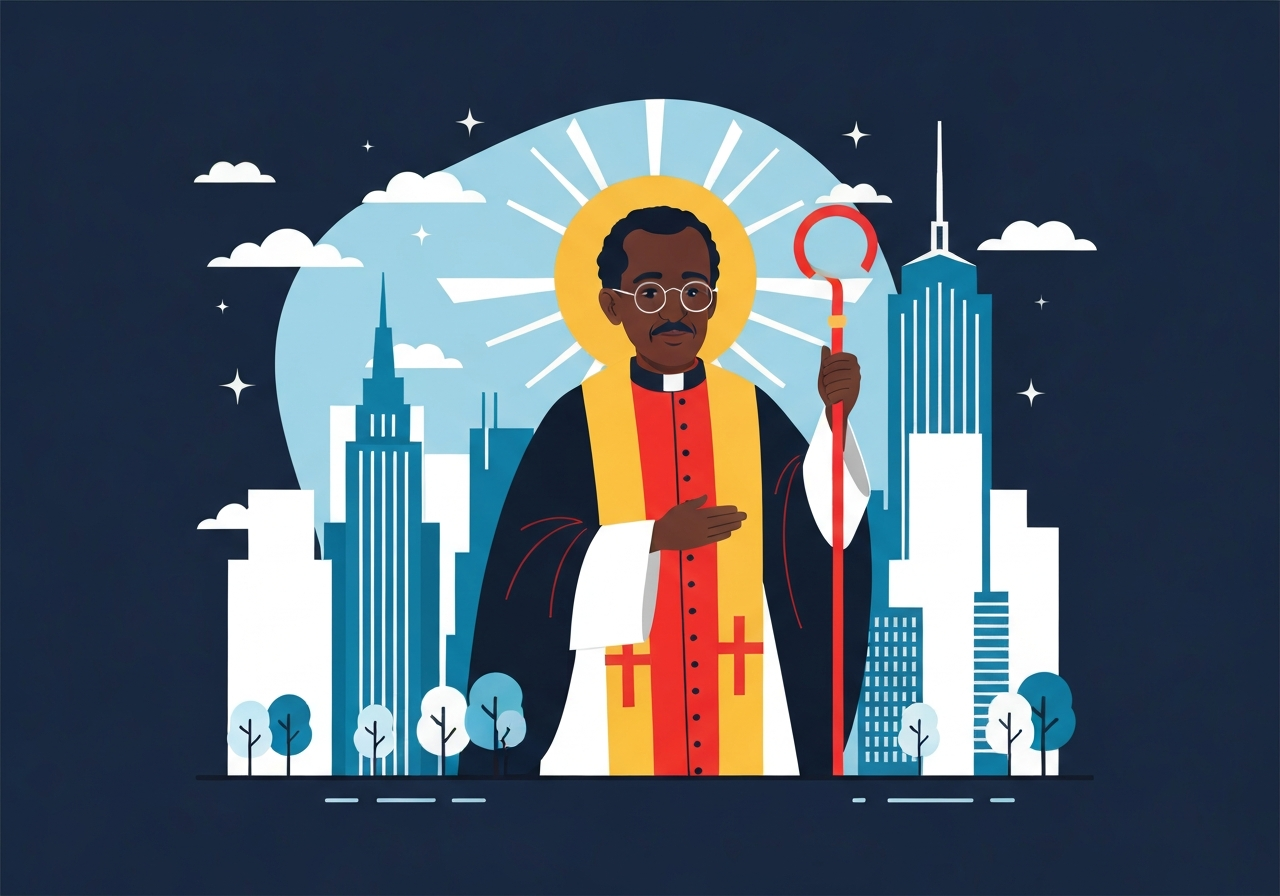
Lead: Archbishop-designate Ronald Hicks will be installed Friday, Feb. 6, 2026, at St. Patrick’s Cathedral in Manhattan in a ceremony set to draw civic leaders, clergy and laypeople. Hicks, 58 and until recently bishop of Joliet, previewed the Mass on Thursday, Feb. 5, outlining a focus on missionary discipleship, gratitude and outreach. The archdiocese he will lead serves roughly 2.5 million Catholics across New York City (Manhattan, the Bronx and Staten Island) and seven counties to the north. The installation marks the formal succession from Cardinal Timothy Dolan after his mandatory resignation at age 75.
Key takeaways
- Installation scheduled at St. Patrick’s Cathedral on Friday, Feb. 6, 2026, with the liturgy beginning at 2 p.m.
- Ronald Hicks, 58, was chosen by Pope Leo XI in December and previously served as bishop of Joliet, Illinois.
- The Archdiocese of New York serves about 2.5 million Catholics in New York City and neighboring counties.
- Hicks signaled priorities of missionary discipleship, interfaith outreach and bridging civic divides during a Feb. 5 press preview.
- Cardinal Timothy Dolan retired after submitting his resignation at 75, making way for a leadership change in one of the nation’s largest sees.
- Observers describe Hicks as aligned with Pope Leo XI’s pastoral style; the new pope has already signaled an activist U.S. posture on issues like immigration.
Background
The Archdiocese of New York is one of the largest and most prominent Catholic sees in the United States, with a long history of civic engagement, education and social services. Cardinal Timothy Dolan, a well-known conservative figure in U.S. Catholic life, submitted his resignation upon turning 75 as required; the Holy See accepted the transition and named Ronald Hicks in December. Pope Leo XI, a Chicago-born pontiff identified in Vatican announcements as the first American pope, has signaled a pastoral emphasis that differs in tone from some predecessors, especially on immigration and outreach.
Hicks’s selection reflects both continuity and change: continuity in the archdiocese’s long-standing civic role in New York, and change in the Vatican’s personnel choices under Pope Leo XI. Hicks comes from the Chicago area, where he led Joliet’s diocese, giving him experience in a large, diverse Midwestern Catholic community. Stakeholders across religious, government and civic sectors are watching how the new archbishop will balance diocesan administration, pastoral priorities and public engagement in a city that is both globally prominent and locally complex.
Main event
At a Feb. 5 news preview at St. Patrick’s Cathedral, Hicks outlined themes he expects to develop in his installation Mass: gratitude, mission and intergenerational faith transmission. He said he will emphasize a church made up of “missionary disciples” who engage the peripheries and seek to pass faith to the next generation. The ceremony itself is expected to include Catholic leaders and laity along with representatives from other faiths, government, business, labor, education, the arts and first responders, reflecting the archdiocese’s civic footprint.
Photographs from the Feb. 5 briefing show Hicks engaging reporters with a light tone; an image by Seth Wenig/AP captured him laughing during the event. Church officials have described the liturgy as both a sacramental installation and a public event that signals how the archdiocese intends to meet pastoral and social needs. Local parish leaders told the archdiocesan office they anticipate a large public presence, though precise turnout figures were not released ahead of the ceremony.
Hicks reiterated that while political disagreements will exist, he wants to identify common ground for the common good. He framed his approach as one that will try to bridge differences without avoiding moral teaching, noting New York’s diverse civic and religious landscape. The installation will be closely watched by bishops’ conferences and civic leaders for signals about diocesan priorities and how the archdiocese will engage citywide issues.
Analysis & implications
Hicks’s appointment arrives at a moment of renewed attention to how the U.S. Catholic hierarchy navigates public policy and pastoral care. As the leader of an archdiocese that administers extensive schools, charities and social programs, the new archbishop’s priorities will shape service delivery and public advocacy across the region. His comments about missionary disciples and outreach suggest a pastoral emphasis on evangelization and social engagement that may reinforce existing programs or shift resources toward outreach initiatives.
The choice of Hicks, a prelate described by observers as consonant with Pope Leo XI’s pastoral style, may also influence national church dynamics. A New York archbishop traditionally carries national visibility; Hicks’s willingness to work across civic divides could affect how the U.S. church positions itself on contested policies like immigration, healthcare access and economic inequality. At the same time, his administration will face practical tasks: clergy assignments, financial stewardship of diocesan institutions and addressing parish-level concerns.
Institutionally, the transition tests the archdiocese’s administrative continuity after a high-profile leadership change. Diocesan staff turnover, pending legal or financial matters, and long-term pastoral planning will require steady management. Hicks’s prior experience in Joliet provides administrative background, but scaling to New York’s larger, more complex ecosystem will be a primary challenge during his first months. Observers will track early personnel decisions and strategic statements as indicators of direction.
Comparison & data
| Metric | Value |
|---|---|
| Catholics served | ~2.5 million |
| Installation date/time | Feb. 6, 2026, 2 p.m. |
| Archbishop-designate age | 58 |
| Previous post | Bishop of Joliet, Illinois |
| Predecessor | Cardinal Timothy Dolan (retired at 75) |
The figures above underscore the scale of the office Hicks is assuming and the immediacy of the installation. The archdiocese’s population and institutional reach mean actions by the archbishop can have both local and national resonance. Comparing the Joliet and New York assignments highlights the administrative leap in scope; Joliet is a significant diocese, but New York’s global visibility and civic entwinement present different governance demands.
Reactions & quotes
Archbishop-designate Hicks framed the installation as a civic and pastoral gathering that reflects New York’s diversity.
“I’m going to talk just about being a church who’s made up of missionary disciples who want to go out and make disciples, and also to pass our faith on to the next generations.”
Ronald Hicks
He offered that emphasis as both theological and practical, asserting that forming “missionary disciples” will shape parish life, youth ministry and outreach strategies. Church leaders present described the language as signaling active evangelization combined with social engagement.
Hicks also used a conversational moment to stress inclusivity about the ceremony’s attendees.
“In other words, who’s going to be there? Everyone. Everyone.”
Ronald Hicks
That remark was presented to underline the archdiocese’s intent to involve broad civic partners. Organizers emphasized invitations to public officials, faith leaders and community organizations to reflect the archdiocese’s public mission.
Unconfirmed
- Exact attendance numbers for the Feb. 6 installation have not been released and remain estimates until posted by organizers.
- Specific staffing and personnel changes in the archdiocesan curia under Archbishop Hicks have not been announced and are subject to later confirmation.
- Long-term policy stances beyond the broad themes Hicks outlined—especially detailed positions on specific legislation—remain to be articulated officially.
Bottom line
Ronald Hicks’s installation as the 11th archbishop of New York closes a formal transition from Cardinal Timothy Dolan and opens a new chapter for a major American see. His stated emphasis on missionary discipleship, outreach and building bridges signals a pastoral agenda consistent with the priorities articulated by Pope Leo XI. Operationally, the archdiocese will need to translate those themes into concrete programs, personnel decisions and public engagement strategies that reflect New York’s scale and diversity.
For observers inside and outside the church, the early months of Hicks’s tenure will be revealing: personnel appointments, programmatic investments and the tone of public statements will indicate whether the archdiocese pivots or consolidates existing directions. Given New York’s national visibility, those signals will matter beyond diocesan boundaries, shaping how the U.S. Catholic Church addresses social, pastoral and civic challenges in the years ahead.
Sources
- NPR (news media report)
- Archdiocese of New York (official diocesan site)
- Associated Press (news/media – photo credit: Seth Wenig/AP)