
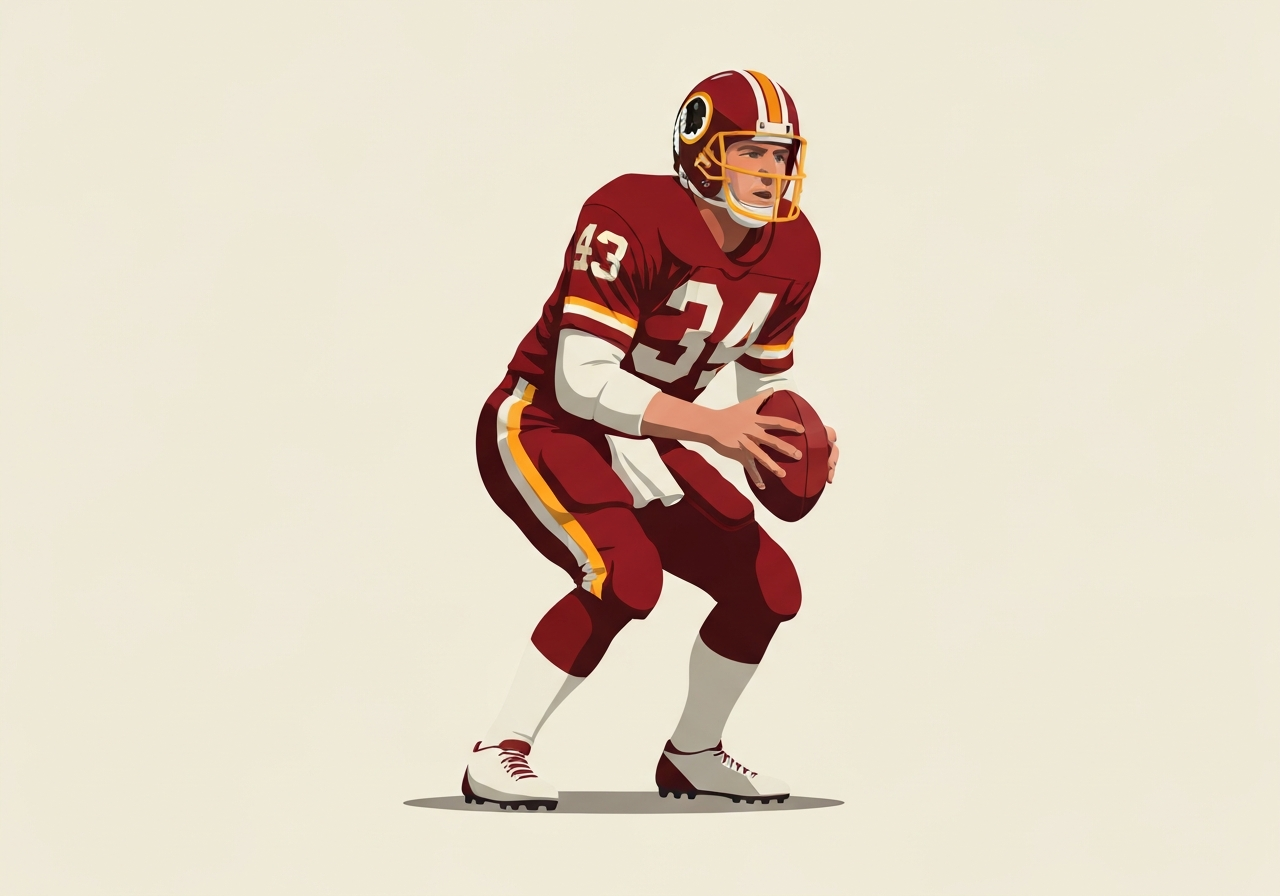
— Sonny Jurgensen, the Hall of Fame quarterback whose arm, humor and long association with Washington football made him a local institution, has died at 91, his family and the Washington Commanders announced. Jurgensen spent 11 seasons in Washington after a surprise trade from Philadelphia in 1964 and later became a familiar voice as part of the radio team “Sonny, Sam and Frank.” The family called him the “steady, humorous, and deeply loving heart of our family,” and the club released an official statement honoring his life on Friday.
Key Takeaways
- Sonny Jurgensen died on Feb. 6, 2026, at age 91, confirmed by his family and the Washington Commanders.
- He joined Washington in a trade on April 1, 1964, and played 11 seasons with the franchise before retiring after the 1974 season.
- Career totals: 2,433 completions for 32,224 yards, 255 TDs, 189 INTs, a 57.1% completion rate and an 82.6 passer rating; five Pro Bowl selections and five 3,000+ yard seasons.
- Inducted into the Pro Football Hall of Fame in 1983 and remains the only Washington player to wear No. 9 in a game.
- Signature moments include a 411-yard, three-touchdown comeback vs. Dallas on Nov. 28, 1965, and a 99-yard touchdown pass to Gerry Allen in 1968.
- After his playing career he spent decades as a broadcaster and advisor in the Washington organization, influencing multiple generations of quarterbacks.
Background
Born Christian Adolph Jurgensen III on Aug. 23, 1934, in Wilmington, North Carolina, Jurgensen was a two-way standout at Duke University before the Philadelphia Eagles selected him in the fourth round of the 1957 draft. He spent the early part of his pro career backing up Norm Van Brocklin, then seized the starting job in 1961 and led the league with 3,723 passing yards and 32 touchdown passes that season. The 1960s NFL was a different environment for passers: defenses could be more physical at the line of scrimmage and rule changes that later widened passing opportunities had not yet been adopted. In that context, Jurgensen’s ability to throw for more than 3,000 yards five times was particularly notable.
On April 1, 1964, a trade that sent Norm Snead to Philadelphia brought Jurgensen to Washington. The move transformed the franchise’s offense and rewrote franchise record books as Jurgensen became the face of the team’s passing attack for over a decade. His Hall of Fame induction in 1983 cemented his standing among the game’s elite, and his long-running No. 9 remains uniquely associated with him in Washington club history.
Main Event
The death announcement Friday came via a family statement shared by the Washington Commanders. The family praised his on-field accomplishments and described him as the emotional center of their household, emphasizing his intellect, courage and warmth. The team, ownership and league figures issued tributes noting both his statistical achievements and his outsized place in Washington sports culture.
Jurgensen’s on-field persona blended irreverence with excellence. He was notorious for late-night cigars, for breaking curfew and for joking about his fitness, yet few questioned the precision of his pocket passing. One of the best-known single-game performances came on Nov. 28, 1965, when he overcame boos and a 21-0 deficit to throw for 411 yards and three touchdowns in a 34-31 win over Dallas, a defining moment in his Washington tenure.
He played through injuries and earned praise from coaching legends; Vince Lombardi called him “the best I have seen” during Lombardi’s 1969 season with Washington. Later managerial changes and quarterback competition, most notably the arrival of Billy Kilmer, sparked long-running debates about stewardship of the position, but Jurgensen remained part of the franchise’s narrative until his retirement in 1974 and in decades that followed as a broadcaster and unofficial mentor.
Analysis & Implications
Jurgensen’s death closes a chapter in Washington football that spans from the pre-television-era style of play into the modern media age. Statistically, his 32,224 passing yards and era-adjusted accomplishments place him among the most productive quarterbacks of his generation. Culturally, he served as a bridge between eras — a player who thrived in the 1960s and then became a daily presence in Washington living rooms as a broadcaster, helping preserve the franchise’s history for younger fans.
His role as a mentor and commentator also had institutional implications. By publicly advising and defending quarterbacks — from guiding Gus Frerotte in the 1990s to maintaining close ties with successive owners — Jurgensen influenced personnel narratives and fan perceptions over decades. That informal power shows how a retired star can shape a franchise’s identity off the field as much as on it.
Looking ahead, teams and the NFL will likely mark his passing with formal tributes: moments of silence, commemorative patches or halftime recognitions are common responses for Hall of Famers with long team ties. The precise form and timing of tributes in Washington will reflect both team decisions and the family’s wishes.
Comparison & Data
| Stat | Career |
|---|---|
| Completions | 2,433 |
| Passing yards | 32,224 |
| Completion % | 57.1% |
| Touchdowns | 255 |
| Interceptions | 189 |
| Passer rating | 82.6 |
| Pro Bowls | 5 |
| 3,000+ yard seasons | 5 |
Those totals were compiled largely before the 1978 rule changes that liberalized passing, making Jurgensen’s production especially significant when compared with many contemporaries. He led the NFL in passing yards five times and produced signature plays, including the NFL’s rare 99-yard touchdown pass in 1968. When assessing quarterbacks across eras, context matters: defensive rules, play-calling norms and season length all shape raw totals.
Reactions & Quotes
Team ownership, former teammates and league officials offered immediate responses that emphasized both achievement and affection.
“We are enormously proud of his amazing life and accomplishments on the field, marked not only by a golden arm, but also a fearless spirit and intellect that earned him a place among the legends in Canton.”
Family statement via Washington Commanders
The family framed Jurgensen’s life in personal as well as athletic terms, underscoring his role in the community and family life beyond statistics.
“Sonny Jurgensen is, and always will be, one of the defining legends of Washington football.”
Josh Harris, controlling owner
That ownership remark reflects the way successive leaders of the franchise have invoked Jurgensen as an emblem of club identity.
“He is the best I have seen.”
Vince Lombardi, quoted about Jurgensen (1969)
Lombardi’s praise, made in the context of the 1969 season when he coached Washington, is frequently cited as evidence of Jurgensen’s elite standing among peers and coaches.
Unconfirmed
- The family has not publicly released a cause of death; official confirmation has not been made public at the time of this report.
- Specific plans for a public memorial, jersey retirements or Hall of Fame ceremonies tied to this passing have not been announced and remain unconfirmed.
Bottom Line
Sonny Jurgensen’s death is the passing of a figure who mattered on multiple levels: as a statistical standout of his era, as a character who enlivened the franchise’s public life, and as a long-serving ambassador for Washington football. His numbers put him among the top quarterbacks of the 1960s and early 1970s, and his broadcasting career kept him central to the team’s identity for generations.
For Washington fans, the immediate weeks ahead will include remembrance and debate about how best to honor a player whose life bridged playing, media and organizational roles. For the broader NFL community, Jurgensen’s legacy will be reassessed in conversations about passing eras, rule changes and how individual personalities shape a franchise’s history.