
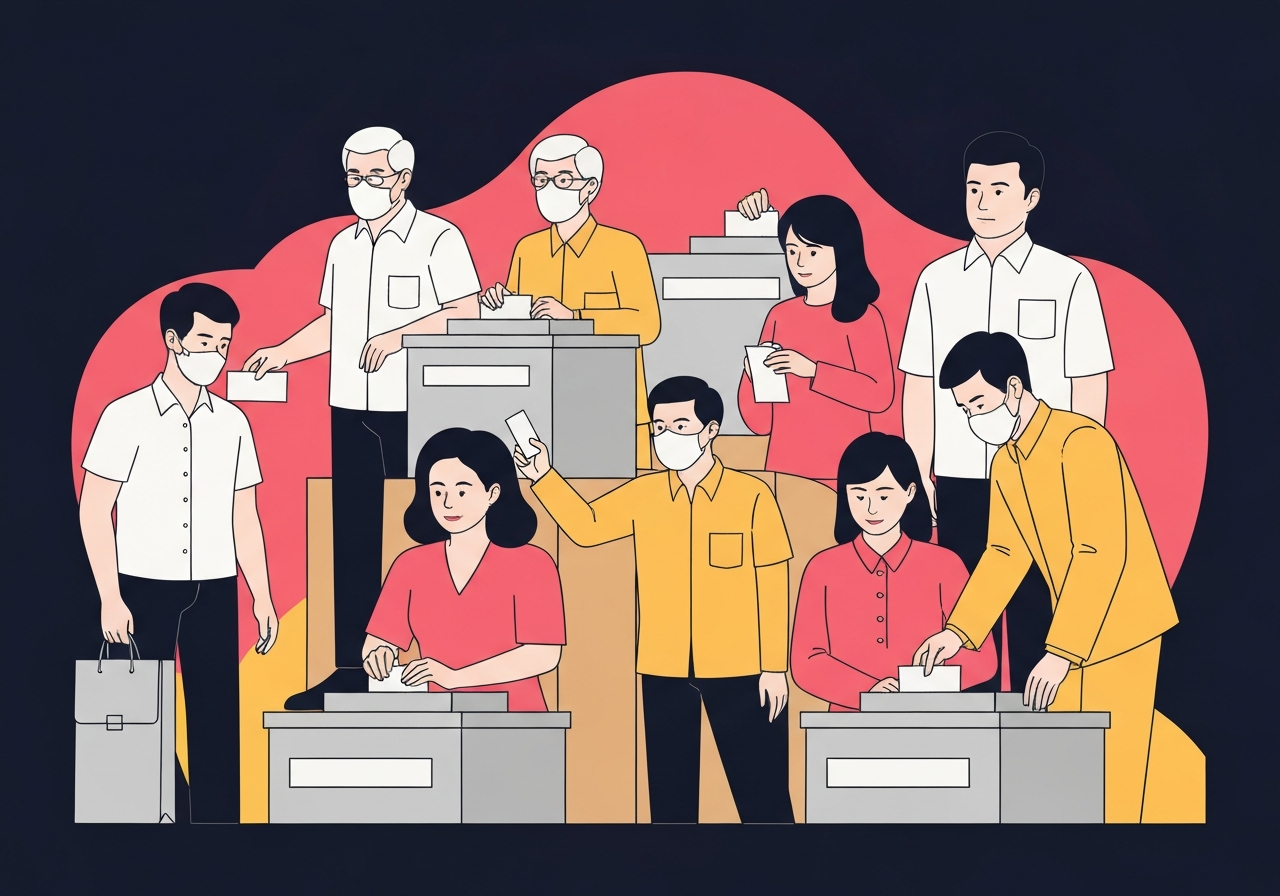
Thailand held a national election on 8 February 2026 that pits a resurgent reform movement against entrenched conservative forces. Voters across the country went to the polls amid economic strains, a referendum on a military-era constitution and legal challenges targeting the reform movement’s leaders. The People’s Party — the latest incarnation of Thailand’s progressive reform bloc — campaigned on constitutional change, anti-corruption and economic relief but faces legal and parliamentary obstacles. Early returns and expert commentary suggest results will shape coalition talks and the pace of institutional reform for months to come.
Key Takeaways
- The People’s Party is the successor to Future Forward and Move Forward; Move Forward was dissolved by the Constitutional Court in 2024 over its push to amend the lese‑majesté law.
- In 2023 Move Forward won the most lower‑house seats but was blocked from government formation; similar blockades remain a key risk for the People’s Party this year.
- Thailand’s economy has slowed to roughly 2% growth over the past five years; the IMF forecasts growth could fall to about 1.6% this year.
- The 2024 senate changes removed senators’ formal power to choose the prime minister but conservatives and legal mechanisms still influence outcomes.
- Legal complaints have been filed against 44 leading figures associated with the reform movement, a development that could disqualify candidates if cases succeed.
- High voter engagement among younger and first‑time voters, and targeted social campaigns (including memes), were notable features of the day.
- Former and disqualified leaders such as Pita Limjaroenrat and Paetongtarn Shinawatra remain politically influential despite court rulings and jail sentences within the Shinawatra network.
Background
The People’s Party emerges from a multi‑stage reform movement that began with the Future Forward Party and then the Move Forward Party, both of which energized largely younger and urban voters with pledges to reduce military and royalist influence in politics. Move Forward’s strong performance in the 2023 election exposed a deep split: popular support on the ground versus institutional resistance from conservative actors in parliament and the judiciary. In 2024 the Constitutional Court dissolved Move Forward, finding its campaign to amend the lese‑majesté law in breach of the constitution — a ruling that reshaped the reform camp into the People’s Party.
Thailand’s political institutions have been repeatedly reshuffled since the 2014 coup, producing a hybrid system where elected lower‑house politics coexist with appointed or politically influenced bodies. The senate, once able to vote on the prime minister, was curtailed after a 2024 reform that left it with 200 seats and removed its PM selection role; nevertheless, conservative influence persists through courts, commissions and extra‑parliamentary pressure. Those institutional constraints frame why legal cases and electoral rules remain decisive, not just ballot tallies.
Main Event
On election day, polling stations from Bangkok to Pattani reported steady turnout, with visible enthusiasm among first‑time voters. Campaign messages ranged from calls for constitutional reform and anti‑corruption measures by the People’s Party to pledges of stability and economic stewardship from conservative and populist rivals. High‑profile figures — including ex‑Move Forward leader Pita Limjaroenrat, former PM Paetongtarn Shinawatra, and ex‑army chief Prayuth Chan‑ocha — were present at polling stations, underscoring the contest’s political intensity.
The People’s Party positioned itself as a vehicle for the reform agenda: parliamentary reform, amendment of royal‑insult statutes, and anti‑corruption initiatives. Party leaders campaigned despite past bans and court rulings that removed some predecessors from office; many of the movement’s senior strategists continue to advise from outside formal roles. Opponents countered with warnings about stability and legal boundaries, and mainstream parties pitched incremental change and economic recovery.
Legal filings added drama as a complaint to the National Anti‑Corruption Commission named 44 senior figures linked to the reform movement, including 15 parliamentary candidates, for publicly endorsing lese‑majesté amendments. Observers warned these cases could be used to seek disqualifications if authorities pursue them aggressively — a repeat of the legal‑political interplay seen in 2023. The referendum to replace the military‑backed constitution ran alongside the vote and was promoted with unconventional digital campaigns, notably viral cat memes encouraging a ‘Yes’ vote.
Analysis & Implications
Politically, the election tests whether popular demand for constitutional and legal reform can translate into enforceable power within Thailand’s layered institutions. Even if the People’s Party wins the plurality in the lower house, coalition arithmetic and disqualification risks mean it may struggle to form a government without moderating demands or forging broad alliances. The removal of the senate’s PM‑selection role lowers one barrier from 2023, but courts and administrative bodies still hold levers that can shape outcomes.
Economically, the incoming government will inherit a slow‑growing economy that has expanded around 2% in recent years and faces demographic headwinds, high household debt and competitive pressures from regional manufacturing hubs. Policy choices on fiscal stimulus, industrial policy (including EV transition support) and measures to rein in illicit ‘grey capital’ will influence investor confidence and medium‑term growth. Economists note priorities should include boosting domestic consumption, upgrading supply chains and stabilising public finances.
Regionally, Thailand must navigate a shifting balance of power: a less engaged United States combined with an assertive China complicates foreign policy choices. New leadership will need pragmatic alignments to protect trade links and prevent escalation in border disputes, as seen in recent tensions with Cambodia. How the government balances major‑power ties while protecting national economic interests will be closely watched by investors and neighbours alike.
Comparison & Data
| Indicator | Recent value / note |
|---|---|
| Thailand average growth (past 5 years) | ~2% (domestic demand, manufacturing and tourism weakened) |
| IMF forecast (current year) | ~1.6% (IMF projection) |
These figures underline a structural slowdown relative to peers. Thailand faces an ageing workforce and intense competition from newer manufacturing centres such as Vietnam and Indonesia. Any governing coalition will likely prioritise policies to boost competitiveness, support factory upgrades for an EV world and shore up household incomes to revive consumption.
Reactions & Quotes
Voter sentiments captured at polling stations reflected a mix of hope and frustration, especially among younger voters and public servants.
“Thai kids should be able to get free education and students in rural areas should have a chance to access good education also,”
Thanisorn Sitthisomboon (21), first‑time voter
Many older voters emphasised stability and anti‑corruption as primary concerns.
“I want Thailand to be run more efficiently by the government. I want corruption to be eliminated,”
Suradet Butakheow (47), teacher
Party leaders framed the election outcome as a mandate for either reform or continuity.
“We will form a people’s government to implement policies that benefit all, not just a few,”
Natthaphong Ruengpanyawut, People’s Party leader
Unconfirmed
- Whether the complaints filed against 44 reform figures will lead to effective disqualifications is unresolved and depends on investigatory outcomes and legal rulings.
- The extent of Thaksin Shinawatra’s operational influence from prison over Pheu Thai strategy is debated; analysts disagree on how direct his role remains.
- Attribution of the leaked call that led to Paetongtarn Shinawatra’s removal remains contested; full details about the leak’s origin have not been independently verified.
Bottom Line
Thailand’s 2026 election is a pivotal moment: it measures the strength of a reform movement that has repeatedly won popular support but confronted institutional resistance. Even a strong showing for the People’s Party will only be a first step; converting seats into a durable governing coalition will require negotiations, legal resilience and possibly moderated policy proposals to placate centrist partners.
For voters and markets, the near‑term focus will be on whether the election produces a stable coalition capable of addressing an underperforming economy and pushing through credible reforms without provoking institutional backlash. Regardless of the immediate outcome, the contest has cemented the centrality of constitutional and judicial questions in Thai politics; their resolution will determine the country’s political trajectory for years to come.