
Lead
On Feb. 8, 2026, The New York Times podcast The Daily turned its Sunday episode into a primer for this year’s Super Bowl, framing the matchup between the New England Patriots and the Seattle Seahawks as a contrast of temperament: the established, methodical Patriots versus the kinetic underdog Seahawks. Host Michael Barbaro, a self-described non-fan, is guided into the drama by reporter Natalie Kitroeff and two team beat writers in a 37-minute conversation that aims to make the game accessible beyond die-hard fans. The episode foregrounds storytelling as the bridge between sports detail and broader cultural interest, while spotlighting key figures such as Patriots head coach Mike Vrabel and Seahawks quarterback Sam Darnold.
Key Takeaways
- The episode aired Feb. 8, 2026, and runs roughly 37 minutes (37:02), billed as a Sunday edition of The Daily podcast.
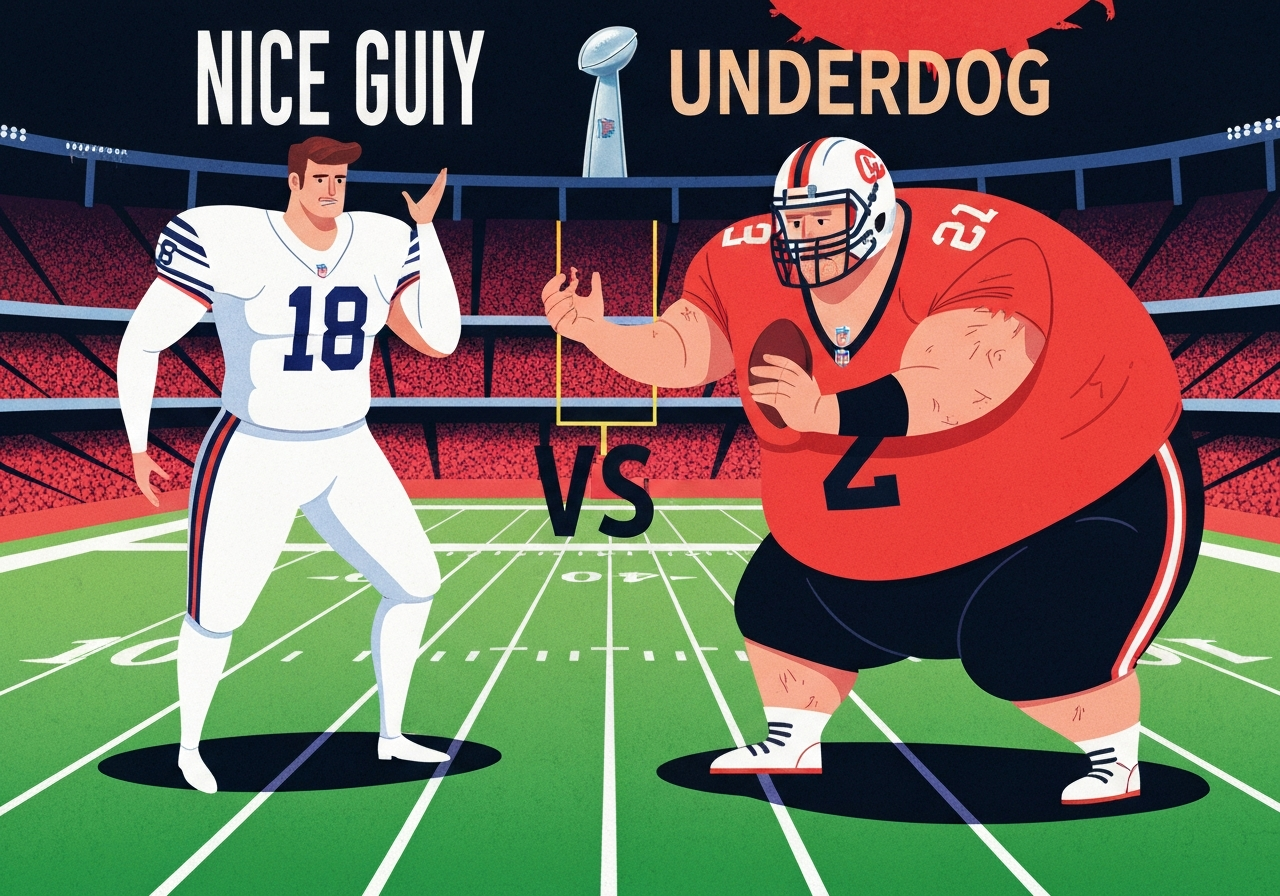
- Teams: New England Patriots vs. Seattle Seahawks — framed as a contrast between a disciplined franchise and an energetic underdog.
- Guests include Natalie Kitroeff (hosting the segment, Eagles fan), Chad Graff (senior writer covering the Patriots for The Athletic) and Michael-Shawn Dugar (staff writer covering the Seahawks for The Athletic).
- Visual references in the episode coverage note Patriots head coach Mike Vrabel and Seahawks quarterback Sam Darnold in promotional imagery.
- The episode’s approach prioritizes narrative entry points for non-fans, using human details and team identities rather than technical play-by-play analysis.
- Coverage aims to balance fan-oriented color with context useful for casual listeners, highlighting coaching styles, roster storylines and cultural significance.
Background
The Super Bowl remains a national spectacle that draws both committed followers and casual viewers; public interest often centers on characters and narratives as much as on Xs-and-Os. In 2026, the matchup between New England and Seattle was presented as a study in contrasts—tradition and structure against unpredictability and momentum—making it an attractive subject for a newsroom seeking to explain why the game matters beyond the scoreboard. Podcasts like The Daily have increasingly attempted to translate sports moments into stories for broader audiences, pairing beat reporters with hosts who may lack deep sports familiarity.
Both franchises carry distinct public images shaped by recent seasons and organizational choices. The Patriots under Mike Vrabel are depicted as process-oriented and veteran-led, while the Seahawks under a different organizational arc have cultivated a reputation for dynamic playmaking and underdog resilience. Reporters who cover each team mediate these reputations for listeners, drawing on season-long observation and locker-room access to clarify storylines that matter on game day.
Main Event
The episode opens with Natalie Kitroeff setting the stage and gently nudging host Michael Barbaro toward the dramatic beats she sees in the matchup. Kitroeff frames the game through personalities and turning points, aiming to convert curiosity into investment by telling short, resonant stories about players and coaches. Barbaro responds as a listener new to the sport’s rhythms, asking clarifying questions that shape the segment into an explainer accessible to non-football audiences.
Chad Graff situates the Patriots in the context of coaching and roster construction, emphasizing the team’s attention to process and the leadership of head coach Mike Vrabel. Graff outlines how consistency on defense and situational football have defined New England’s path to the title game without delving into technical schematics. Michael-Shawn Dugar counters with a portrait of the Seahawks as a club that thrives on improvisation and momentum, and he highlights quarterback Sam Darnold as a central narrative figure whose play can swing the contest.
The conversation is more descriptive than predictive: guests avoid precise score forecasts and instead surface the human stakes—coaching adjustments, roster health and the psychological edge that comes with identity. Production elements (short clips, anecdotal turns and image references) are used to keep the episode brisk and listener-friendly, deliberately trading exhaustive analysis for narrative hooks that invite further exploration.
Analysis & Implications
This episode exemplifies how mainstream news outlets translate a major sports event for a general audience: by reframing technical sports details as human stories. The approach broadens the appeal of the Super Bowl and reflects a wider editorial strategy to make specialty beats accessible without alienating core fans. For media organizations, this balancing act matters commercially and culturally—broadening listenership while maintaining credibility with dedicated readers.
Politically and socially, the Super Bowl functions as a shared cultural moment that can surface regional identities, commercial storytelling and civic rituals. A Patriots–Seahawks matchup brings together distinct fan bases with different media ecologies; translating those worlds for neutral listeners requires attention to both teams’ histories and present-day narratives. The episode’s emphasis on process versus personality maps onto larger narratives about institutional stability versus nimble innovation, themes resonant beyond sports.
Economically, framing the game in human terms can boost engagement metrics for publishers: episodes that convert non-fans into curious listeners may extend audience lifetime value and cross-pollinate interest across beats. For journalists, the format underscores the value of beat access—season-long observation supplies the credible specifics that make narrative summaries trustworthy for new audiences.
Comparison & Data
| Item | Patriots | Seahawks |
|---|---|---|
| Representative voice on episode | Chad Graff (The Athletic) | Michael-Shawn Dugar (The Athletic) |
| Framing | Process-oriented, veteran-led | Underdog, momentum-driven |
| Prominent figure cited | Head coach Mike Vrabel | Quarterback Sam Darnold |
| Episode runtime | Approximately 37 minutes (37:02) | |
The simple comparison above translates the episode’s qualitative framing into a compact reference for listeners who want a quick alignment of the two teams. It is not a statistical performance comparison; rather, it reflects how the podcast’s guests characterized each franchise during the Feb. 8, 2026 segment.
Reactions & Quotes
“The Patriots’ identity this season has been about getting the details right and letting structure win the day.”
Chad Graff, The Athletic (Patriots beat)
Graff’s comment—offered as a summary on the program—was used to explain why the Patriots were presented as the steadier side in the matchup. He positioned coaching and situational execution, rather than star-driven theatrics, as the team’s defining elements.
“Seattle leans into chaos in a productive way; when they click, momentum becomes their playmaker.”
Michael-Shawn Dugar, The Athletic (Seahawks beat)
Dugar emphasized the Seahawks’ tendency to convert energy into decisive plays, and he used quarterback Sam Darnold as an example of a player whose on-field temperament can determine outcomes. That framing supported the episode’s underdog narrative.
“You don’t need to be a lifelong fan to care—start with the people and the moments, and the rest follows.”
Natalie Kitroeff, guest host
Kitroeff’s intervention shaped the episode’s editorial aim: teaching non-fans to value narrative threads—personal histories, coaching arcs, turning-point plays—so they can follow the game without prior technical knowledge.
Unconfirmed
- Any last-minute roster changes or injury updates that could affect game-day lineups were not confirmed within the Feb. 8 episode and require team sources for verification.
- Specific viewership or listener metrics tied to the episode’s reach were not provided in the program and remain unreported here.
Bottom Line
The Feb. 8, 2026 episode of The Daily used the Patriots–Seahawks Super Bowl as an occasion to translate the sport for non-fans, privileging narrative clarity over tactical depth. That editorial choice makes the game more accessible to a broader audience while relying on beat reporting to preserve credibility. For casual listeners, the episode offers a useful roadmap: focus on personalities, coaching traits and pivotal moments to follow the contest.
For journalists and newsrooms, the segment illustrates a replicable method for covering specialized beats—pair credible insiders with a host who asks clarifying questions, and structure the piece around a few resonant stories. As Super Bowl weekend unfolds, readers and listeners should watch for verified roster updates and postgame analyses that rely on play-by-play evidence rather than narrative framing alone.