
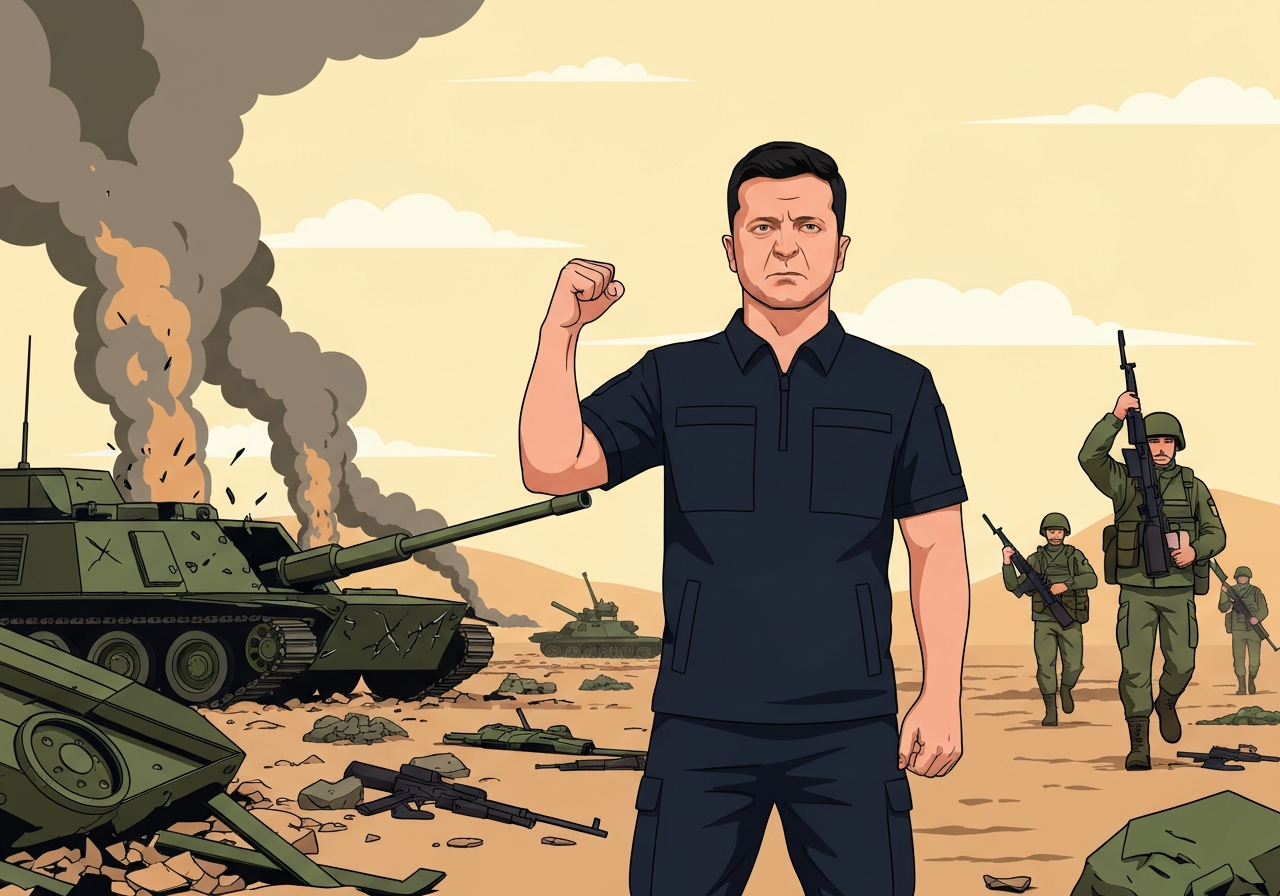
— Ukrainian President Volodymyr Zelenskyy urged an urgent international response after what he said was a week in which Russia fired more than 3,300 munitions at Ukraine, including over 2,000 attack drones, 1,200 guided aerial bombs and 116 missiles. The strikes, concentrated on energy infrastructure, logistics hubs and residential areas across multiple regions, left significant power outages and damage. Ukrainian air defenses said they intercepted dozens of incoming drones during a Saturday night assault that still left impacts across 13 locations. Zelenskyy called for heavier military support, sustained diplomatic pressure and new sanctions to make the conflict “untenable” for the Russian Federation.
Key takeaways
- Ukrainian totals for the week: more than 3,300 munitions—about 2,000 attack drones, 1,200 guided aerial bombs and 116 missiles, according to President Zelenskyy.
- On the night from Saturday into Sunday, Russian forces launched 101 drones; Ukraine reported 69 were shot down or suppressed and 32 struck 13 different sites.
- Significant impacts were reported in Poltava (industrial facility), Kramatorsk (residential building), Odesa (industrial site) and Kherson (residential blocks), and widespread power outages followed a prior large assault on Friday night.
- Zelenskyy announced new Ukrainian sanctions targeting foreign firms accused of supplying components used in Russian drones and missiles.
- Kyiv said it conducted its own long-range strikes against Russia overnight; Moscow reported shooting down 22 Ukrainian drones.
- Russian authorities say a suspect, identified as Lyubomir Korba (b. 1960), was arrested in Dubai and transferred to Russia in connection with the Feb. 7 shooting of senior GRU official Vladimir Alexeyev; Moscow alleges Ukrainian services ordered the attack, a claim Kyiv denies.
Background
Since the full-scale invasion began in 2022, Russia has periodically focused attacks on Ukraine’s power grid and energy infrastructure, especially during winter months when outages cause the most social and economic strain. Long-range strikes, including cruise missiles and maritime-launched weapons, have been complemented by swarms of Iranian-made and domestically produced attack drones. Kyiv and its Western partners have repeatedly warned that a sustained campaign against civilian energy networks is intended to sap public morale and disrupt industry.
The international response has included military aid packages, sanctions on Russian individuals and companies, and diplomatic efforts to isolate Moscow, but Kyiv argues that current measures are insufficient to stop an accelerating campaign of strikes. Ukraine’s air defenses—composed of Western-supplied systems and domestically adapted launchers—have intercepted many incoming weapons, yet the volume and diversity of threats complicate protection of all regions. At the same time, Ukraine has expanded its own long-range strike capabilities to target Russian military infrastructure and logistics nodes across the border.
Main event
Over the past week, President Zelenskyy said Moscow launched more than 3,300 munitions into Ukrainian territory, a tally that Kyiv distributed publicly as it appealed for more air-defense missiles and offensive weapons. Ukrainian air force statements said the most recent overnight wave included 101 incoming drones; air defenses reportedly neutralized or suppressed 69, but 32 struck sites across 13 locations. The assaults produced new damage to residential blocks and industrial plants and worsened electricity shortages in affected regions.
Saturday night’s strikes hit an industrial facility in central Poltava, a residential building in Kramatorsk, an industrial location in Odesa and multiple homes in Kherson, according to Ukraine’s State Emergency Service reports. Emergency responders described scenes of damaged apartment buildings, shattered windows and local blackouts; images distributed by Ukrainian units showed structural damage in Donetsk region following the strike on Feb. 8. Officials emphasized that civilian areas continue to be at risk even as Kyiv and partners pursue diplomatic channels.
Zelenskyy framed the attacks as part of a pattern: strikes on energy and logistics infrastructure, alongside precision and unmanned weapons, intended to erode Ukraine’s ability to sustain society and its armed forces. He called on partners to provide missiles for air-defense systems and weapons for frontline units, saying a combination of military aid and diplomatic pressure can increase the cost to Russia until the war is untenable. Kyiv also announced targeted sanctions against foreign companies it says supplied critical components for Russian drones and missiles.
Analysis & implications
The scale and composition of the reported strikes—heavy use of attack drones alongside guided bombs and missiles—reflect layered tactics that complicate air defense planning. Drones provide persistent, low-cost strike options that can overwhelm air defenses when used in mass, while guided aerial munitions and missiles enable higher-yield strikes on strategic infrastructure. For defenders, this mix forces trade-offs between wide-area protection and point defense at critical facilities.
If the pattern continues through the winter and into spring, Ukraine may face sustained pressure on civilian power supplies that hinders industrial output, healthcare delivery and municipal services. That outcome would raise humanitarian concerns and increase international urgency for systems that can replenish grid capacity quickly or harden infrastructure against repeated attacks. Conversely, accelerated deliveries of long-range Western precision weapons to Kyiv would enable deeper strikes on Russian logistics and energy nodes, potentially escalating retaliatory risk.
Zelenskyy’s explicit naming of Russia’s energy sector as a legitimate target marks a diplomatic and strategic calibration: Kyiv argues revenue from oil and gas sales directly finances weapons procurement. Striking energy infrastructure raises legal and ethical issues under international humanitarian law when civilian harm is likely, and it would expand the geographic and economic scope of the conflict. The move also signals Ukraine’s intent to pressure foreign suppliers and intermediaries involved in Russia’s defense-industrial supply chain.
Comparison & data
| Weapon type | Reported count (week) |
|---|---|
| Attack drones | ~2,000 |
| Guided aerial bombs | ~1,200 |
| Missiles | 116 |
| Total munitions | >3,300 |
The table above reproduces figures released by Ukrainian authorities for the referenced week. Independent verification of each strike and munition type can lag due to battlefield conditions; public tallies are typically compiled from air force reports, emergency services and local authorities. Compared with earlier months in 2024–25, Ukrainian officials say the tempo of drone attacks has increased, requiring adaptation in air-defense doctrine and procurement priorities.
Reactions & quotes
Ukrainian leaders emphasized the need for concrete support rather than statements alone, framing additional supplies as both defensive and deterrent. International partners expressed concern while balancing escalation risks; Moscow described the attack on the GRU official as linked to Ukrainian intelligence, an allegation Kyiv rejects.
“The world must not turn a blind eye to Russian attacks. When there is no global response, the strikes become more frequent and increasingly brutal.”
Volodymyr Zelenskyy, President of Ukraine
Zelenskyy’s statement framed the munitions surge as a test of international resolve, accompanying his appeal for air-defense missiles and sanctions. He defined Ukraine’s options as either building and using weapons to strike Russian military targets or striking revenue sources that fund those weapons.
“He arrived in Moscow at the end of December on the instructions of the special services of Ukraine to commit a terrorist act.”
Svetlana Petrenko, Russian Investigative Committee representative
Russian investigators accused a suspect of acting on Kyiv’s orders in the shooting of a senior military intelligence official; Ukrainian authorities have denied involvement. This claim remains contested and is included in the unconfirmed section below.
“Russia’s energy sector is a legitimate target”
Volodymyr Zelenskyy (address to students, National Aviation University)
Zelenskyy’s remark prompted debate among legal and policy experts about the boundaries between military and economic targets and the proportionality of attacks that could affect civilians.
Unconfirmed
- Allegation that Ukrainian special services ordered the Feb. 7 shooting of GRU official Vladimir Alexeyev: asserted by Russian authorities but denied by Kyiv; independent verification is not publicly available.
- Details of the Dubai arrest and transfer of the suspect Lyubomir Korba rely on statements by Russian security services and have not been independently corroborated in open international reporting at the time of publication.
- Precise weapon attribution for each impacted site (which specific munition caused which damage) is still pending forensic and open-source validation.
Bottom line
This week’s reported surge in drone, bomb and missile launches underscores a persistent Russian emphasis on degrading Ukraine’s energy and logistics capacity while testing the limits of Kyiv’s air defenses. Zelenskyy’s call to make the war “untenable” for Russia signals a strategy that blends defensive procurement, targeted sanctions and expanded offensive options to raise Moscow’s cost of sustained operations.
The path forward will be shaped by whether partners supply additional air-defense interceptors and long-range strike capabilities, and by how both sides manage escalation risks tied to cross-border attacks on economic infrastructure. For readers, the critical developments to watch are new deliveries of intercept missiles, implementation of the announced sanctions, and independent verification of claims surrounding the attempted assassination in Moscow.
Sources
- ABC News (international news report consolidating Ukrainian and Russian statements)