
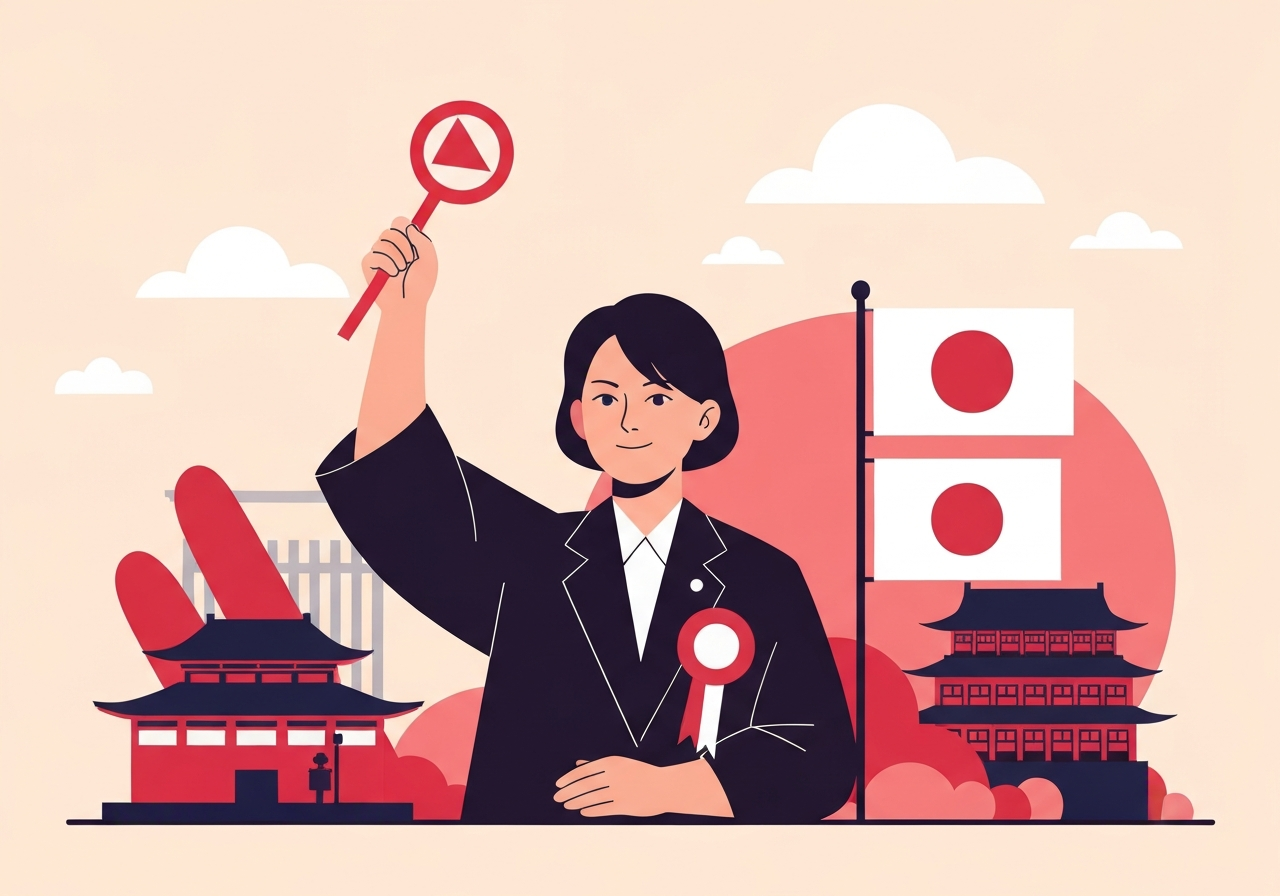
Prime Minister Sanae Takaichi scored a decisive victory in a snap election held on Feb. 8, 2026, winning a clear mandate in national voting across Japan. The Liberal Democratic Party (LDP) captured at least 310 of the 465 seats in the House of Representatives, up from 198 seats ahead of the vote, according to public broadcaster NHK. The result comes 110 days after Ms. Takaichi became Japan’s first woman prime minister and strengthens her ability to pursue an expansive economic program and tougher immigration and China policies. Analysts say the landslide removes parliamentary constraints and positions her government to push a conservative agenda rapidly.
Key Takeaways
- The snap election on Feb. 8, 2026 returned a strong mandate: the LDP won at least 310 of 465 lower-house seats, NHK reported.
- The party’s seat total rose from 198 before the vote, producing an outright majority in the House of Representatives.
- Ms. Takaichi called the election 110 days after becoming the first female Japanese prime minister to secure a public mandate.
- The victory paves the way for aggressive fiscal spending, expanded national security laws, and stricter immigration measures.
- An alliance with the Japan Innovation Party could create a working supermajority to fast-track legislation.
- President Trump publicly endorsed Ms. Takaichi’s candidacy, a development cited by observers as raising her international profile.
Background
The LDP has been Japan’s dominant postwar party for much of the last 70 years but in recent electoral cycles it lost ground and at one point lacked a majority in both houses. Internal party turmoil and shifting public attitudes toward the economy and social policy left the LDP in a vulnerable position prior to Ms. Takaichi’s rapid rise. Ms. Takaichi assumed office 110 days before the snap vote, becoming the first woman to hold Japan’s premiership; she framed the election as a bid for legitimacy and a public mandate to govern. The snap timing reflected both political calculation and concern inside government about governing without stable lower-house support.
Key stakeholders include business groups backing expanded fiscal stimulus, conservative lawmakers pushing national security revisions, and opposition parties warning of curtailed checks and balances. Public debate had centered on the economy, immigration, China policy and defense spending in the months leading to the vote. Japan’s electoral system and single-member districts amplified the impact of a consolidated conservative vote. Voter turnout and regional patterns will be scrutinized in coming days for signals on the depth of support across urban and rural constituencies.
Main Event
On Feb. 8, 2026, ballots across Japan recorded a swing toward the LDP and its allies; NHK’s early returns showed the party winning at least 310 seats in the 465-member lower house. Polling stations reported orderly voting, and initial counts were released late Sunday into Monday local time. Ms. Takaichi addressed supporters after results, saying she sought a mandate to avoid governing without a clear public endorsement and that the outcome validated her policy direction.
Campaigning focused heavily on the economy and national security, with Ms. Takaichi promising large-scale government investment and tougher immigration controls to protect wages and social cohesion. The LDP’s message resonated in districts where voters prioritized stability and economic promises, while opposition parties failed to coalesce a persuasive alternative. The election produced substantial gains for the LDP compared with its pre-election tally of 198 seats, reversing recent electoral setbacks for the party.
Strategic cooperation with the Japan Innovation Party, a smaller center-right formation, was cited by party strategists as key to converting votes into a supermajority that could fast-track legislation. International observers noted that a stronger LDP majority reduces parliamentary obstacles for constitutional and security policy moves that have been politically contentious. Domestic officials said administrative preparations will now accelerate to translate the mandate into concrete legislative proposals.
Analysis & Implications
Politically, the landslide repositions Japan’s governing coalition to act more decisively on defense and fiscal policy. With at least 310 lower-house seats, the LDP will face far fewer procedural constraints and can advance bills on national security and spending with greater speed. That creates room for comprehensive stimulus measures and possible expansions to defense posture, prompting debate over long-term fiscal sustainability and regional stability. Markets may initially welcome fiscal certainty but will watch for spending scale and debt implications.
On immigration, Ms. Takaichi’s tougher stance suggests tighter entry rules and stricter enforcement, policies likely to affect labor markets already strained by demographic decline. Businesses that rely on foreign workers could face short-term disruptions unless parallel workforce reforms are enacted. The government’s approach to China—a centerpiece of her campaign—could harden, affecting trade and diplomatic relations in East Asia; neighboring countries and foreign investors will monitor shifts in security posture and trade policy.
Internationally, the endorsement from former President Trump amplified Ms. Takaichi’s global visibility and may signal closer alignment with like-minded leaders on security and economic nationalism. However, Tokyo will still need to balance alliances, trade relationships, and regional diplomacy, particularly with China and ASEAN partners. Domestically, opposition parties must reassess strategy; fragmentation among opposition ranks contributed to the scale of the LDP victory and could prolong conservative dominance unless opposition forces unify.
Comparison & Data
| Indicator | Pre-election | Post-election (at least) | Total |
|---|---|---|---|
| House of Representatives seats (LDP) | 198 | 310 | 465 |
| Days since Takaichi took office | 110 days | ||
The table highlights the swing in lower-house representation that gives the LDP a clear legislative majority. Analysts will map seat gains regionally to understand shifts among urban, suburban and rural electorates, and how single-member district rules amplified the LDP’s vote-to-seat conversion. Historical comparisons show this result as a swift recovery for the LDP after earlier losses that left it out of majority control.
Reactions & Quotes
“I sought a public mandate because it would be wrong to keep moving forward without clear support,”
Ms. Sanae Takaichi, Prime Minister
Ms. Takaichi framed the snap vote as a legitimacy-seeking move and presented the result as confirmation of her policy course.
“The electorate has rewarded a promise of stability and decisive action on economic and security matters,”
Senior LDP official (statement)
LDP spokespeople emphasized stability and policy urgency in their immediate response, signaling intent to legislate quickly.
“Opposition parties must regroup after a disappointing outcome that reflected fragmentation and mixed messaging,”
Opposition strategist (analysis)
Opposition figures acknowledged the scale of the loss and noted the need for consolidation ahead of future votes.
Unconfirmed
- Reports that a formal supermajority pact with the Japan Innovation Party is already signed remain unverified pending party statements.
- Claims that specific constitutional amendment text has been drafted and agreed upon by the LDP caucus have not been publicly confirmed.
Bottom Line
Ms. Takaichi’s landslide reshapes Japan’s immediate political landscape by restoring strong parliamentary control to the LDP and enabling an assertive legislative agenda on economy, immigration and security. The scale of the win reduces short-term obstacles to policy implementation but raises questions about fiscal trajectories and regional diplomatic responses. Observers should watch for concrete legislative proposals, the formation of any formal supermajority alliance, and how opposition parties reorganize in response.
For citizens and markets alike, the coming months will show whether the electoral mandate translates into durable policy gains or intensifies political polarization. International partners will closely follow Tokyo’s China policy and defense moves for broader regional implications.
Sources
- The New York Times (International newspaper report)
- NHK (Japan public broadcaster)
- House of Representatives, Japan (official government website)