
Lead
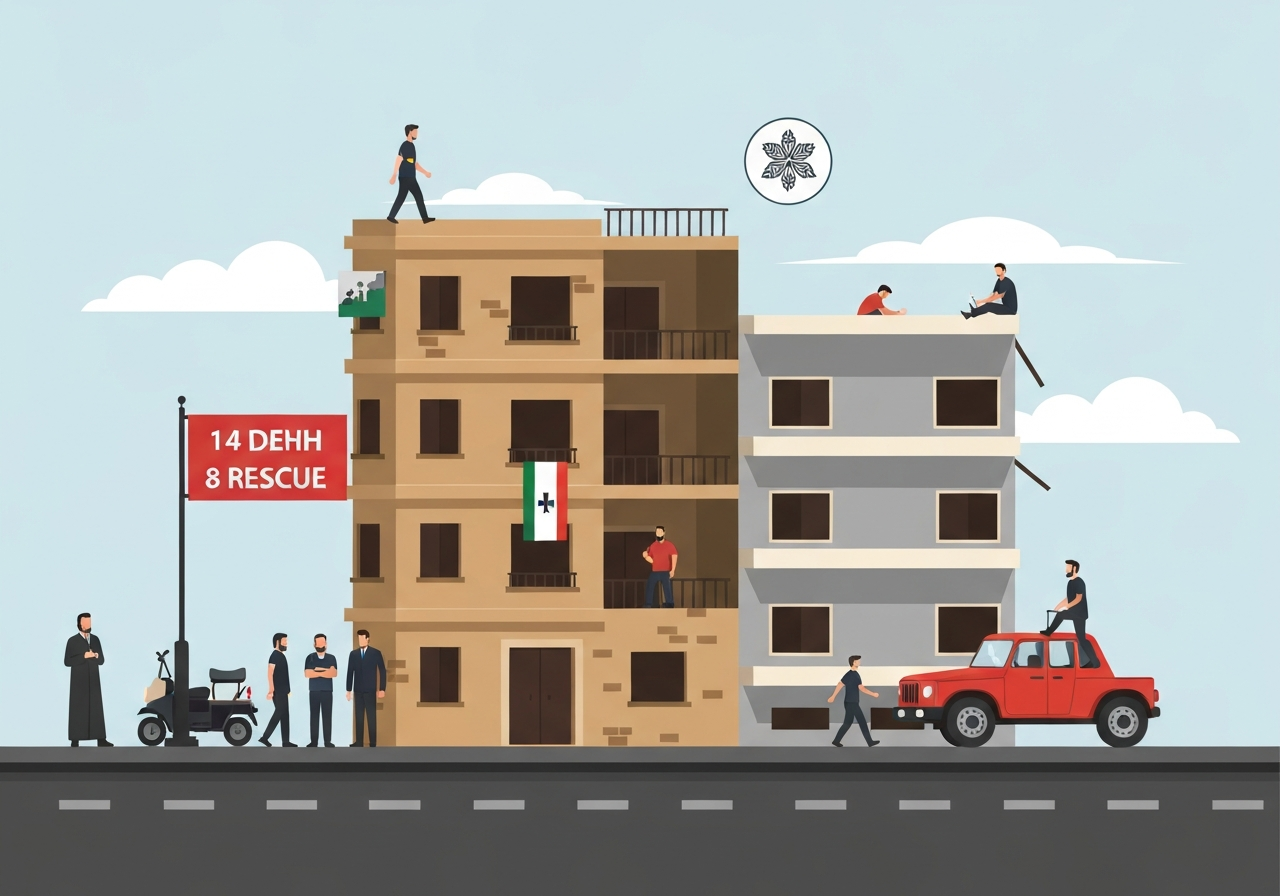
On 8 February 2026, two adjoining residential blocks collapsed in Tripoli, northern Lebanon, killing at least 14 people and injuring others, officials said. Civil defence teams declared search-and-rescue operations complete after recovering 14 bodies and pulling eight survivors from the rubble. The collapse prompted immediate evacuations of neighbouring buildings and mobilised national emergency services. Local residents, the Lebanese Red Cross and municipal forces joined the response, amid rising public anger over unsafe housing.
Key Takeaways
- Death toll: Civil defence confirmed 14 fatalities after search-and-rescue ended on 8 Feb 2026; this supersedes an earlier figure of nine.
- Survivors: Eight people were rescued alive from the debris during the operation.
- Building details: The collapsed structure comprised two connected blocks, with six apartments in each block (12 apartments total), according to civil defence.
- Evacuations: Internal Security Forces and Tripoli municipal police evacuated adjacent residential buildings for safety concerns.
- Official response: President Joseph Aoun ordered emergency services on high alert; Prime Minister Nawaf Salam pledged housing allowances for displaced residents.
- Investigation: Justice Minister Adel Nassar instructed the northern public prosecutor to open an immediate inquiry into the collapse.
- Wider problem: Tripoli authorities previously reported 105 buildings that required immediate evacuation warnings, underlining a broader structural and regulatory crisis.
Background
Tripoli has a long history of densely packed, aging housing stock. Many apartment blocks were built without formal permits, particularly during Lebanon’s civil war from 1975 to 1990, and informal additions—such as extra floors—have become common. Over decades, maintenance and regulatory enforcement have been uneven, leaving numerous structures in advanced states of disrepair.
Local authorities and relief agencies have repeatedly warned about unsafe buildings. In January 2026 the head of the higher relief authority, Bassam Nablusi, cited municipal data indicating 105 buildings in Tripoli required immediate evacuation notices. Those figures feed into a larger picture of a housing system strained by economic collapse, population pressures and weak oversight.
Main Event
Shortly before or on 8 February 2026 two adjoining residential blocks in Tripoli collapsed. Civil defence units, supported by the Lebanese Red Cross and other emergency organisations, led the response, conducting search-and-rescue operations that recovered 14 bodies and extricated eight survivors. Residents in the neighbourhood joined efforts to clear rubble and create access points for rescuers.
Following the collapse, members of the Internal Security Forces and Tripoli municipal police moved to evacuate nearby residential buildings out of concern they too might fail. The state-run National News Agency reported the evacuations and quoted municipal sources describing the gravity of the situation. Local clinics and relief agencies treated injured people, though official counts for the number of injured remain incomplete.
President Joseph Aoun ordered all emergency services to be on high alert and to provide shelter for those displaced. Prime Minister Nawaf Salam announced that the government stood ready to offer housing allowances to people forced from evacuated buildings and appealed against politicising the tragedy. The Justice Minister requested the northern public prosecutor open an immediate investigation into the causes and any accountability.
Analysis & Implications
The collapse is both an acute tragedy and a symptom of chronic structural problems in Tripoli and elsewhere in Lebanon. Years of regulatory gaps, illegal construction practices and underinvestment in maintenance have left many buildings vulnerable. The incident will increase pressure on national and municipal authorities to act, but the scale of decay exceeds the resources of local governments alone.
Politically, the event raises questions about enforcement and oversight. Officials face demands for rapid repairs, clear prosecutions where negligence or illegal alterations are found, and meaningful plans to rehouse people. Yet implementing large-scale structural surveys, demolitions and rehousing in a country facing severe fiscal constraints will be costly and politically fraught.
Economically, the collapse could deepen housing insecurity for low-income residents. Short-term housing allowances ease immediate displacement but do not address structural remedies such as retrofitting, legalising tenure, or rebuilding with safety standards. Long-term solutions would require coordinated national funding, donor support, and strengthened municipal capacity.
Comparison & Data
| Metric | Value |
|---|---|
| Confirmed fatalities (8 Feb 2026) | 14 |
| People rescued alive | 8 |
| Apartments in collapsed complex | 12 (two blocks, six each) |
| Buildings flagged for evacuation (Jan 2026) | 105 (Tripoli municipality data) |
The table summarises confirmed numbers released by civil defence and municipal officials. While fatalities and rescues have been reported as definitive, counts of injured and displaced are still being compiled by emergency agencies and local authorities.
Reactions & Quotes
Local and national figures responded with emergency measures and public statements, reflecting both urgency and political sensitivity.
“We declare Tripoli a disaster-stricken city,”
Mayor Abdel Hamid Karimeh
The mayor characterised the situation as beyond municipal capacity, stressing longstanding neglect and the threat to thousands of residents living in unsafe structures.
“There is a lot of anger,”
Zeina Khodr, Al Jazeera (reporter in Tripoli)
On-the-ground reporting highlighted frustration in poor neighbourhoods where residents say housing options are scarce and temporary allowances will not resolve deep structural risks.
“The government is prepared to provide housing allowances for residents who need to be evacuated,”
Prime Minister Nawaf Salam (statement)
The prime minister framed the response as humanitarian and urged political actors not to exploit the tragedy while pledging financial assistance for displaced residents.
Unconfirmed
- The precise number of people injured in the collapse has not been fully released by authorities and remains incomplete.
- Investigations into whether structural neglect, illegal construction or specific acts of negligence directly caused the collapse are ongoing and not yet concluded.
- It is not yet confirmed which property owners or contractors, if any, will face criminal or civil charges pending the prosecutor’s inquiry.
Bottom Line
The Tripoli collapse on 8 February 2026 is a human tragedy rooted in longstanding housing, regulatory and governance failures. Fourteen people lost their lives and eight were pulled alive from the ruins, while many more face displacement and uncertainty. Immediate relief measures, including evacuations and housing allowances, address short-term needs but do not resolve the systemic problems that make such events likely to recur.
Meaningful prevention will require coordinated national action: comprehensive structural surveys, clear enforcement of building codes, funding for repairs or safe rehousing, and transparent investigations that can rebuild public trust. For residents of Tripoli, the urgent challenge is shelter and safety; for national leaders, the task is to translate sympathy and pledges into sustained policy and resources.
Sources
- Al Jazeera — International news media report (original coverage, 8 Feb 2026)
- National News Agency (NNA) — Lebanese state news agency (reports on evacuations and official statements)