
Lead
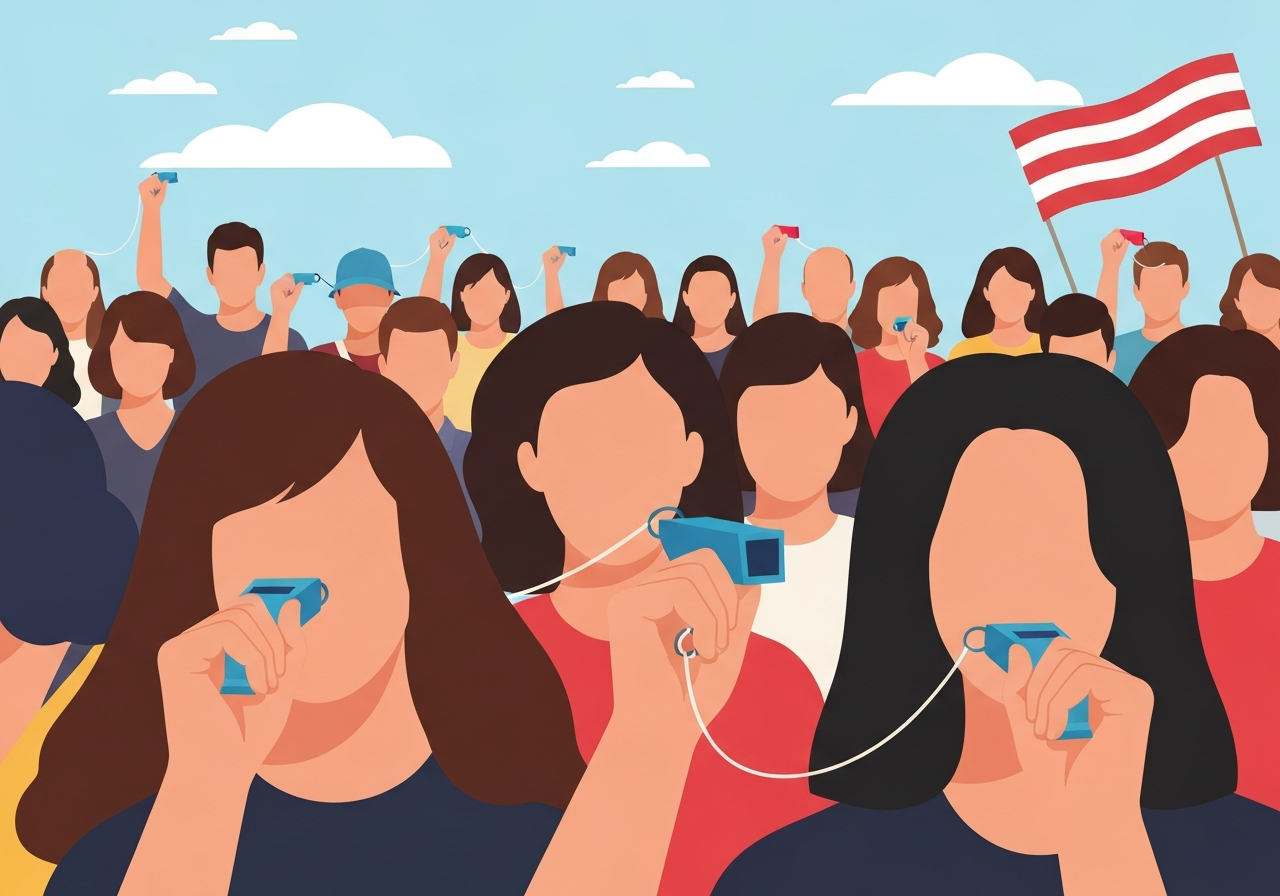
Artists, lawmakers and neighborhood activists have turned a simple whistle into a frontline alert system against Immigration and Customs Enforcement (ICE) operations, a practice that came into the spotlight after several high-profile confrontations. The accessory gained renewed attention when Justin Vernon of Bon Iver wore a whistle on the Grammy red carpet, a symbolic nod to observers who warn communities about ICE presence. Supporters say the device helps undocumented people evade surprise raids; critics on the right argue the tactic escalates confrontations and have labeled whistle-blowing dangerous or even criminal. The debate intensified after the killing of Alex Pretti in Minneapolis and coordinated public actions in multiple U.S. cities.
Key takeaways
- Activists nationwide use whistles as audible alerts: short bursts warn of ICE presence; sustained blasts indicate a detention in progress, a system promoted by groups such as Hands Off NYC.
- One organizing group has distributed more than 150,000 whistles across the country, according to the Chicago Sun-Times, and local “whistle parties” have been held in Chicago and other cities.
- Right-wing commentators including Steven Crowder, Mike Cernovich and Megyn Kelly have publicly condemned whistle use, calling it disruptive and, in some comments, a form of assault or a weapon.
- Elected officials have taken the symbol into formal settings: state and city lawmakers wore whistles at a Minneapolis press conference, and Rep. Rashida Tlaib used a whistle on the House floor to protest the administration’s immigration policy.
- Supporters frame whistleblowing as a low-cost, nonviolent community defense that helps neighbors warn each other against surprise enforcement actions.
- Opponents point to public-safety and legal concerns—noise ordinances, alleged interference with officers and disputed claims linking whistles to violent outcomes after the Minneapolis killing.
- The tactic’s spread has made the whistle both a tool of civil defense and a focal point in the broader polarization around immigration enforcement.
Background
Over recent years, immigration enforcement under the Trump administration escalated in scope and visibility, with more aggressive interior operations by ICE that prompted grassroots responses in many neighborhoods. Community-based groups and volunteers—sometimes called observers or street-level monitors—began coordinating simple signaling methods to warn residents of enforcement actions. A whistle’s portability, audibility and low cost made it an effective device for transmitting quick alerts across blocks and public spaces.
Hands Off NYC and similar local organizations formalized basic protocols—short bursts to signal sighting, long repeated blasts for detainment—so that neighbors can react consistently and quickly. The tactic dovetails with broader accompaniment and rapid-response networks that assist undocumented people with legal resources, transportation and sanctuary referrals. As the practice spread from cities such as New York and Chicago to Milwaukee, Portland and Los Angeles, distribution campaigns and public demonstrations elevated the whistle from pragmatic tool to visible symbol of resistance.
Main event
The whistle moved into national conversation after Justin Vernon, frontman of Bon Iver, wore one on the Grammy red carpet, framing the object as a tribute to street observers who warn neighbors, even in extreme cold, about ICE activity. Vernon described the whistle as representing people who “get out on the street and take care of each other,” linking a music-industry moment to grassroots solidarity. Around the same period, reports of confrontations and a deadly encounter in Minneapolis involving Alex Pretti intensified scrutiny of both ICE tactics and the role of bystanders during operations.
Conservative commentators responded sharply. Steven Crowder argued that women who blew whistles near officers had crossed a line and suggested the acts could amount to assault; Mike Cernovich urged that whistles be treated as violent weapons, citing hearing-damage concerns. Megyn Kelly and others suggested whistle use contributed to chaotic scenes and at least indirectly to the conditions preceding Pretti’s death. Those claims quickly circulated across right-leaning platforms, amplifying calls for legal scrutiny of organized whistle campaigns.
At the same time, activists and some elected officials staged visible acts of solidarity. A group of city and state lawmakers wore whistles at a Minneapolis city-hall press conference to protest enforcement tactics. In Congress, Rep. Rashida Tlaib used a whistle on the House floor to dramatize her opposition to the administration’s crackdown, linking whistle use to broader calls to reform or abolish ICE. These public acts underscored how the whistle has become both a practical alarm and a political emblem.
Analysis & implications
The whistle’s rise reflects a larger phenomenon: low-cost technologies and simple signals can dramatically change how communities respond to state enforcement. Unlike encrypted messaging apps or organized legal aid, whistles are public, immediate and accessible to people regardless of language or tech literacy. That accessibility explains rapid uptake in neighborhoods often targeted by enforcement and why organizers emphasize standardized patterns to reduce ambiguity and false alarms.
The controversy also illustrates how symbolic objects can be reinterpreted in polarized media environments. What activists present as collective self-defense is framed by critics as interference with law enforcement or as a provocation that could escalate tension. That reinterpretation carries legal risks: if officials or courts construe repeated audible alarms as obstruction, organizers and bystanders could face charges, creating new liabilities for neighborhood watch tactics.
Politically, the whistle episode feeds into larger debates over ICE’s mandate and tactics. Public demonstrations, congressional theatricality and celebrity visibility raise the profile of enforcement controversies and could influence local policy decisions—from municipal observer protections to noise-ordinance enforcement. Internationally and domestically, the dispute may shape how civil-society tactics are perceived in future immigration enforcement cycles, affecting both operational planning by ICE and countermeasures by community groups.
Comparison & data
| City / Group | Activity | Known distribution |
|---|---|---|
| Chicago | “Whistle parties” and outreach | Part of a campaign that distributed 150,000+ whistles (reported) |
| New York (Hands Off NYC) | Public guidance on short/long blasts | Organized neighborhood alert protocols (no central tally) |
| Minneapolis | Lawmakers wore whistles at city hall | Local demonstrations and press events |
The table aggregates public reporting: a Chicago Sun-Times item recorded one group’s distribution of more than 150,000 whistles nationwide, while Hands Off NYC has circulated clear signal protocols to volunteers. Exact distribution counts beyond the Chicago figure are uneven because local groups track dissemination differently, and many whistles change hands informally through events and street outreach.
Reactions & quotes
Right-leaning commentators framed whistle use as dangerous or unlawful, amplifying criminal-justice framing in media coverage and social platforms.
“Those women absolutely went out of their way to cross the street and arguably commit assault against the officers with whistles in the ears.”
Steven Crowder
Crowder’s remark was made in the context of live commentary about the Minneapolis encounter; his claim treats whistle-blowing as direct physical interference. Legal analysts note that asserting “assault” for producing sound would require a specific showing of intent and harm under local criminal statutes, which is not established by broadcast commentary alone.
“High IQ people don’t respond well to shrill noises…those things should be considered a violent weapon.”
Mike Cernovich
Cernovich emphasized alleged hearing damage to argue for weaponization of a whistle; medical experts say brief whistle blasts are unlikely to cause permanent loss, though sustained, close-range loud noises can risk hearing. The claim has been used politically to push for stricter penalties against coordinated alarm campaigns.
“The whistle is there to represent all the observers in Minneapolis…they are warning their neighbors of danger.”
Justin Vernon, Bon Iver
Vernon framed his red-carpet accessory as solidarity with on-street observers who monitor enforcement activity. His public use of the whistle helped propel the object into broader cultural conversation beyond activist circles.
Unconfirmed
- That whistle-blowing directly caused the shooting death of Alex Pretti; investigations and official findings have not established causation between the use of whistles and the fatal outcome.
- That brief, typical whistle blasts cause permanent hearing loss in bystanders or officers; medical evidence for permanent damage from short-distance blasts is limited and context-dependent.
- That any single, nationwide group coordinated all whistle distributions; reporting shows multiple local campaigns and informal giveaways rather than a single centralized distributor.
Bottom line
The humble whistle has become a contested object at the intersection of grassroots defense, symbolic protest and criminal-justice debate. For supporters it is a practical, low-tech alarm that can protect vulnerable neighbors; for opponents it is a provocative act that, they argue, can interfere with enforcement and public order. The dispute exposes broader fault lines over immigration enforcement tactics, community oversight and the limits of public protest.
As investigations into incidents such as the Minneapolis killing continue and as lawmakers and courts parse legal boundaries, the whistle episode will likely influence local policy decisions—whether through strengthened observer protections, renewed enforcement of noise ordinances, or litigation over obstruction. Observers and organizers should document practices carefully and seek legal guidance; policymakers should weigh community safety and civil liberties when crafting responses.
Sources
- The Guardian (international news outlet; primary reporting referenced)
- Chicago Sun-Times (local news outlet; reported distribution figures and “whistle party” activity)