
Google experiments with locking YouTube Music lyrics behind paywall
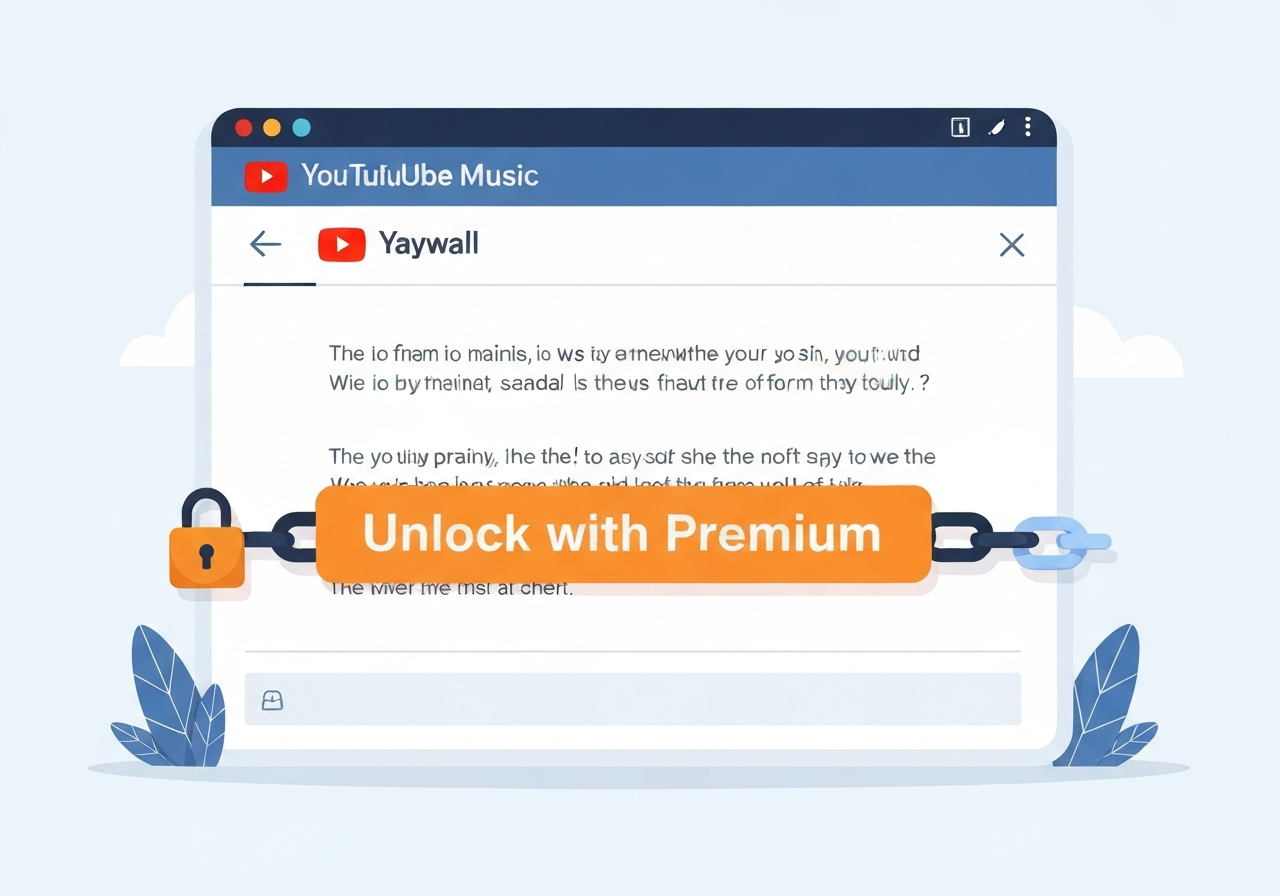
Who: Google’s YouTube Music app. When: A recent test reported in February 2026. Where: In-app experiments appearing for some free users. What: Listeners can follow song lyrics while music plays, but the test blurs lyrics after the first few lines and prompts users to subscribe to continue viewing. Result: The trial pushes users toward YouTube Premium or YouTube Music subscriptions, which cost $14 for both video and music bundles or $11 for music-only plans and also remove ads and unlock downloads and higher-quality streams.
Key Takeaways
- The YouTube Music test shows only the first few lines of lyrics to some free users, with the remainder blurred and gated behind a subscription prompt.
- Subscribers pay $14 for bundled YouTube video+music or $11 for music-only; subscriptions also remove ads and enable downloads and higher-quality streaming.
- Lyrics are supplied by third-party licensors, and licensing fees are cited as a likely reason for the paywall experiment.
- Spotify attempted a similar restriction in 2024 but reversed course after broad negative reaction from users and creators.
- Alphabet reported approximately $60 billion in YouTube revenue in its most recent earnings period, nearly $10 billion above the previous year, underscoring the platform’s growing monetization.
- Google has been rolling out multiple AI-driven changes to YouTube recently, which have drawn user scrutiny and mixed feedback.
Background
Lyrics-sync features have become a standard expectation for streaming music apps because they enhance discovery, engagement and accessibility by allowing listeners to follow along in real time. Many services obtain full textual sync rights from licensing partners and pay royalties or access fees that are separate from mechanical and performance rights. The cost and structure of those licensing deals vary by territory and by provider; platforms often weigh user experience against the economics of paying third-party vendors for lyric text and synchronization data.
Streaming services have tested different ways to offset licensing costs. In 2024, Spotify briefly limited lyric access for ad-supported accounts, provoking a large user backlash that led Spotify to restore the feature for free-tier listeners. That episode has become a reference point for how consumers react when a long-standing free convenience is suddenly restricted. YouTube Music’s user base is smaller than Spotify’s, and many subscribers already pay for ad-free YouTube, which may blunt the public visibility of any change.
Main Event
Reports surfaced showing screenshots and in-app behavior where free users could see only the opening lines of a song’s lyrics; after the cutoff, the text was blurred and an in-app prompt suggested upgrading to a paid plan to view the remainder. The experiment appears to be limited in scope and visible to a subset of accounts rather than a global rollout. The prompt highlights subscription options — $14 for an all-in YouTube bundle including video and music, or $11 for music alone — and lists standard premium benefits such as ad removal, downloads and higher-quality playback.
The feature’s implementation and the decision to blur rather than remove lyrics entirely indicate a design choice intended to create friction while still showcasing the functionality. Industry observers point out that lyric providers are paid vendors, and gating full access is a straightforward path to recoup those costs. At the same time, the company has been testing a slate of other AI-driven experiments on YouTube, from automated upscaling of uploads to new generative features for creators, which has increased sensitivity among users about changes made without broad announcement.
Google’s broader monetization push for YouTube has been visible in its financial reporting: YouTube generated roughly $60 billion in recent revenue, an increase of nearly $10 billion year-over-year, split across advertising sales and subscriptions including YouTube Premium and YouTube TV. That scale of revenue has likely given product teams latitude to test changes that could push more users into paid plans, especially for features that carry additional licensing costs.
Analysis & Implications
Placing lyrics behind a paywall would be a notable shift in the equilibrium between free and paid tiers. For many listeners, lyric visibility is a low-friction engagement feature that increases session length and discovery of back-catalog tracks; removing it for free users could reduce these engagement dividends unless other incentives compensate. If enough casual listeners convert to paid plans, the tactic could raise per-user revenue, but it risks generating negative publicity similar to Spotify’s 2024 backlash.
Licensing economics likely drive this experiment. Lyrics are frequently provided by specialist vendors who charge for text and timed-sync metadata. By limiting free access, Google can reduce royalty exposure and create a clearer revenue capture path, especially given YouTube’s existing subscription ecosystem. However, the company could alternatively explore AI-generated lyrics for display to free users; that option raises legal and quality-control issues around accuracy, attribution and licensing of original text.
For the broader music industry, the test spotlights continued pressure on streaming margins and the shifting tactics platforms use to monetize features. Labels, publishers and lyric vendors may view gating as leverage to renegotiate fees or to push for different licensing terms. Internationally, how copyright and consumer-protection laws treat text-based content could shape whether paywalled lyrics remain viable in specific markets.
Comparison & Data
| Item | 2024/2025 precedent | Current YouTube Test (2026) |
|---|---|---|
| Lyric access for free users | Generally available; Spotify restriction then rollback (2024) | First few lines visible, remainder blurred in tested accounts |
| Subscription price examples | Varies by platform; Spotify/Apple tiering common | YouTube: $14 bundle (video+music), $11 music-only |
| YouTube revenue (recent) | — | ~$60B across ads & subscriptions; +~$10B YoY |
The table summarizes how the current test compares with recent industry events. While Spotify’s 2024 attempt provoked a rapid reversal, YouTube’s different product ecosystem and overlapping Premium bundle may mute some immediate backlash. Still, economic and legal constraints remain central variables in whether a paywall becomes permanent.
Reactions & Quotes
Below are representative short statements with context. Each quote is concise and attributed to the source or venue where the reaction appeared.
“This is a limited experiment to understand user engagement with lyrics,”
Google (company statement reported to Ars Technica)
Google framed the change as an experiment rather than an across-the-board policy. Company statements emphasized learning from product tests, which is consistent with other limited rollouts that Google has run across YouTube.
“Licensing fees for lyrics and timed syncs are real costs that platforms need to cover,”
Music-licensing analyst (industry expert comment)
Analysts noted that third-party lyric vendors bill for both the text and the synchronization metadata, and gating access is one way platforms can reduce their exposure or create direct monetization pathways.
“I noticed the blur mid-song and got a prompt to upgrade — annoying if you rely on lyrics,”
Social media user reports (Reddit/Twitter posts)
Public reaction shared on social platforms showed frustration from free-tier listeners and curiosity from those considering upgrades; some subscribers, however, may never notice the change if they already pay for ad-free YouTube.
Unconfirmed
- Whether the test will expand beyond the currently observed subset of users; Google has not confirmed a timeline for wider rollout.
- Whether Google plans to use AI-generated lyrics as a permanent free-tier alternative to licensed text.
- The precise contractual terms and costs between YouTube and lyric providers in this experiment are not publicly disclosed.
- The long-term revenue impact on subscriptions or ad engagement from restricting lyrics remains uncertain until broader data are available.
Bottom Line
This YouTube Music experiment highlights a tension streaming services face between delivering a frictionless listening experience and covering the costs of licensed content. Blurring lyrics after a few lines is a low-friction way to expose users to the feature while nudging them toward subscription, but it carries the risk of user frustration and negative publicity if scaled abruptly.
How Google proceeds will depend on licensing economics, legal constraints and user response. If the test yields a measurable lift in paid conversions without provoking a large backlash, the change could become part of a broader strategy to extract more value from YouTube’s substantial revenue base; if public reaction mirrors the swift pushback Spotify saw in 2024, Google may reverse or modify the approach.