
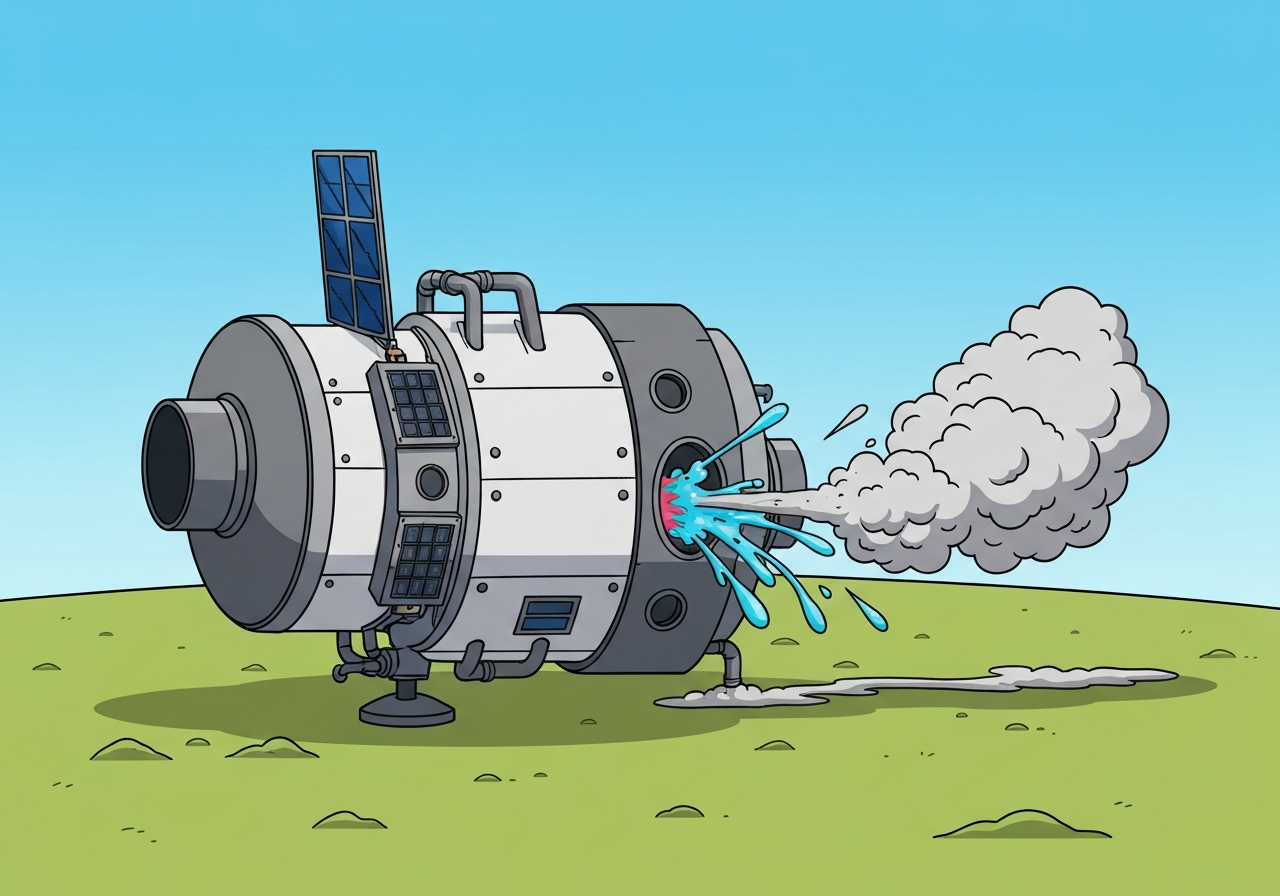
— NASA has postponed the planned Feb. 8, 2026 launch of Artemis II after a liquid hydrogen leak surfaced during a Jan. 31 wet dress rehearsal at Kennedy Space Center. Engineers halted and restarted propellant loading multiple times as the leak recurred during countdown practice, forcing an early end to the rehearsal and pushing the earliest target window into March. The four-person crew — Reid Wiseman, Victor Glover, Christina Koch and Jeremy Hansen — have left quarantine until a new launch date is set. NASA says safety will dictate the schedule as teams trace and fix the leak.
Key Takeaways
- The wet dress rehearsal began on , and repeated liquid hydrogen leaks stopped propellant flow and ended the rehearsal early.
- The original crewed launch date of has been abandoned; NASA is now targeting March as the earliest possible launch window.
- Artemis II will carry four astronauts on a roughly 10-day circumlunar mission following the uncrewed Artemis I flight in late 2022.
- Engineers also reported additional rehearsal anomalies: degraded audio links and pressurization issues with a crew module hatch.
- Artemis I experienced similar hydrogen leakage that delayed its 2022 launch from spring to November, highlighting recurring technical risk in the SLS/Orion stack.
- The crew members have exited the two-week prelaunch quarantine and will return only when a firm launch date is set.
Background
The Artemis program aims to return humans to lunar orbit and, eventually, the surface. Artemis I, an uncrewed SLS/Orion test flight, completed a three-week mission around the Moon and back in late 2022; lessons from that flight guided upgrades and inspections ahead of Artemis II. Liquid hydrogen fueling is inherently challenging because of the propellant’s extreme cold (near 20 K) and its propensity to leak through small fittings and seals. The Space Launch System (SLS) has had limited flight cadence: more than three years passed between SLS launches, compressing opportunities to rehearse integrated operations.
Multiple stakeholders are involved: NASA mission managers, prime contractors responsible for the core stage and the mobile launch infrastructure, and the astronaut office tasked with crew readiness. For NASA, Artemis II is a critical stepping stone toward Artemis III, the campaign planned to return humans to the lunar surface in 2028, and Artemis IV, which is slated to begin lunar orbital infrastructure construction. Delays in Artemis II therefore have programmatic ripple effects for schedule, budgets and downstream mission readiness.
Main Event
During the Jan. 31 wet dress rehearsal — a full-propellant loading and countdown simulation — technicians encountered a leak in the liquid hydrogen feedline used to fill the core stage. Teams stopped the fuel flow, worked through leak isolation and resumed operations after several hours, but leakage recurred later during countdown practice. Because the issue could not be fully mitigated in real time, controllers aborted the rehearsal early for safety reasons.
Ground teams also logged other problems that complicated the run: intermittent loss of audio communications between the pad and control rooms and anomalies relating to pressurization of a crew module hatch. Each issue required troubleshooting protocols and checks that extended the rehearsal timeline. With multiple unresolved items, mission leadership elected to lift the opening of the February launch window.
NASA posted an update on its official social channel on , saying the agency is “moving off the February launch window and targeting March for the earliest possible launch of Artemis II” and emphasizing safety as the primary criterion for proceeding. The four astronauts exited their two-week quarantine and are standing down until a new launch date is established.
Analysis & Implications
Recurrence of a liquid hydrogen leak on Artemis II echoes problems seen on Artemis I and underlines a core engineering challenge: cryogenic propellant management at large scale. Hydrogen’s low molecular weight and small atomic size make it likely to leak through seals that otherwise perform well at ambient temperatures. Repeated leak detection prolongs troubleshooting, parts replacement and verification, stretching schedule margins and driving up costs.
Programmatically, a slip from February into March compresses the schedule ahead of other Artemis milestones. If further problems arise, launch could shift later in 2026, affecting manifested payloads and international partners’ timelines. Suppliers and launch base teams must balance speed with the exhaustive verification necessary for crewed missions; NASA’s stated priority on astronaut and public safety will favor caution even at the expense of on-time objectives.
There are economic and political stakes as well. High-profile delays can increase congressional scrutiny of budgets and contractor performance, and they may influence commercial and international partners’ planning. Conversely, a transparent, methodical fix that yields a successful crewed circumlunar flight could reinforce confidence in NASA’s risk management and engineering rigor despite setbacks.
Comparison & Data
| Item | Artemis I | Artemis II (so far) |
|---|---|---|
| Initial planned launch window | Spring 2022 | Feb. 8, 2026 |
| Actual/target launch | Nov. 2022 (actual) | Targeting March 2026 (earliest) |
| Primary anomaly | Liquid hydrogen leak | Liquid hydrogen leak; audio and hatch pressurization issues |
The table highlights that both Artemis I and Artemis II have confronted liquid hydrogen sealing challenges and that schedule slips are a recurring program risk. Addressing root causes — including hardware interfaces, valves and ground support equipment — will be essential to reduce re-test cycles and secure a reliable launch cadence for the Artemis series.
Reactions & Quotes
Mission managers framed the decision to delay as precautionary, noting the primacy of crew safety and system readiness.
“We are moving off the February launch window and targeting March for the earliest possible launch of Artemis II,” NASA said in its public post on Feb. 3, 2026.
NASA (official social update)
Industry observers noted that hydrogen leaks are not uncommon in cryogenic operations, but repeated occurrences across consecutive missions raise questions about interfaces that must be corrected.
“Hydrogen leak detection and mitigation are routine engineering tasks, but recurring leaks require deeper analysis of seals, joints and thermal behavior under launch conditions,” an aerospace systems engineer commented.
Independent aerospace systems expert (anonymized)
Members of the public and space enthusiasts expressed disappointment but also support for a cautious approach while teams work the technical issues.
“Disappointing to wait, but better to fix it now than risk the crew or mission,” said a visitor watching operations near Kennedy Space Center.
On-site observer
Unconfirmed
- Whether the leak stems from a specific valve or a broader feedline interface remains under investigation and has not been formally confirmed by NASA.
- No public timeline has been released for completion of the engineering root-cause analysis; any projection that Artemis II will definitely fly in March is tentative until NASA announces a firm launch date.
Bottom Line
The Jan. 31 wet dress rehearsal revealed a recurring vulnerability in cryogenic propellant management for Artemis II, forcing NASA to forgo the February launch window and aim for March at the earliest. While hydrogen leaks are a known technical challenge, their repetition across missions increases the likelihood of deeper inspections, parts swaps and extended tests before controllers clear the vehicle for crewed flight.
NASA’s emphasis on safety and methodical verification means that schedule pressure will likely yield to the need for comprehensive fixes. Observers should watch forthcoming NASA updates for a confirmed launch date, results of the leak investigation and any changes to downstream Artemis mission timing.
Sources
- BGR — news article summarizing rehearsal events (media)
- NASA Artemis II Mission Page — official mission information and program context (official agency)
- NASA (official social update) — agency statement posted on social platform (official)