
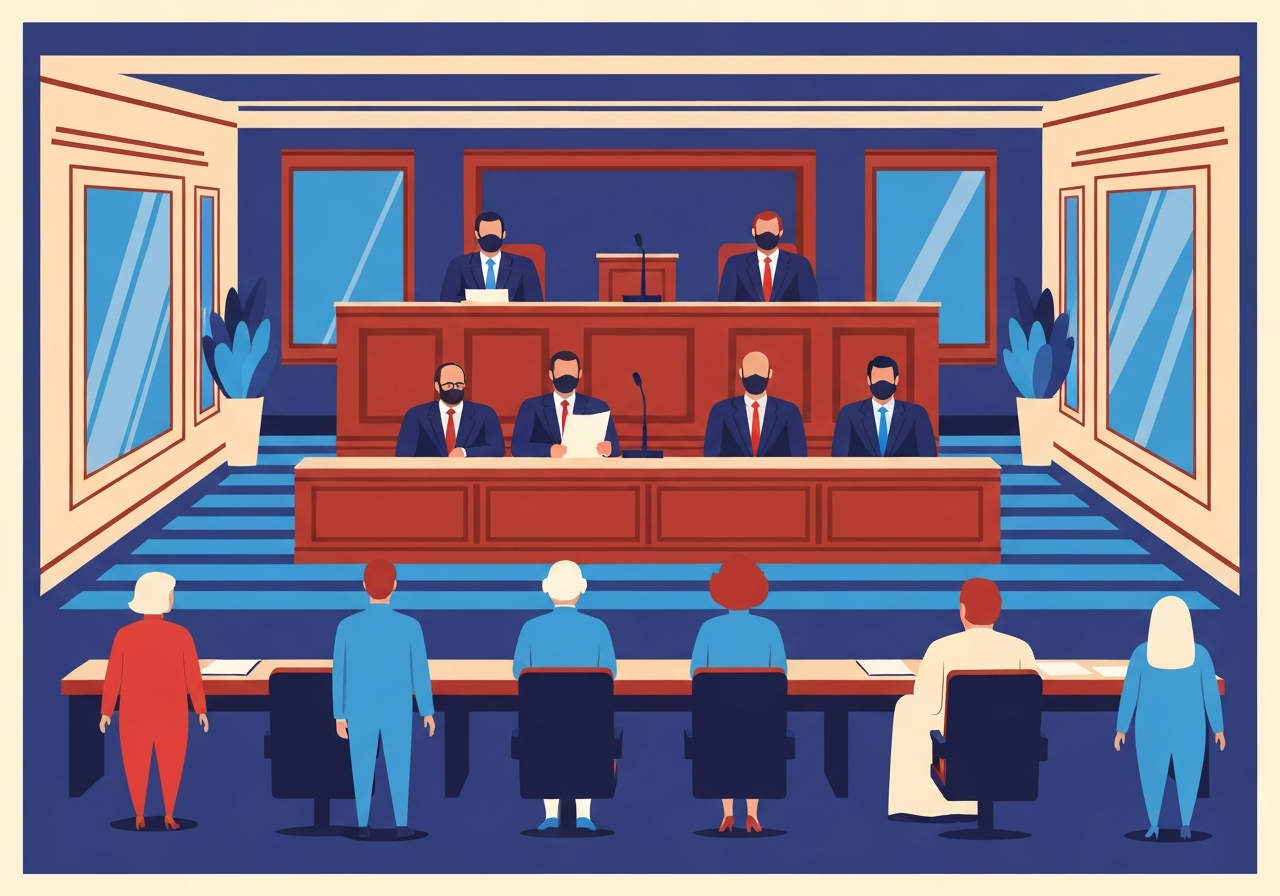
On Feb. 10, 2026, a federal grand jury in Washington declined to indict six Democratic members of Congress who last year posted a video urging active-duty service members and intelligence personnel to refuse unlawful orders. Prosecutors from the U.S. Attorney’s Office in Washington — led by Jeanine Pirro — had sought the indictment after the video drew sharp criticism from President Trump. The grand jurors’ refusal was a rare, public rebuke of a prosecutorial push and highlighted tensions over alleged politicization inside parts of the Justice Department.
Key Takeaways
- A grand jury in Federal District Court in Washington on Feb. 10, 2026 declined to return charges against six Democratic lawmakers who appeared in a fall 2025 video about refusing illegal orders.
- The U.S. Attorney’s Office for the District of Columbia, under Jeanine Pirro, authorized prosecutors to present the matter to a grand jury but did not secure an indictment.
- Among those involved in the video were Senator Mark Kelly (Arizona) and Senator Elissa Slotkin (Michigan); all six have backgrounds in the military or U.S. intelligence.
- The video reportedly prompted strong reactions from President Trump, who had criticized the lawmakers for advising service members to question orders.
- The decision raises questions about career prosecutors’ independence and whether political considerations shaped charging decisions in this and related cases.
Background
The dispute traces to a video posted in the fall of 2025 in which several Democratic lawmakers — many with prior military or intelligence service — reminded active-duty service members and intelligence personnel of the legal and ethical duty to refuse unlawful commands. Prosecutors opened a review after political leaders and the White House condemned the message, framing it as an effort to undermine military discipline. The U.S. Attorney’s Office in Washington, whose leadership includes appointees aligned with President Trump, authorized a grand jury presentation seeking indictments.
Grand juries traditionally function as a prosecutor-led screening mechanism; historically, jurors have tended to follow prosecutors’ recommendations. That dynamic has shifted in several high-profile matters since 2024, with reports of grand juries declining to indict in cases where jurors expressed doubts about the sufficiency of evidence or prosecutorial motives. Legal scholars point to this episode as part of a broader debate over the Justice Department’s neutrality after a series of politically charged investigations and directives from the presidential level.
Main Event
Federal prosecutors presented the case to a grand jury in the U.S. District Court for the District of Columbia, setting out allegations that the lawmakers’ public statements crossed a legal line. The special presentation focused on whether the video constituted a criminal attempt to induce service members to disobey lawful orders — an element prosecutors would need to prove to obtain indictments. Grand jurors ultimately voted not to return any charges, meaning prosecutors failed to secure the formal secrecy-protected indictment that would have led to public criminal charges.
The outcome was reported as an unusual pushback against prosecutors authorized by the U.S. Attorney’s Office. According to people familiar with the proceeding, jurors expressed skepticism that the lawmakers’ public statements met the criminal standard required to charge a federal offense. The grand jury’s decision does not bar prosecutors from reopening the matter with new evidence, but it does represent a formal setback to the charging effort.
The six lawmakers have defended the video as an exercise of political speech and a reiteration of long-standing legal and ethical obligations. White House officials and allies of the prosecutors argued that the public message risked encouraging insubordination, framing the presentation to the grand jury as a lawful prosecutorial response. The clash underscores a rare moment where ordinary citizens on a grand jury pushed back against a high-profile prosecutorial initiative.
Analysis & Implications
Legally, the grand jury’s refusal signals that jurors may be unwilling to convert contentious political expression into criminal liability absent clear evidence of intent and actionable conduct. Criminal statutes addressing the inducement of military disobedience carry high mens rea thresholds; converting political speech into a prosecutable offense would require tight evidentiary showing that goes beyond abstract encouragement. Grand jurors’ reluctance in this case suggests they viewed the video as political speech rather than criminal solicitation.
Politically, the episode deepens concerns among civil liberties advocates about the Justice Department’s independence. The decision by a U.S. Attorney’s Office led by a politically connected appointee to seek indictments against sitting lawmakers invited scrutiny; the grand jury’s rebuff may be read as a check by lay citizens against perceived overreach. That dynamic could affect future charging decisions, as prosecutors weigh not only legal sufficiency but potential grand jury receptivity and public backlash.
For lawmakers and the military, the ruling temporarily clarifies boundaries around public counsel to service members: reaffirmation of existing legal framings of illegal orders remains a legitimate public policy position. Yet the incident may chill some public statements if prosecutors demonstrate willingness to pursue high-profile cases in politically sensitive contexts. Practically, prosecutors retain other tools — administrative sanctions, ethics investigations, or civil suits — but criminal charging is a particularly consequential step that grand juries may now scrutinize more closely.
Comparison & Data
| Period | Grand Jury Rebukes (Qualitative) |
|---|---|
| Pre-2024 | Rare; grand juries generally followed prosecutorial recommendations |
| 2024–Feb 2026 | Increasingly visible instances where grand jurors declined to indict in high-profile politically charged matters |
This qualitative comparison emphasizes a noted shift in grand jury behavior in recent years, according to legal commentators and court observers. The change does not reflect precise nationwide counts in this article, but rather a pattern reported in multiple cases where jurors expressed doubts about politicized prosecutions. That trend matters because grand jury decisions are typically confidential; visible rebukes in high-profile matters therefore carry outsized symbolic weight.
Reactions & Quotes
“Paraphrase: I welcome the grand jury’s decision and view it as an affirmation that public debate and counsel to service members are not crimes,”
Sen. Mark Kelly (paraphrase)
“Paraphrase: Prosecutors acted within their authority to present the case; grand juries are independent and their decision is part of the process,”
U.S. Attorney’s Office, District of Columbia (paraphrase)
“Paraphrase: The outcome raises important questions about the use of criminal law in political conflicts and the need to protect free expression,”
Constitutional law scholar (paraphrase)
Unconfirmed
- Whether senior White House officials directly pressured the U.S. Attorney’s Office in this specific matter remains unverified.
- It is unclear if prosecutors will reopen the investigation with new evidence or present the matter to a separate grand jury.
- Any internal deliberations at the U.S. Attorney’s Office regarding political considerations in the charging decision have not been publicly disclosed.
Bottom Line
The grand jury’s refusal to indict six Democratic lawmakers over a video about refusing illegal orders is a noteworthy check on a prosecutorial initiative tied to a politically sensitive message. By declining to return charges, ordinary citizens on a grand jury signaled hesitation about treating political speech as criminal conduct without clear, corroborating evidence of intent to induce unlawful acts.
Beyond this single case, the episode feeds a larger debate about the boundaries between political expression, military discipline, and prosecutorial discretion. Observers should watch whether other grand juries follow this pattern and whether the Justice Department adjusts charging practices in response — developments that will have implications for free expression, executive accountability, and the perceived independence of federal law enforcement.
Sources
- The New York Times (news)