
Lead
Engineers at Google were instrumental in recovering surveillance footage tied to the disappearance of Nancy Guthrie, the mother of NBC “Today” host Savannah Guthrie, authorities disclosed on Feb. 10, 2026. Guthrie disappeared more than a week earlier in Arizona, and investigators initially reported that video could not be retrieved. After several days of technical work, Google personnel restored footage showing a masked, armed person outside the Guthrie residence on the day she went missing. The recovered material changed investigators’ immediate options and was released by the FBI hours after it obtained the files.
Key takeaways
- Google engineers, who maintain Nest services, recovered video data after investigators initially concluded footage was unavailable; the recovery took several days.
- Pima County Sheriff Chris Nanos had said no video was available because Guthrie did not hold a Nest subscription; investigators later obtained material from Google’s systems.
- Nest retains roughly three hours of event-based video for free; residual data in backend systems can remain recoverable after deletion.
- FBI Director Kash Patel stated investigators recovered footage from “residual data located in backend systems” and the bureau released images within hours of obtaining them.
- Investigators served a search warrant on Google for the Nest cameras at the Guthrie home the prior week, a routine step in criminal probes.
- Forensic experts noted cloud-based video pipelines involve many processing layers and servers — each a potential locus for recoverable residual data.
Background
Nancy Guthrie was reported missing in Arizona in early February 2026; the case drew national attention because her daughter, Savannah Guthrie, is a high-profile broadcast journalist. Local law enforcement initially indicated no usable video from the home’s Nest cameras, citing the lack of a paid recording subscription that typically archives longer clips in Google’s cloud. That public statement left both investigators and the public uncertain about whether any visual leads existed.
Cloud-based home camera systems like Nest separate live capture, short-term event clips and longer subscription-based archives across multiple backend services. Even when a user lacks an ongoing subscription, companies often preserve a short window of event clips — here described by authorities as roughly three hours — before automated deletion. Digital-forensic practitioners emphasize that deletion commands do not immediately overwrite storage media; instead they mark space as available, and residual fragments can persist until overwritten by new data.
Main event
According to people familiar with the investigation, investigators sought Google’s technical assistance after internal attempts to locate usable footage failed. Engineers at Google, which owns Nest, carried out multi-day recovery work to extract imagery and associated metadata from backend systems and cloud storage. The task involved identifying where the event-based recordings lived in complex processing pipelines and determining which storage nodes still retained unpurged fragments.
Pima County Sheriff Chris Nanos had earlier told the public there was “no video available” because Guthrie “had no subscription” to Nest’s extended cloud service. That position shifted after Google located residual data. FBI leadership said the bureau released the recovered images within hours of receiving them, indicating investigators moved quickly from retrieval to dissemination for investigative and public-safety reasons.
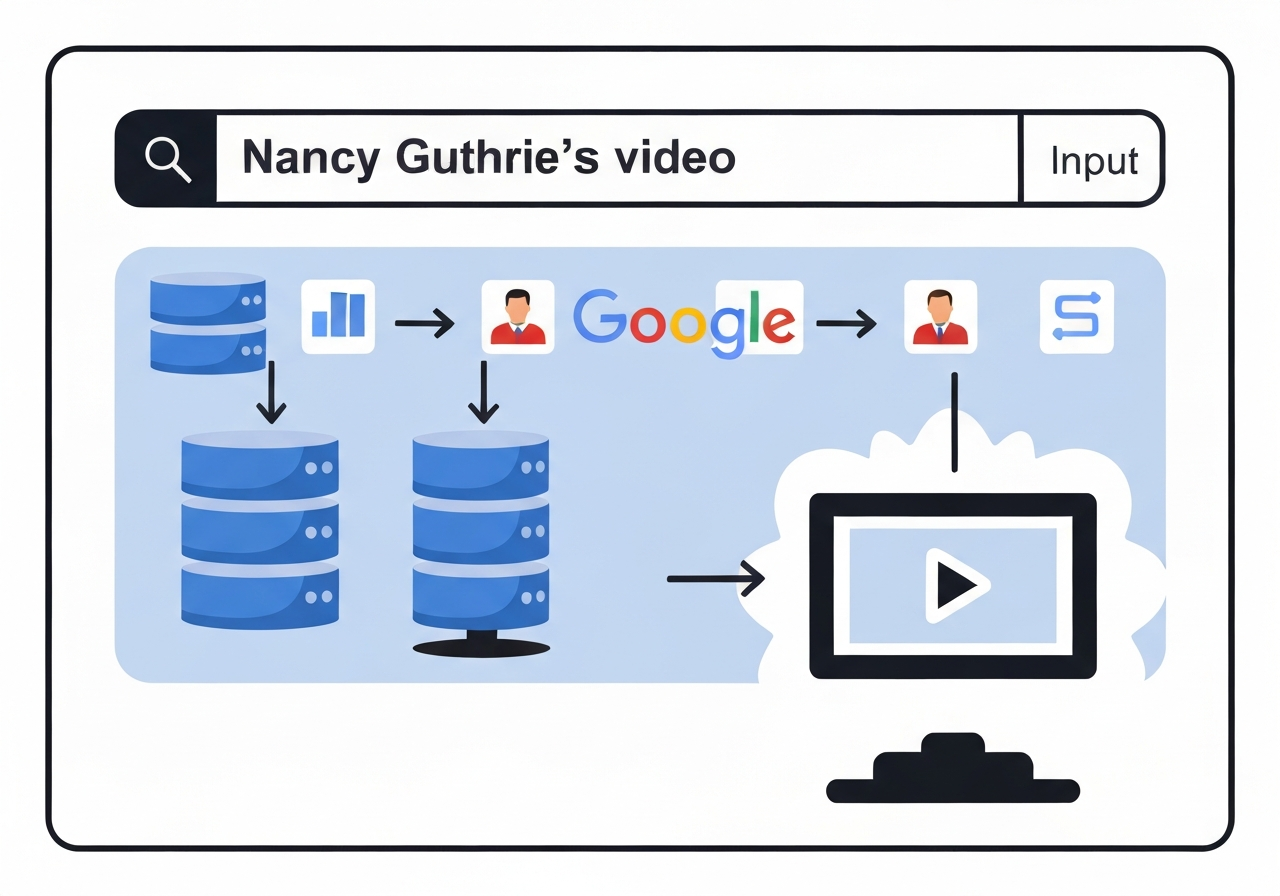
Cybersecurity and forensic experts described the operation as technically demanding because modern cloud video systems route and reformat data through many intermediary components. Adam Malone of Kroll explained that footage can pass through modules that compress, transcode or re-render images, and each stage may leave separate file traces. That architecture can increase the number of places where residual data survives, improving the odds that skilled engineers can find and restore useful material.
Analysis & implications
The episode highlights how private-sector technical capabilities have become integral to contemporary criminal investigations. Law enforcement increasingly depends on cloud providers for data that can be pivotal in a case—both for establishing timelines and identifying persons of interest. When companies maintain deep operational access to backend systems, their engineers can sometimes retrieve deleted or unindexed data that local investigators cannot access alone.
However, the case also underscores policy and transparency questions. Public statements from local authorities and the sequencing of disclosures created confusion about what footage existed and when it became available to investigators. Clearer communication about steps taken — such as search warrants, vendor assistance and the technical limits of recovery — would help manage public expectations and preserve trust in investigative processes.
For privacy and legal reasons, companies must balance rapid cooperation with due-process safeguards. Providers typically require lawful process (warrants or subpoenas) before producing substantive user data, and they must also safeguard customer privacy. In high-profile incidents, pressure for rapid disclosure can strain those procedures and raise questions about how and when private-sector teams intervene in active investigations.
Comparison & data
| Item | Typical status in this case |
|---|---|
| Nest event-based free retention | ~3 hours of clips held before deletion (company behavior cited by investigators) |
| Subscription retention | Longer, subscription-dependent archives (varies by plan) |
| Residual data recoverability | Possible until storage overwritten; depends on processing queues and storage architecture |
The table summarizes the retention context discussed by investigators and experts: short free retention windows, more extended storage for paid plans, and the forensic principle that deleted files can persist. In distributed cloud systems, copies and intermediary processing buffers can create additional recovery opportunities, especially if a file happened to remain queued or unpurged in a subsystem.
Reactions & quotes
The FBI framed the recovery as the product of close public–private collaboration and emphasized the investigative significance of the material.
“Working closely with our private sector partners, we recovered some video from residual data located in backend systems,”
FBI Director Kash Patel (social post)
Forensic practitioners explained why deleted footage can still be retrieved if underlying storage has not yet been overwritten.
“A delete function is just telling the file system to ignore that data and feel free to use that space on the hard drive for new data,”
Nick Barreiro, founder, Principle Forensics
Cybersecurity professionals highlighted the complexity of cloud application stacks and how that complexity creates many potential points where data can linger.
“There are layers and layers of components — each can process or hold data briefly, and that increases chances some residual data remains,”
Adam Malone, Kroll (cyber crisis expert)
Unconfirmed
- Exact technical node(s) within Google’s backend where the residual data was recovered have not been publicly identified; Google/Nest did not provide a public technical breakdown at the time of reporting.
- The precise timeline of when individual backend components processed or purged the Guthrie footage remains unclear pending vendor or court disclosures.
Bottom line
The recovery of Nest footage in the Nancy Guthrie investigation demonstrates how cloud providers’ internal systems and engineering expertise can materially alter the course of a criminal probe. The case shows both the investigative value of vendor cooperation and the technical complexity of modern cloud services, which can leave recoverable traces even after apparent deletion.
Going forward, the incident may prompt calls for clearer protocols between law enforcement and technology providers, better public explanations when data availability changes during active investigations, and renewed attention to how retention policies and storage architectures influence both privacy and forensic outcomes. For the Guthrie family and investigators, the recovered images represent a substantive development in an active and sensitive inquiry.