
Lead
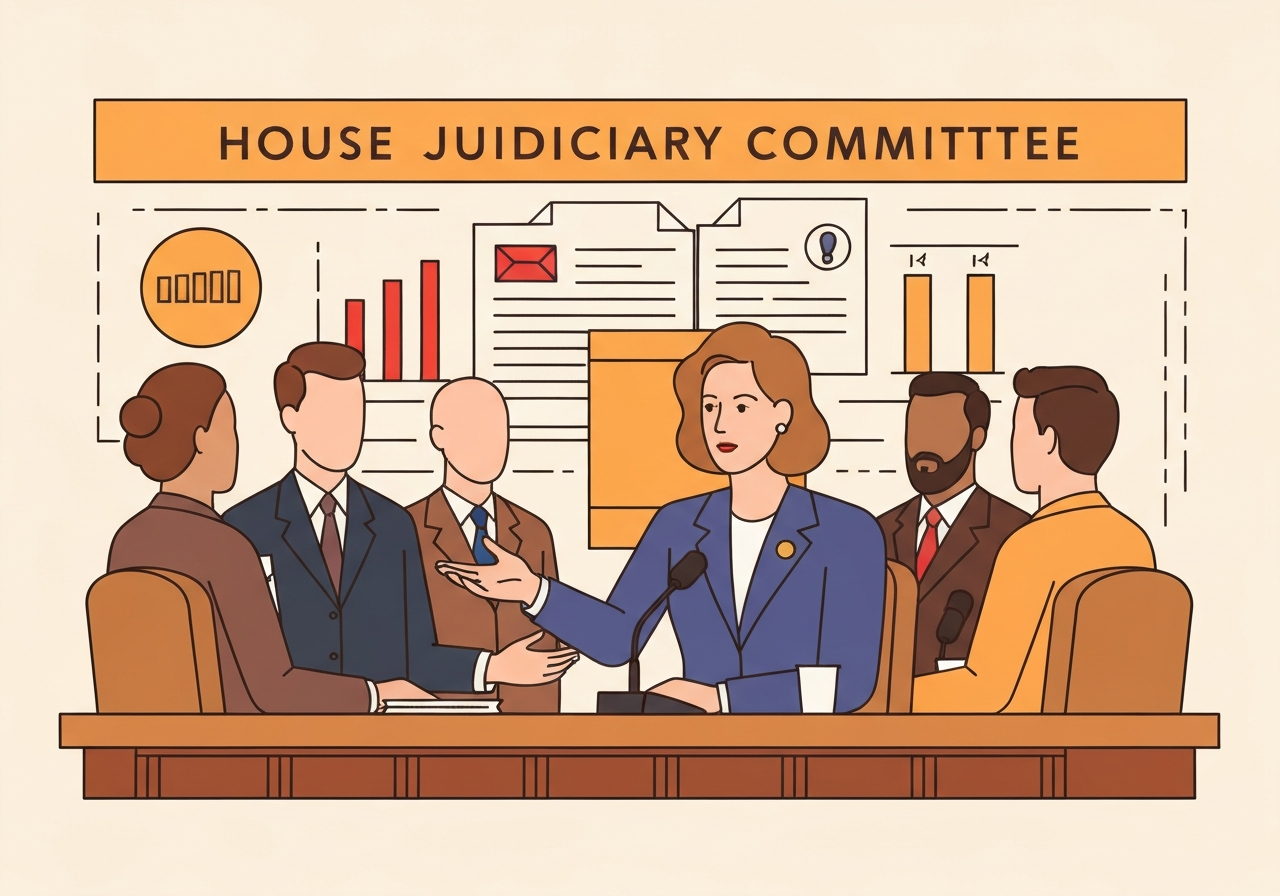
On Feb. 11, Attorney General Pam Bondi testified before the House Judiciary Committee in Washington, D.C., one year after taking charge of the Justice Department. Lawmakers pressed her on allegations that the department has targeted President Trump’s political opponents, its handling of the Jeffrey Epstein case files, and personnel changes that critics say undermine prosecutorial independence. Bondi defended the department’s record, highlighting law-enforcement priorities she credits as accomplishments while facing bipartisan scrutiny. The hearing crystallized deep disagreements over whether the Justice Department’s traditions of independence have been preserved.
Key Takeaways
- Pam Bondi testified before the House Judiciary Committee on Feb. 11, marking one year in office as Attorney General.
- Congressional members questioned the department’s treatment of investigations tied to President Trump’s opponents and its release of Jeffrey Epstein files, including missed statutory deadlines and heavy redactions.
- The tenure has included firing of some career prosecutors and FBI personnel involved in Capitol riot and Trump-related investigations, and the withdrawal or decline of cases involving some allies of the president.
- The public-corruption section and portions of the Civil Rights Division have seen significant departures; several U.S. attorney offices, including Minnesota’s, experienced resignations.
- Bondi and allies emphasize initiatives against cartels, violent crime, and immigration enforcement as major accomplishments during her first year.
- Biden-era DOJ officials dispute the politicization claims and cite recent prosecutions of prominent Democrats, including investigations related to Hunter Biden, as counterexamples.
- A federal judge has set aside indictments in at least two politically sensitive cases after finding the acting U.S. attorney was unlawfully appointed; the Justice Department is appealing.
Background
The Justice Department has long operated with a layer of institutional independence intended to separate politically charged decision-making from White House influence, especially in investigations and prosecutions. That tradition rests on norms—career prosecutors leading criminal decisions, standardized appointment processes and a professional Civil Rights Division charged with protecting constitutional guarantees. Changes to staffing and case priorities have raised alarms among former DOJ officials and legal observers concerned about preserving those norms.
Pam Bondi, a former Florida attorney general, was confirmed as Attorney General a year ago and has since overseen a series of personnel moves and prosecutorial decisions that supporters say reflect a refocusing of priorities. Critics counter that some of those changes amount to political retribution or selective enforcement aligned with the president’s agenda. Tensions increased when President Trump publicly urged aggressive action against high-profile critics, and subsequent prosecutorial appointments and indictments drew scrutiny for how they were authorized.
Main Event
During the Feb. 11 hearing, committee members across the aisle pressed Bondi on concrete examples: the removal of career prosecutors tied to January 6 and other Trump-era investigations; decisions to pursue or drop cases involving figures aligned with the administration; and the department’s slow and heavily redacted disclosure of Epstein-related materials. Bondi defended her record, saying changes were necessary to correct what she characterized as prior politicization and to prioritize threats like drug trafficking and violent crime.
Republican supporters of Bondi framed the personnel moves and case choices as restoring balance and accountability, while Democratic members described a pattern that, in their view, erodes impartial law enforcement. Lawmakers also focused on the logistics of releasing court and investigative records related to Jeffrey Epstein: deadlines set by statute were missed and many documents contained large redactions, prompting calls for greater transparency and expedited production.
The hearing revisited episodes in which an acting U.S. attorney hand-picked by the White House obtained indictments against former FBI Director James Comey and New York Attorney General Letitia James. Career prosecutors reportedly had reservations about the strength of the cases; a federal judge later tossed those indictments after concluding the acting U.S. attorney was unlawfully appointed. The department has appealed that ruling. Bondi told lawmakers she supported the department’s choices and the appeal process.
Analysis & Implications
The events of the past year represent an inflection point for the Justice Department’s internal culture and the public’s perception of its independence. If career prosecutors are sidelined or removed when their work conflicts with political priorities, institutional expertise and procedural safeguards risk erosion. That can change how investigations are opened, how charges are evaluated, and how plea and charging decisions are made—shifts that carry long-term consequences for rule-of-law norms.
Politically sensitive prosecutions brought under question and the apparent narrowing of some divisions—such as public corruption and civil-rights enforcement—could alter enforcement patterns. Reduced capacity in these areas may lead to fewer high-profile corruption cases and slower civil-rights litigation initiated by the department, affecting communities relying on federal enforcement to protect constitutional and statutory rights.
Domestically, erosion of perceived impartiality may fuel partisan debates over federal law enforcement and prompt legislative responses, including greater oversight or changes to appointment and removal protections for prosecutors. Internationally, allies and judicial partners often look to the U.S. DOJ as a benchmark of prosecutorial independence; sustained perceptions of politicization could weaken cooperation or the moral authority of U.S. legal positions in multilateral forums.
Comparison & Data
| Area | Reported Change under Bondi (qualitative) |
|---|---|
| Public Corruption Section | Described by critics as substantially reduced in capacity |
| Civil Rights Division | Significant departures of career attorneys reported |
| U.S. Attorney Offices | Resignations reported in multiple districts, including Minnesota |
The table presents qualitative changes reported since Bondi took office; public filings and official staffing rosters provide the definitive counts. Observers note that organizational shifts can be measured by vacancy rates, personnel announcements and case filings over time—metrics to watch in coming quarters to assess whether the qualitative changes translate into quantifiable declines in enforcement.
Reactions & Quotes
Supporters of Bondi emphasized redirected priorities and recent law-enforcement successes, while critics warned the department’s independence is at stake. Below are representative public statements and reactions with context.
“Tremendous progress”
Pam Bondi, Attorney General
Bondi used the phrase to describe what she says are accomplishments in refocusing the department on violent crime, cartels and immigration enforcement, framing personnel and policy changes as corrective rather than political.
“JUSTICE MUST BE SERVED, NOW!!!”
President Donald Trump (social post)
The president publicly urged aggressive action against perceived adversaries; lawmakers cited that message when questioning whether prosecutorial decisions reflected political pressure.
“Unlawfully appointed”
Federal judge (court ruling)
A federal judge found that an acting U.S. attorney involved in two high-profile indictments had not been lawfully appointed, a finding that led to the indictments being set aside and which the DOJ is currently appealing.
Unconfirmed
- Reports that the DOJ opened formal investigations into figures such as Federal Reserve Chair Jerome Powell, Sen. Adam Schiff, James Clapper and John Brennan have been described in media accounts; the precise scope and current status of any such inquiries have not been fully corroborated in public records.
- Assertions that every personnel departure was politically motivated remain contested; in many cases full personnel files and internal deliberations have not been released for independent review.
Bottom Line
Bondi’s appearance before the House Judiciary Committee underscored a central debate: whether the Justice Department is being restored to nonpartisan law-enforcement priorities or reshaped to reflect political aims. The hearing surfaced concrete examples—personnel changes, high-profile indictments tossed by a judge, and delayed Epstein-file disclosures—that will animate oversight efforts and litigation for months to come.
For observers, the key indicators to watch are case-filing patterns, staffing and vacancy data in critical DOJ divisions, the outcomes of appeals such as the unlawful-appointment ruling, and whether statutory deadlines for document release are met going forward. Those developments will determine whether this period represents a temporary shift in emphasis or a lasting institutional realignment.