
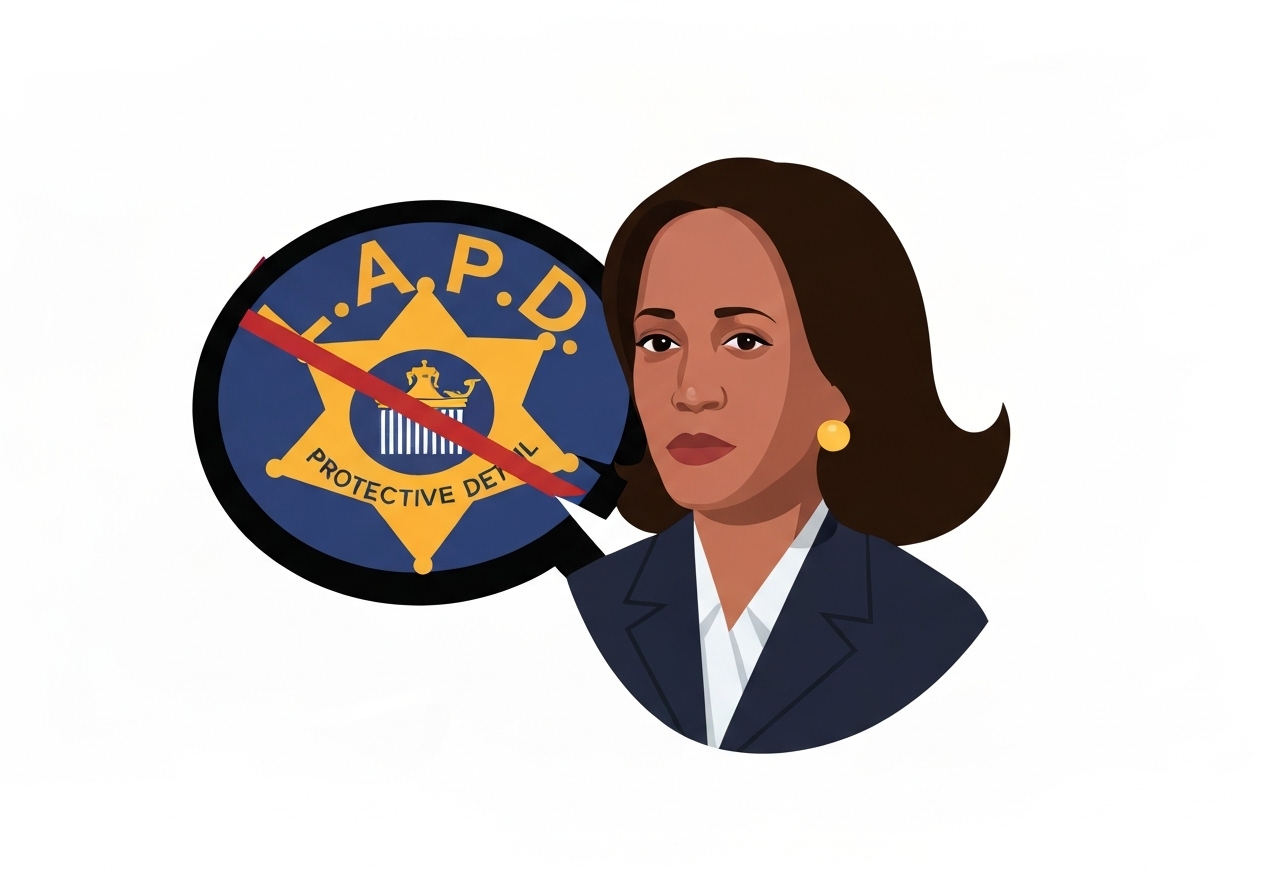
On Sept. 6, 2025 in Los Angeles, the L.A.P.D. halted a temporary protective detail for former Vice President Kamala Harris after internal objections from a specialized unit and criticism from the police union.
Key Takeaways
- The Los Angeles Police Department withdrew officers assigned to guard Kamala Harris on Saturday morning, Sept. 6, 2025.
- The assignment was meant to back up the California Highway Patrol after the Secret Service protection was terminated earlier in the week.
- Members of the L.A.P.D.’s Metropolitan Division and the Los Angeles Police Protective League criticized the use of Metro officers for the protective mission.
- Union leaders called the deployment a misuse of resources and later praised the decision to return officers to regular duties.
- Mayor Karen Bass said the support was always intended as temporary and thanked L.A.P.D. for prioritizing public safety.
- The move follows President Trump’s decision to end Ms. Harris’s Secret Service detail, a policy change he has applied to other former officials.
Verified Facts
The L.A.P.D. removed the officers from the protective assignment on Saturday morning, Sept. 6, 2025, according to law-enforcement sources familiar with the deployment. The detail had been provided to assist the California Highway Patrol after the Secret Service protection for Ms. Harris was terminated earlier in the week.
The U.S. Secret Service normally provides six months of protection to former vice presidents. The Biden administration had extended Ms. Harris’s coverage by an additional year through executive order, but the termination ordered by President Trump ended that arrangement beginning Monday of the same week.
Officers assigned to the task were drawn from the Metropolitan Division, a specialized unit focused on crime suppression and crowd management. Colleagues in that unit reportedly objected to the reassignment, citing staffing strains and the diversion of Metro personnel from patrol and suppression duties in areas such as the San Fernando Valley.
The Los Angeles Police Protective League, which represents rank-and-file L.A.P.D. officers, publicly condemned the assignment and then praised the department’s decision to pull the detail, saying Metro officers were returned to street duties.
Context & Impact
President Trump has rescinded Secret Service protection for several individuals since taking office, including some former administration officials and relatives of former officials. The move to end Ms. Harris’s detail is part of that pattern and prompted local agencies to consider temporary measures to ensure her safety.
Deploying local police for personal protection can generate internal friction when it requires reassigning specialized officers away from community policing or crime suppression. In Los Angeles, the decision highlighted tensions between meeting a temporary security need and preserving limited local enforcement resources.
For Ms. Harris, who faced elevated threats during her time in office and through the 2024 campaign, the withdrawal of federal protection raised immediate safety concerns that state and local authorities initially worked to mitigate.
Official Statements
“The plan was always to provide temporary support, and I thank L.A.P.D. for protecting former V.P. Harris and always prioritizing the safety of all Angelenos.”
Mayor Karen Bass
“We are happy to report that the Metro officers assigned to protect the multimillionaire failed presidential candidate are back on the street fighting crime.”
Los Angeles Police Protective League board statement
Unconfirmed
- Precise operational orders and the length of time officers had been assigned to the protective detail beyond the reported start and end dates have not been publicly released.
- Any internal disciplinary or administrative actions tied to the dispute over the assignment have not been confirmed.
Bottom Line
The L.A.P.D.’s withdrawal of its temporary protective detail for Kamala Harris resolved an immediate personnel dispute but underscores the limits of local agencies stepping in when federal protection is removed. The incident may prompt review of protocols for coordinating security among federal, state, and local partners when high-profile protection is altered.