
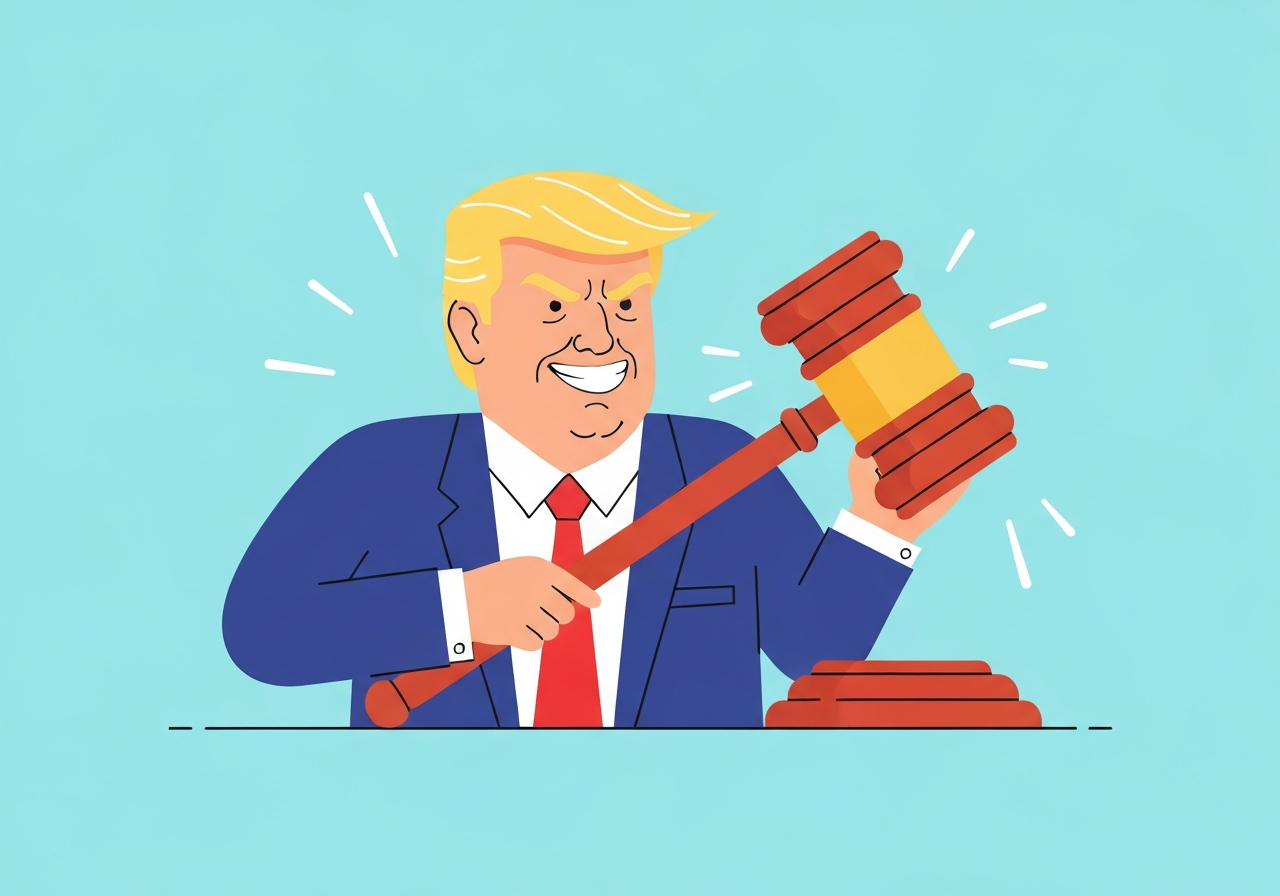
Lead: In Washington this week, the Trump administration announced plans to rescind the Environmental Protection Agency’s 2009 “endangerment finding” that concluded greenhouse gases threaten public health and welfare, a change first reported by The Wall Street Journal. The step is intended to limit the EPA’s authority under the Clean Air Act and to ease regulatory constraints on large industrial emitters. Legal scholars and public-health experts warn the action would undercut longstanding pollution controls and could raise health care and economic costs for ordinary Americans. The move also sets up a clash with prior judicial precedent, notably the Supreme Court’s 2007 decision in Massachusetts v. EPA.
Key Takeaways
- The administration has announced plans to roll back the EPA’s 2009 endangerment finding that treated greenhouse gases as threats to public health and welfare, according to reporting by The Wall Street Journal.
- The 2007 Supreme Court ruling in Massachusetts v. EPA found greenhouse gases to be “unambiguous” pollutants, a legal foundation for EPA regulation under the Clean Air Act.
- Air pollution from fossil fuels is estimated to drive more than $820 billion in U.S. health-care costs each year, by recent aggregated analyses reported in public sources.
- EPA regulation, particularly under the Clean Air Act from 1990–2020, has been credited with preventing over 230,000 early deaths and contributing more than $2 trillion in economic productivity gains.
- Federal analyses and past regulatory reviews have reported large benefit-to-cost ratios for air regulations; one commonly cited figure is roughly $77 in health benefits for every $1 spent on certain Clean Air Act measures.
- Polling cited by nonpartisan Kaiser Family Foundation shows roughly half of U.S. adults say they struggle to afford health care, and about one-third report postponing medical care for cost reasons—trends that intersect with rising pollution-related health burdens.
- Politically, surveys suggest about 65% of voters connect the administration’s climate and air-pollution positions with everyday consumer-price pressures, making air-quality policy a growing voter concern ahead of the 2026 midterms.
Background
The EPA’s 2009 “endangerment finding” concluded that greenhouse gases met the Clean Air Act’s statutory definition of air pollutants and therefore allowed the agency to regulate emissions that threaten public health and welfare. That regulatory pathway traces back to the Supreme Court’s 2007 decision in Massachusetts v. EPA, which held that greenhouse gases could be regulated under the Clean Air Act and described them as pollutants that posed demonstrable risks. Over subsequent decades the Clean Air Act and EPA rulemaking led to tighter vehicle emissions standards and controls on industrial sources, producing measurable declines in many traditional pollutants such as sulfur dioxide, nitrogen oxides and particulate matter.
Economic and public-health research has attributed large benefits to these regulatory changes, including fewer hospitalizations, reduced work absenteeism and lower mortality rates. At the same time, major energy and manufacturing firms have lobbied against tighter rules for years, arguing for flexibility and lower compliance costs. The political debate over air regulations has long mapped onto partisan divides and campaign finance patterns: industries with heavy emissions have been significant donors to political candidates across both parties, but recent federal actions suggest a strategic focus by the current administration on easing constraints for high-emitting sectors.
Main Event
The administration’s announcement signals an intent to revoke or substantially narrow the 2009 endangerment finding, which would remove the statutory basis for many greenhouse-gas regulations under the Clean Air Act. Officials directed the Environmental Protection Agency to stop calculating the lives and dollars saved from pollution reductions, a change the administration says will alter the agency’s cost–benefit accounting of future rules. The action also complements steps already taken to relax vehicle-emissions standards and other regulatory limits, moves the administration argues will reduce regulatory burdens on businesses.
Critics contend that removing the endangerment finding will hamper the EPA’s ability to set nationwide standards for major polluters and will shift the burden of increased pollution onto working families and communities with fewer resources. Public-health advocates warn that weaker protections will increase exposure to pollutants linked to respiratory and cardiovascular illness, which in turn raises medical spending and reduces workforce productivity. The administration frames the rollback as regulatory reform and economic relief for industry, while opponents characterize it as a rollback of public-protection infrastructure built over decades.
Practically, rescinding the finding would prompt rulemaking procedures and invite litigation. Given the Supreme Court’s 2007 precedent and extensive scientific literature linking emissions to harm, any final administrative change is likely to be challenged in federal court. Meanwhile, state and local governments, advocacy groups and private firms may respond with their own regulatory or market measures to maintain emissions controls where federal action retreats.
Analysis & Implications
Health and economic impacts will not be evenly distributed. Communities downwind of major industrial emitters and low-income households—who already disproportionately bear pollution burdens—are likely to suffer the most. Increased concentrations of fine particulate matter and ozone correlate with higher rates of asthma, chronic obstructive pulmonary disease and heart disease, and those increases translate into higher emergency visits, medication needs and lost labor hours. For households already squeezed by higher insurance costs or reduced subsidies, the incremental medical spending could be consequential.
From an economic perspective, the rollback risks reversing gains from past pollution controls. Prior EPA analyses and independent studies estimate large net benefits from air regulations through avoided health costs and improved labor productivity. Weakening federal authority may shift mitigation efforts to states that choose to retain stricter standards, producing a patchwork of rules that raises compliance complexity for national industries and could leave citizens in some states less protected.
Legally, the administration’s move will test administrative-law boundaries and the durability of Massachusetts v. EPA as precedent. Courts evaluate whether agencies reasonably interpret statutory mandates and consider the weight of scientific evidence; reversing a long-standing finding tied to a large body of peer-reviewed science may face heightened judicial scrutiny. The outcome will affect not only domestic regulatory power but also U.S. credibility in international climate diplomacy, where federal policy signals matter to partners and markets.
Comparison & Data
| Metric | Reported Value | Source Context |
|---|---|---|
| Health-care costs from fossil-fuel air pollution | $820 billion | Recent aggregated analyses cited in public reporting |
| Prevented early deaths (1990–2020) | 230,000+ | Analyses of Clean Air Act impacts, EPA-era assessments |
| Economic productivity gains (1990–2020) | $2 trillion+ | Estimates tied to lower morbidity and mortality |
| Benefit per $1 spent (example figure) | $77 | Commonly cited ratio from historical regulatory reviews |
The table summarizes core figures commonly referenced in public reporting and agency analyses describing the scale of health and economic benefits linked to air-pollution controls. Those numbers illustrate why many public-health and economic experts treat the original endangerment finding as central to cost-effective regulation. Removing the finding does not erase the underlying exposure–disease relationships that produced past benefits; instead it alters the legal toolset available to federal regulators to prevent future harm.
Reactions & Quotes
Legal analysts point to the Supreme Court’s 2007 formulation as a key constraint on how far an administration can narrow greenhouse-gas regulation. The court’s language has been a touchstone in subsequent litigation and policymaking debates.
“Greenhouse gases fit well within the Clean Air Act’s definition of air pollutant; the harms are cognizable and the statute applies.”
Supreme Court, Massachusetts v. EPA (2007) — legal ruling
Public-health groups have emphasized the human costs tied to increased air pollution and the economic impacts on families who already struggle with medical bills. Their statements highlight worries that regulatory rollback will translate into measurable increases in illness and medical spending.
“Scaling back protections risks reversing decades of progress in preventing respiratory and cardiovascular disease.”
Public-health organizations (summary of statements)
Some business and industry representatives frame the administration’s actions as regulatory relief that lowers compliance costs and supports economic activity. State officials and many municipal leaders, by contrast, have warned they will consider state-level action if federal protections are reduced.
“Regulatory reform can reduce burdens on industry, but states may maintain their own standards if federal rules are weakened.”
State and industry statements (paraphrased)
Unconfirmed
- That the administration’s primary motive is to directly benefit specific individual donors or companies; while critics cite donor ties, the causal intent is not independently established in the public record.
- How courts will rule on any final rescission; litigation is likely but outcomes depend on administrative record strength and judicial interpretation.
Bottom Line
Rescinding the 2009 endangerment finding would be a consequential administrative step with immediate regulatory and longer-term public-health implications. The scientific relationships between greenhouse-gas and pollutant exposures and human health do not change with administrative rulings; what changes is the federal government’s toolkit for preventing harm. Expect swift legal challenges and a patchwork policy response from states, businesses and civil-society actors if the finding is formally reversed.
For readers and voters, the practical questions are local and immediate: whether their state will retain protections, how increased pollution could affect health-care costs and whether elected officials will make air quality a visible campaign issue before the 2026 midterms. Watch for federal rulemaking documents, court filings, and state policy moves in the weeks ahead as the principal next steps.
Sources
- The Hill — Opinion by Max Burns (media/opinion)
- The Wall Street Journal (news reporting cited for administration action)
- Massachusetts v. EPA (2007) — Supreme Court decision (legal)
- Kaiser Family Foundation (nonpartisan polling and health-affordability data)
- U.S. Environmental Protection Agency — Clean Air Act overview and historical analyses (agency)