
Lead
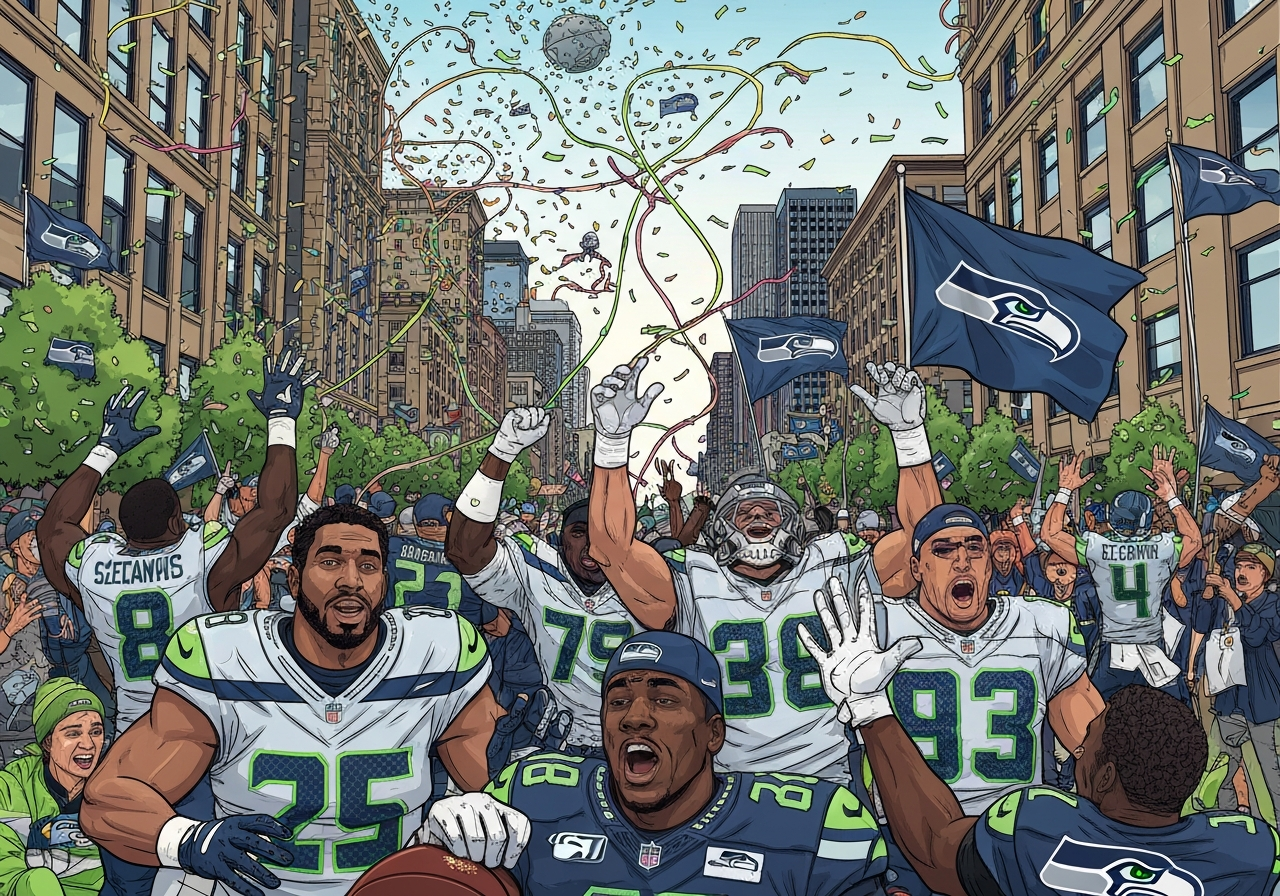
On Wednesday, Feb. 11, 2026, thousands of Seahawks fans packed downtown Seattle to celebrate the team’s Super Bowl LX victory over the New England Patriots (29-13). The parade began after a 10 a.m. trophy presentation at Lumen Field and moved north on Fourth Avenue; the convoy departed the stadium around 11:30 a.m. Players, coaches and staff rode military trucks, buses and floats, spraying champagne and tossing confetti as fans cheered. City services and police reported no major incidents, and cleanup crews began work on Fourth Avenue by midafternoon.
Key Takeaways
- Event timing: Trophy ceremony at Lumen Field began at 10:00 a.m.; parade vehicles left the stadium around 11:30 a.m. and followed Fourth Avenue to Cedar Street near the Space Needle.
- Crowd estimates: The team and some media noted 750,000–1 million attendees; independent crowd analysts warn these totals are uncertain and often overstated.
- Public-safety figures: Seattle Police reported no major incidents or arrests tied to the parade; Seattle Fire Department medics treated 28 people, two of whom were taken to hospital.
- On-field moments: Julian Love, Sam Darnold and coach Mike Macdonald prominently displayed the Lombardi Trophy; players interacted directly with fans, giving high-fives and selfies.
- Cleanup and impact: Crews began removing barricades and picking up confetti, cans and tape by 3:18 p.m.; officials noted a visible residue of blue, green and white debris along Fourth Avenue.
- Transit and logistics: Despite street closures (11:00 a.m.–1:30 p.m.) and rerouted buses, city transit and traffic cameras showed broadly manageable flows during most of the day.
- Local business effects: Downtown retailers reported heavy foot traffic and strong sales but also short-term disruption for storefront operations, particularly those near the route.
Background
The Seahawks clinched Super Bowl LX on Sunday, defeating the New England Patriots 29-13, returning the Lombardi Trophy to Seattle for the franchise’s second title since 2014. Victory parades have historically drawn massive crowds to the city; the 2014 celebration remains a reference point for both organizers and fans. City agencies, the Seahawks organization and law-enforcement partners planned the 2026 route, closures and security measures in advance to handle an expected large turnout.
Stakeholders included the Seahawks front office and players, the City of Seattle (public-safety and public-works divisions), King County transit agencies and downtown business owners. The presence of National Guard vehicles and dozens of law-enforcement units mirrored the logistics used in large civic events, while the team coordinated with broadcast partner KING 5 to stream the Lumen Field ceremony and reach viewers who could not attend in person.
Main Event
The morning program at Lumen Field opened with a raucous trophy presentation at 10:00 a.m.; the Lombardi Trophy was carried onto the field by Coach Mike Macdonald and shown to the crowd, and the final Super Bowl score (29-13) was displayed on the stadium ribbon board. Speeches ranged from playful to emotional: GM John Schneider paid tribute to team members and family losses this season, and players such as Leonard Williams and Ernest Jones IV offered bold declarations about next season.
After the on-field ceremonies concluded, about 20 military transport vehicles, double-decker and team buses assembled on the playing surface to ferry coaches, players and dignitaries to the parade route. The procession moved north on Fourth Avenue from South Washington Street, drawing fans up onto rooftops, lamp posts and overpasses to watch. Players including Sam Darnold and AJ Barner disembarked to high-five front-row spectators; Julian Love deliberately moved the trophy across the vehicle to show as many fans as possible.
The visual of champagne being sprayed from parade vehicles, jets of confetti and smoke effects from the team mascot’s van punctuated the route. Organizers repeatedly broadcast a request that fans not follow the buses into demobilization zones; at the parade’s end, a number of fans gathered on the roof of a 7-Eleven by Seattle Center as the final vehicles passed. Cleanup crews and Parks and Recreation staff began removing barricades and debris by midafternoon.
Analysis & Implications
Civic cohesion and morale: Large celebrations like this act as a focal point for city pride and collective relief; many attendees described the event as a brief chance for communal joy amid broader civic stressors. That social value is real, but it is separate from measurable economic or infrastructural impacts.
Economic effects: Local businesses along the route reported strong foot traffic and impulse sales (flowers, food, souvenirs), benefiting small retailers and hospitality outlets on a typically slow weekday. However, the short-term revenue bump must be weighed against staff disruptions, temporary closures and cleanup costs borne by public works departments.
Public-safety and logistics: The absence of reported major incidents and no parade-related bookings indicates planning and interagency coordination were effective. Still, treating 28 people and transporting two to hospitals underscores the predictable medical needs at mass gatherings; future events should maintain medical staging and crowd-movement contingencies.
Environmental and operational costs: Confetti (blue, green, white), broken barricades, discarded cans and tape create cleanup burdens on Parks and Public Works; officials will need to account for labor and disposal costs. Repeated large events may push city planners to consider stricter waste-reduction measures and more resilient street-fleet resources for cleanup.
Comparison & Data
| Item | 2014 Parade (reported) | 2026 Parade (reported) |
|---|---|---|
| Official/team attendance claim | 700,000–1,000,000 (widely cited) | 750,000–1,000,000 (team/coverage) |
| Independent crowd estimate (journalistic analysts) | ~250,000–450,000 (expert estimates) | Not yet independently verified; likely lower than 750k–1M |
| Medical treatments reported | — | 28 treated; 2 hospitalized |
Context: Parade attendance figures are inherently difficult to verify because they mix people at fixed venues (ticketed stadium seats) with loosely counted street crowds. Journalistic crowd-estimation methods (density x area) frequently produce lower totals than promotional claims; the 2014 example remains a cautionary comparison for interpreting 2026 numbers.
Reactions & Quotes
The mood among fans and officials was celebratory, with many short remarks capturing the afternoon’s tone.
“I want the entire city to see this trophy.”
Julian Love, Seahawks safety (to KING 5)
Context: Love carried the Lombardi Trophy across his vehicle so fans on both sides of the route could see, a moment that repeatedly drew loud cheers.
“It’s just been pretty happy.”
Jennifer Sullivan, Seattle Police spokesperson
Context: Sullivan summarized the department’s assessment that the parade passed without significant incident or arrests tied to the event.
“They’ll be cleaning this up for years.”
Parade attendee (on Fourth Avenue)
Context: The remark, made with a laugh as confetti drifted through downtown, underlined both the exuberance and the tangible cleanup the celebration left behind.
Unconfirmed
- The exact total attendance figure for the parade remains unverified; the 750,000–1,000,000 range is a team/media-circulated number and should be treated as preliminary.
- Reports of rooftop crowd sizes and people on private property were observed but not systematically counted or cleared by authorities.
Bottom Line
The Seahawks’ Feb. 11, 2026, victory parade was a high-energy civic celebration anchored by a trophy ceremony at Lumen Field and a downtown procession that involved military vehicles, buses and hundreds of thousands of fans. Event planning and interagency coordination produced a largely safe day: police reported no major incidents and the fire department handled a modest number of medical calls.
Longer-term implications center on reconciling the parade’s social and economic benefits with the logistical costs—cleanup, street restoration and public-safety staffing. For the team and its supporters, the parade crystallized the Super Bowl LX triumph; for city managers, it reinforced the value of detailed planning, transparent crowd accounting and post-event operational follow-through.