
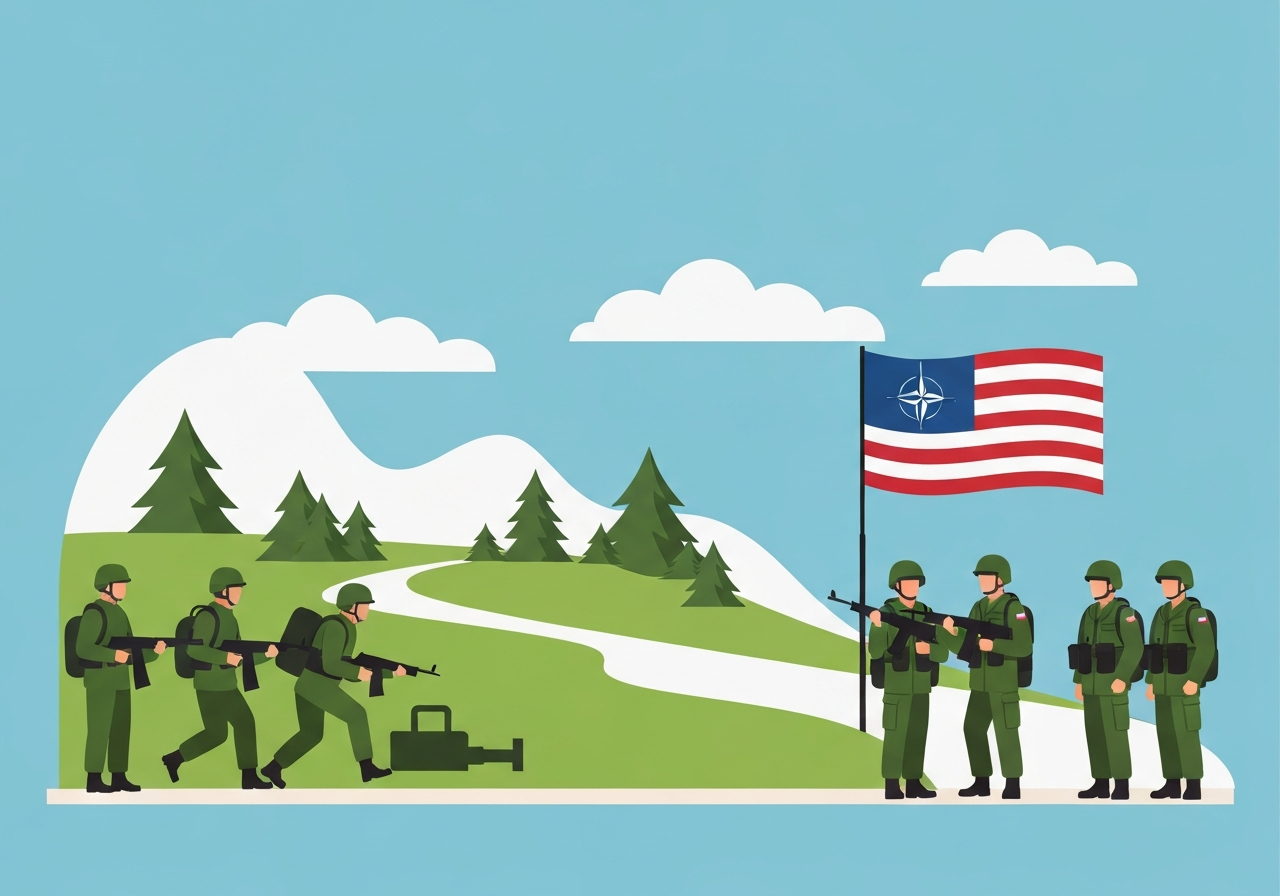
Lead: NATO has sent a small, highly visible presence to Greenland in early February as allied officials seek to reassure the United States after President Donald Trump’s public remarks about the Arctic. The move, reported Feb 10, is described by NATO and diplomats as largely symbolic and intended to signal continued allied commitment rather than a large new force posture. U.S. officials have indicated any withdrawal of American troops from Europe is likely to be limited, and the U.S. ambassador to NATO emphasized Washington’s intention to remain engaged. The deployment aims to balance political concerns in Washington with alliance cohesion in Brussels and capitals across Europe.
Key takeaways
- Deployment announced Feb 10: NATO initiated a small Arctic sentry deployment to Greenland reported on Feb 10 to address U.S. concerns.
- Symbolic, not large-scale: NATO and allied officials describe the operation as visibility-focused rather than a major force surge or permanent basing action.
- U.S. pullback likely limited: Officials signaled any U.S. troop reductions from Europe will probably be smaller than feared, reducing immediate disruption to allied force posture.
- Political motive: The move is intended to reassure President Trump and U.S. policymakers that NATO remains active in the High North.
- European strategic follow-up: Some EU capitals are revisiting nuclear and deterrence calculations, including closer reliance on UK and French capabilities for “insurance.”
- Diplomatic pattern: The deployment follows a trend of Washington sending deputies to NATO meetings—raising questions about political signal vs. operational change.
- Uncertain permanence: NATO has not committed to a long-term Arctic garrison; plans appear contingent on political developments in Washington and Moscow.
Background
The Greenland deployment comes amid heightened attention to the Arctic’s strategic importance and renewed great-power competition. Russia has expanded Arctic activity in recent years, upgrading infrastructure and patrols; allied capitals have been debating how to respond while avoiding an escalatory posture. Donald Trump’s public discussion of Greenland and questions about U.S. force commitments prompted alarm among some European allies, who feared a more significant American drawdown.
Within NATO, the episode has revived older debates about burden-sharing, forward presence and political reassurance. Historically, the alliance has maintained rotational presences and exercises in northern Europe but not a permanent, heavy footprint in Greenland. Many European governments now weigh whether deeper cooperation with France and the United Kingdom on nuclear and strategic deterrence is needed as a hedge.
Main event
Reported Feb 10, NATO’s Arctic sentry deployment placed a modest allied presence on or near Greenland to demonstrate operational reach and allied solidarity. Officials described the mission as highly visible and temporary, designed to make a political point in Washington rather than to establish a new theater command. The operation included allied ships and surveillance elements calibrated to monitor activity in the region while minimizing permanent infrastructure commitments.
Allied diplomatic channels coordinated messaging with Washington as the deployment unfolded. U.S. representatives signaled that while policy debates continue in Washington, the immediate effect will not be a sweeping withdrawal of U.S. forces from Europe. The U.S. ambassador to NATO captured that stance succinctly: the alliance will maintain presence and engagement even amid political turbulence.
European capitals received the deployment as a reassurance measure, though some officials privately cautioned that it cannot substitute for long-term planning on Arctic security. The NATO move also prompted fresh discussions in EU and national defense circles about the need for improved surveillance, search-and-rescue capabilities and contingency planning in the High North.
Analysis & implications
Politically, the Greenland deployment is a tactical maneuver to soothe U.S. concerns without fundamentally altering NATO’s force posture in Europe. By signaling responsiveness to Washington, allied leaders aim to keep the United States engaged in alliance decision-making while avoiding commitments that would alarm Moscow or require costly basing investments.
Strategically, the episode highlights growing anxiety about the Arctic as a contested zone where infrastructure, resource claims and new shipping routes intersect with military competition. Even symbolic deployments increase the operational tempo in the region and can accelerate allied investment in sensors, patrols and interoperability with Nordic partners.
Economically and logistically, sustaining operations in Greenland is expensive and technically demanding. If NATO opts for a more persistent presence, members will face choices about which capabilities to prioritize—maritime patrol, long-range reconnaissance, air defense, or logistical nodes—each carrying distinct budgetary and political trade-offs for capitals already balancing defense spending pressures.
Diplomatically, the deployment underscores an uneasy balance: allies are trying to reassure the U.S. executive branch while managing their own strategic autonomy. Some European governments are exploring contingency options, including closer nuclear deterrent cooperation with Britain and France, to reduce reliance on any single external patron in a shifting security environment.
Comparison & data
| Date | Item | Significance |
|---|---|---|
| Feb 10 | NATO Arctic sentry deployment | Symbolic reassurance to the U.S.; limited, visible presence |
| Feb 5 | European debate on nuclear “insurance” | Discussion of greater reliance on UK/France deterrents |
| Jan 29 | Senior U.S. officials send deputies to NATO | Signal of political strain in transatlantic coordination |
The table places the Greenland deployment within a short sequence of diplomatic and strategic moves across late January–early February. Together, these items show how political signals from Washington can produce quick allied adjustments that emphasize visibility and reassurance over sweeping operational shifts.
Reactions & quotes
“We will continue to show up.”
U.S. ambassador to NATO (as reported)
This remark has been used by U.S. and allied officials to stress continued commitment even while policy debates over force posture persist in Washington. It is presented publicly as a commitment to presence rather than a detailed operational plan.
European nations are seeking “insurance” against Russia by looking to France and Britain to share nuclear deterrents.
European diplomats / Politico reporting
That phrasing reflects conversations in several capitals about contingency arrangements should U.S. political signals grow more uncertain. It indicates a pragmatic search for backup options, not immediate policy shifts.
“Pentagon policy leaders will sometimes send deputies to ministerials,”
Allied official / Politico reporting
Observers note the pattern of high-level deputies attending major NATO meetings as a signal of administrative or political constraints within Washington, complicating direct ministerial-level coordination at times.
Unconfirmed
- The precise duration and rules of engagement for NATO’s Greenland sentry mission have not been publicly released and may change.
- The full scale of any future U.S. troop adjustments in Europe—if they occur—remains unclear and subject to internal U.S. policy decisions.
- Whether European states will formalize nuclear “insurance” arrangements with Britain or France is under discussion but not decided.
Bottom line
The NATO deployment to Greenland in February is best read as a calibrated political response: visible enough to reassure Washington and domestic audiences, but deliberately limited to avoid an open-ended commitment or escalation. It signals that, for now, the alliance prioritizes unity and presence over structural shifts in force posture.
Longer term, the episode exposes fault lines in transatlantic politics—how allied reassurance is achieved, how Europeans hedge against strategic uncertainty, and how the Arctic will be governed in an era of renewed competition. Watch for follow-on decisions on surveillance investments, NATO exercise patterns in the High North, and any formal consultations among European capitals about deterrent sharing.
Sources
- Politico Europe — news/analysis reporting on NATO deployment and transatlantic reactions