
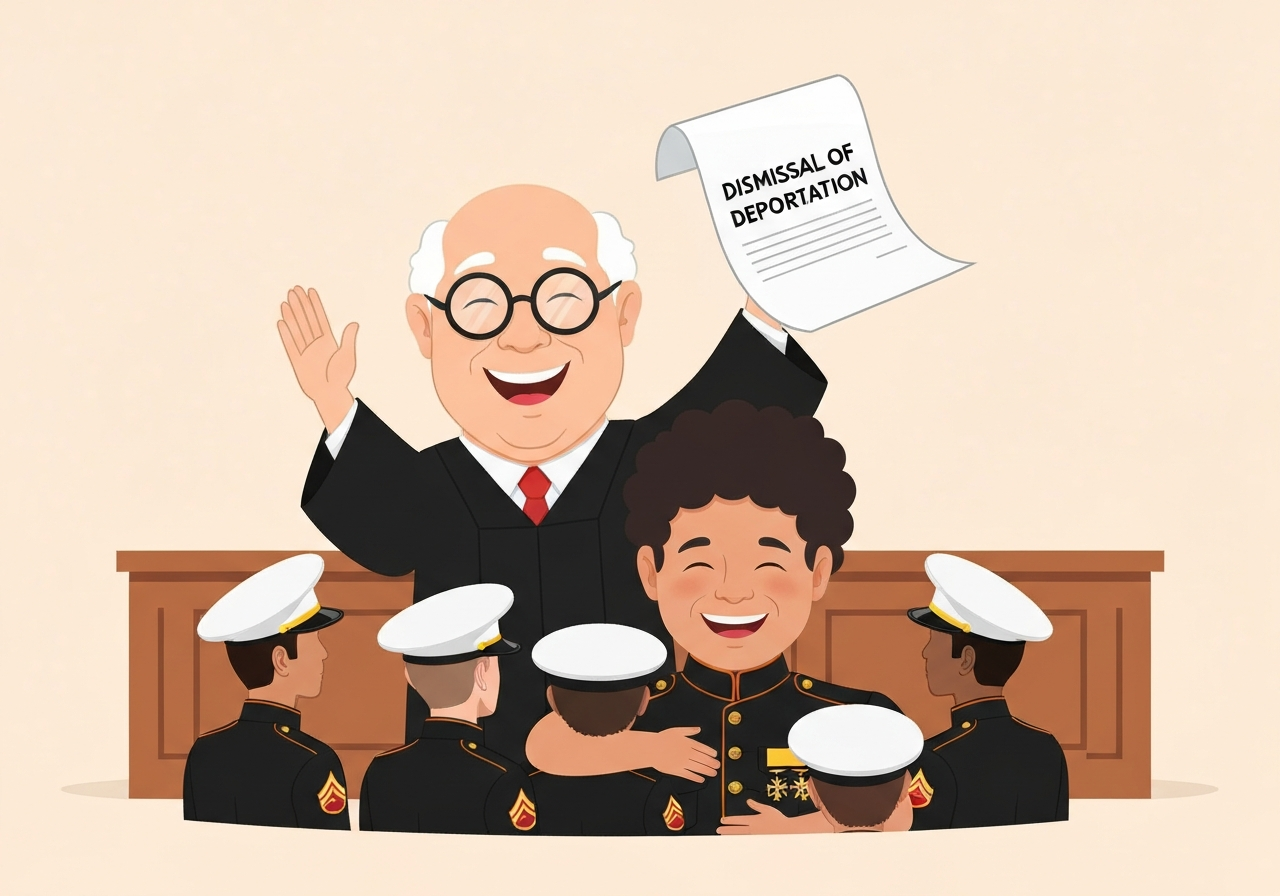
Lead: An immigration judge on Jan. 28, 2026, terminated deportation proceedings against 49‑year‑old Narciso Barranco, a landscaper detained in Santa Ana in June 2025. The decision follows evidence that Barranco is the father of three U.S.-born sons who have served in the U.S. Marine Corps, clearing a path to seek lawful permanent residency. Barranco was arrested outside an IHOP and later released on bond and an ankle monitor; he now faces a DHS appeal of the judge’s order. His attorney says he has applied for Parole in Place, a step that could yield work authorization and permanent status if approved.
Key Takeaways
- Judge Kristin S. Piepmeier issued an order on Jan. 28, 2026, terminating deportation proceedings against Narciso Barranco, age 49.
- Barranco was detained in June 2025 in Santa Ana, Orange County, after a confrontation outside an IHOP that witnesses recorded.
- He was released in July 2025 on a $3,000 bond and ordered to wear an ankle monitor; the monitor has since been removed.
- Barranco has three U.S.-born sons who have served in the U.S. Marine Corps; one son, Alejandro, is a Marine veteran and two are active duty.
- His lawyer, Lisa Ramirez, says Barranco has no criminal history and has filed for Parole in Place to seek lawful residency; she estimates processing could take six months or more.
- The Department of Homeland Security has said it will appeal the judge’s decision and maintains agents acted appropriately during the arrest.
- DHS alleges Barranco refused commands and swung a weed trimmer; family members and eyewitnesses contest that account.
Background
Narciso Barranco emigrated from Mexico in the 1990s and has worked as a landscaper in Southern California for years. In June 2025, federal immigration agents arrested him in Santa Ana during an operation that drew local attention after bystanders uploaded video of the encounter. The footage shows agents wrestling with Barranco and pinning him to the ground outside a restaurant; the event quickly became a focal point in critiques of robust immigration enforcement under the Trump administration.
Following his detention, Barranco was transferred to a Los Angeles immigration detention facility and placed in removal proceedings. In July 2025 he was released after posting a $3,000 bond and was fitted with an ankle monitor and regular check‑in requirements. Advocates and family members pressed for relief on humanitarian and military-family grounds, pointing to protections like Parole in Place that can shield certain relatives of U.S. service members from removal.
Main Event
On Jan. 28, 2026, Immigration Judge Kristin S. Piepmeier issued an order terminating the deportation case, finding the evidence showed Barranco is the father of three U.S.-born sons who served or are serving in the U.S. Marine Corps. That finding makes him eligible to request Parole in Place and other benefits that can lead to lawful permanent residency. The judge’s written order cites the family and military ties presented by the defense as the basis for ending the proceedings.
The June 2025 apprehension that precipitated these proceedings occurred on a Santa Ana street as Barranco was clearing weeds outside an IHOP. Uploaded videos posted by witnesses show a physical struggle between Barranco and agents. Authorities said he resisted commands and swung a weed trimmer; family members, including his son Alejandro, dispute that characterization and say Barranco did not attack anyone.
After the judge’s order, Barranco’s ankle monitor was removed and routine check‑ins discontinued, his attorney reported. Despite relief from immediate removal proceedings, the Department of Homeland Security announced it would appeal the termination, meaning federal immigration lawyers will ask a higher body to reconsider the judge’s ruling. Meanwhile, Barranco’s counsel says their client has applied for Parole in Place and is limiting public activity until paperwork is finalized.
Analysis & Implications
The judge’s termination highlights how close family ties to U.S. citizens, especially service members, can alter the course of immigration enforcement in individual cases. Parole in Place and related procedures were designed to balance humanitarian and national-security interests by allowing certain family members of service members to remain in the country while pursuing lawful status. If Barranco’s Parole in Place petition is approved, he could receive work authorization and later adjust to permanent residency.
At the same time, DHS’s appeal underscores the contested legal terrain: removal proceedings can be reopened or reviewed, and appellate panels may apply stricter standards when weighing evidence of family ties versus enforcement priorities. The outcome of an appeal would set a narrower or broader precedent for similar cases in California and beyond, especially for parents of active-duty military members.
The episode also has political resonance. It occurred amid heightened scrutiny of immigration enforcement tactics under the current administration, producing protests and media attention when videos circulated. For communities with large immigrant populations, the case may reinforce concerns about the use of force during arrests and the discretion of immigration agents in neighborhoods and workplaces.
Comparison & Data
| Key date | Action |
|---|---|
| June 2025 | Barranco detained in Santa Ana; video of arrest circulated |
| July 2025 | Released on $3,000 bond; fitted with ankle monitor |
| Jan. 28, 2026 | Immigration judge terminates deportation proceedings |
| Post‑Jan. 28, 2026 | DHS announces intent to appeal; Parole in Place petition filed |
This table places the case’s public milestones in sequence to clarify timing. The timeline shows roughly seven months elapsed between the June arrest and the judge’s termination, demonstrating how immigration cases can move through detention, bond and monitoring, then adjudication within the administrative court system. If Parole in Place follows the judge’s order, administrative processing estimates from counsel place finalization at about six months or longer.
Reactions & Quotes
Family members and legal advocates framed the judge’s decision as relief and a corrective to an aggressive arrest. Barranco spoke briefly by phone after the ruling, expressing visible relief.
“I feel happy. Thank God I don’t have that weight on top of me,” Barranco said in Spanish after the order.
Narciso Barranco (phone interview)
His attorney emphasized the personal toll of the arrest and the absence of a criminal record.
“The aggressive nature of the apprehension was traumatic. Mr. Barranco has had zero criminal history,” said Lisa Ramirez, noting that removal proceedings have stopped for now and monitoring was discontinued.
Lisa Ramirez (defense attorney)
DHS defended its agents’ conduct and announced an appeal, repeating its account of the June confrontation.
“The agents took appropriate action and followed their training to use the minimum amount of force necessary,” said DHS Assistant Secretary Tricia McLaughlin, who also stated agents believed Barranco refused commands and swung a trimmer.
Tricia McLaughlin (Department of Homeland Security)
Unconfirmed
- DHS’s claim that Barranco “swung his weed trimmer” remains contested by family and some eyewitnesses; independent forensic or corroborating evidence has not been made public here.
- Timing and outcome of DHS’s appeal are pending; it is not yet known whether a federal appellate body will reinstate proceedings or uphold the termination.
- The precise timeline for Parole in Place approval and subsequent adjustment to permanent residency is uncertain and depends on USCIS adjudication and possible administrative delays.
Bottom Line
The judge’s Jan. 28 order halting Narciso Barranco’s deportation proceedings is a significant procedural victory that opens a potential route to legal residency through Parole in Place. For Barranco and his family, including three sons associated with the U.S. Marine Corps, the ruling brings immediate relief but not a final legal resolution, since DHS has signaled it will appeal.
Beyond this case, the episode exemplifies how family ties to the U.S. military intersect with immigration enforcement and how administrative courts and agencies balance humanitarian considerations against enforcement priorities. Observers should watch the DHS appeal and the outcome of the Parole in Place petition for signals about how similar cases will be treated going forward.