
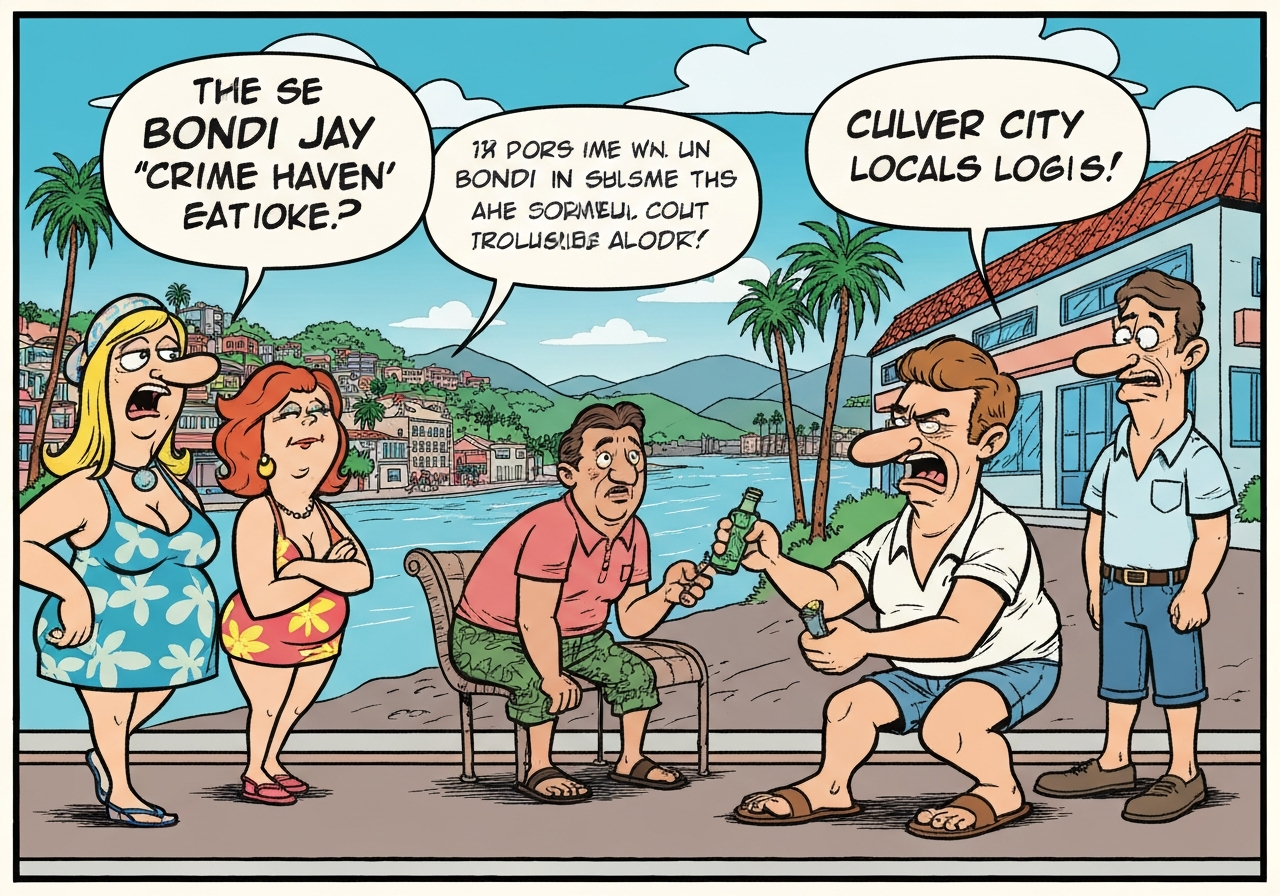
Lead: When U.S. Attorney General Pam Bondi suggested during a Feb. 12, 2026 House hearing that Culver City might be a source of crime, residents and officials swiftly pushed back. The Westside community of about 39,000 people responded with official statistics, local voices and social-media mockery, calling the characterization inaccurate. Culver City leaders cited falling crime figures, ongoing community policing efforts and the city’s major employers to rebut the remark. The exchange came amid broader scrutiny of the Justice Department’s handling of the Jeffrey Epstein files.
Key Takeaways
- Culver City has roughly 39,000 residents and is widely described locally as a walkable, amenity-rich Westside enclave.
- The Culver City Police Department reports an overall crime decline of 9.7% in 2024 and a further 6.1% drop in the third quarter of 2025 versus the same period in 2024.
- Violent crime fell 3.9% in 2024; murders dropped to zero from 2023 to 2024, while sexual assaults were 26 in 2024 versus 25 in 2023.
- Simple assaults rose 8.1% in 2024, the only major category with a marked increase in that year’s data.
- Local officials attribute improvements to community-based policing, housing and social services for people experiencing homelessness, and strong local employment from firms like TikTok, Pinterest, Apple, Amazon and Sony.
- Bondi’s remark occurred during a contentious hearing focused on redaction errors in the Department of Justice’s release of Epstein-related records, drawing wider criticism of her performance.
- The Justice Department did not provide evidence of political violence or domestic terrorism tied to Culver City when asked by local representatives.
Background
Culver City sits on Los Angeles’ Westside and has built a reputation as a compact, amenity-filled community with parks, restaurants and a walkable downtown. Major tech and entertainment employers have expanded local job opportunities, reinforcing the city’s profile as both residential and commercial hub. Like many California municipalities, Culver City has invested in community policing initiatives and social services to address public-safety and homelessness challenges.
The national backdrop includes heightened attention to the Department of Justice’s record-keeping and transparency after publication errors in millions of court filings tied to the Jeffrey Epstein matter. That scrutiny framed a Feb. 12, 2026 House Judiciary hearing in which Rep. Sydney Kamlager-Dove pressed Attorney General Bondi on deletions and redactions in DOJ datasets linking far-right ideology and political violence. Bondi’s offhand reference to Kamlager-Dove’s district — including Culver City — injected a local flashpoint into a broader federal controversy.
Main Event
At the hearing, Rep. Kamlager-Dove emphasized federal reports connecting extremist rhetoric to violent threats and asked about DOJ data deletions. Bondi responded in part by saying the congresswoman’s district contained Culver City and implying that the lawmaker had not highlighted crime there. The comment landed unexpectedly and drew swift reaction from Culver City residents, officials and online commentators.
Local leaders moved quickly to rebut the implication. Culver City Mayor Freddy Puza described the city as “strong and vibrant,” citing job growth and municipal programs as reasons crime has fallen. City officials pointed to recent statistics from the Culver City Police Department showing overall declines in crime and argued community-based strategies have been central to that progress.
Public reaction ranged from measured rebuttals to satire. Local comedian Heather Gardner and political commentator Brian Taylor Cohen used social media to lampoon the suggestion, posting images of clean streets, parks and packed community events. Many posts contrasted Bondi’s remark with the city’s recent statistics to emphasize the perceived mismatch between claim and reality.
Analysis & Implications
Politically, Bondi’s comment illustrates how a national hearing can produce local controversies when high-profile officials generalize about places they do not represent. The exchange shifted attention from the technical debate over redactions to questions about political messaging, local reputations and public trust in federal institutions. For Culver City, the immediate effect was a coordinated local rebuttal that relied on data and community imagery rather than extended policy debate.
Substantively, the city’s recent crime trends complicate the “crime haven” label. With a reported 9.7% overall decline in 2024 and continued drops into 2025’s third quarter, the data point toward net improvements. Yet the rise in simple assaults and a slight uptick in some 2025 indicators underscore that public-safety work remains ongoing and uneven, as it is in many municipalities.
At a national level, the incident fed into existing narratives about DOJ credibility and partisan scrutiny of top officials. Bondi’s performance at the hearing has already stirred calls for accountability from multiple corners; whether that translates into institutional change depends on follow-up investigations and the department’s ability to explain redaction decisions and data handling.
Comparison & Data
| Metric | 2023 | 2024 | Change (2023→2024) |
|---|---|---|---|
| Overall reported crime | baseline | —9.7% | Down 9.7% |
| Violent crime | baseline | —3.9% | Down 3.9% |
| Murders | 1+ (2023) | 0 (2024) | Down to zero |
| Sexual assault | 25 (2023) | 26 (2024) | +1 incident |
| Simple assault | baseline | +8.1% | Up 8.1% |
| Q3 2025 vs Q3 2024 | — | —6.1% overall | Down 6.1% |
The table summarizes the municipal figures reported by the Culver City Police Department and places them against broader state and federal trends. California’s Department of Justice and the FBI reported in 2024 that statewide crime was at one of its lowest levels on record, a pattern that aligns with local declines in many communities. Still, isolated increases in categories such as simple assaults highlight the importance of disaggregating crime data rather than relying on single descriptors for a whole city.
Reactions & Quotes
“This is one of the most non-controversially safe places in L.A.,”
Brian Taylor Cohen, political commentator
Cohen’s comment was part of a broader online chorus insisting that Culver City’s reputation for safety and walkability clashes with the attorney general’s remark. His framing emphasized local perceptions and the city’s day-to-day character.
“The worst crime of the century is that this woman made a mockery of our justice system. Release the un-redacted files. Prosecute the REAL crimes,”
Heather Gardner, Culver City comedian
Gardner used satire to redirect attention to the hearing’s core issue: redactions in the Epstein-related documents. Her post tied local outrage to wider demands for DOJ transparency and accountability.
“She’s trying to deflect,”
Mayor Freddy Puza, Culver City (paraphrased)
Mayor Puza told reporters he believed Bondi’s remark was an attempt to shift attention from DOJ problems. He emphasized municipal efforts — including community policing and social services — as drivers of the city’s safety record.
Unconfirmed
- The Justice Department did not provide publicly documented examples linking ideological political violence to incidents inside Culver City; claims to that effect remain unverified.
- Motivations behind Bondi’s remark — whether tactical deflection or off-the-cuff misstatement — have not been independently confirmed beyond public statements and media coverage.
- Longer-term 2025 crime trends in Culver City are incomplete; third-quarter comparisons show a decline, but full-year 2025 data are not yet available to confirm directionality.
Bottom Line
Bondi’s characterization of Culver City as a crime source triggered a rapid local rebuttal grounded in municipal statistics, civic pride and social-media satire. The episode underlines how national political theaters can reshape local narratives and force municipal leaders to defend community reputations publicly.
Data cited by city officials show net declines in several crime categories through 2024 and into mid-2025, though isolated increases warrant continued attention and targeted policy responses. For observers, the incident is less about a single city’s safety than about transparency, message discipline and the interplay between federal controversy and local identity.
Sources
- Los Angeles Times (news reporting on hearing and local reaction)
- Culver City Police Department (official municipal crime statistics)
- California Department of Justice (official statewide crime data, 2024 report)
- Federal Bureau of Investigation (FBI) (Uniform Crime Reporting and national crime context)