
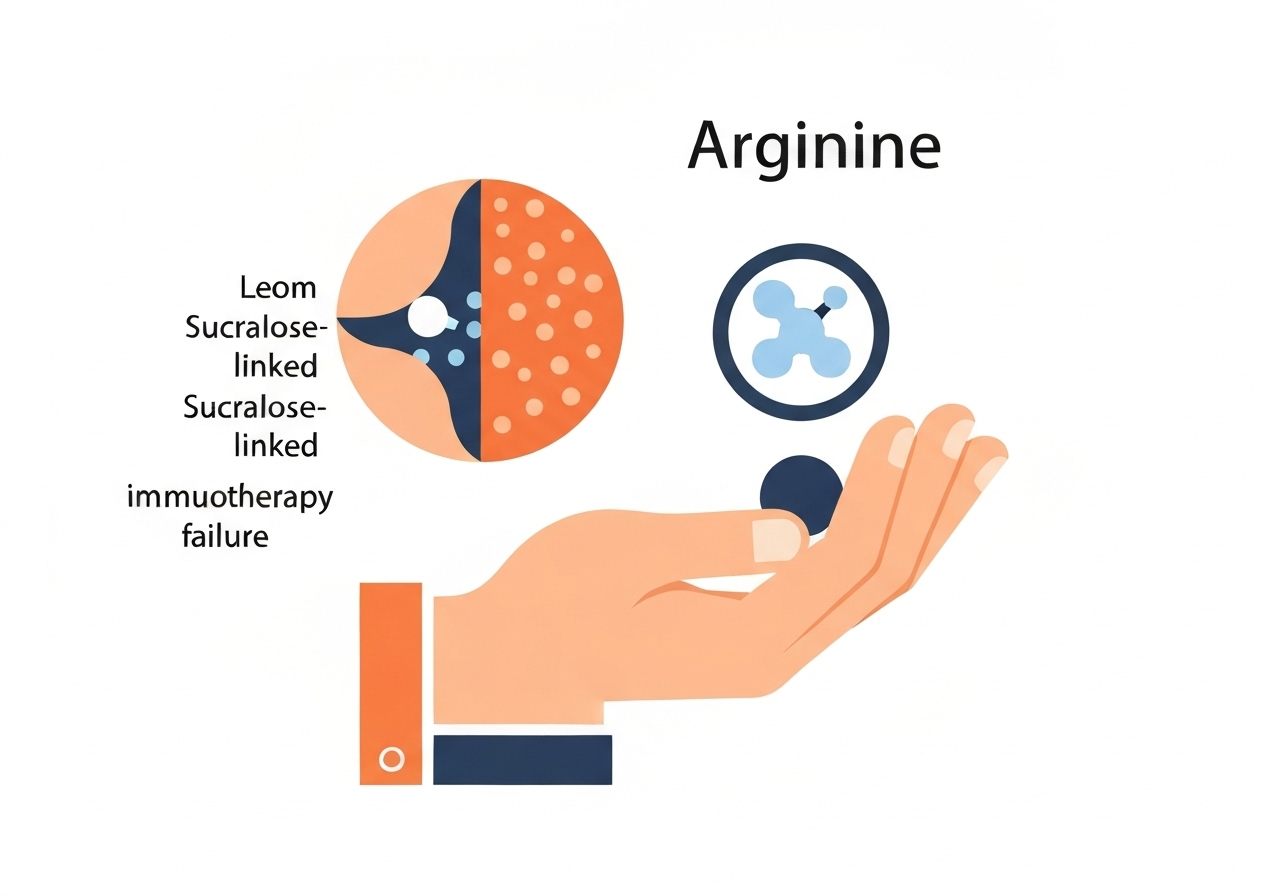
— Researchers at the University of Pittsburgh report that high sucralose intake altered the gut microbiome, reduced arginine levels and was associated with weaker responses to anti‑PD1 cancer immunotherapy; in mice, arginine or citrulline supplements restored treatment effectiveness.
Key Takeaways
- Sucralose consumption shifted the gut microbiome toward arginine‑degrading bacteria in mice.
- Reduced arginine was measured in blood, tumor interstitial fluid and stool after sucralose exposure.
- Sucralose-fed mice showed poorer responses to anti‑PD1 immunotherapy and larger tumors.
- Supplementing arginine or citrulline in mice restored T cell function and immunotherapy efficacy.
- An observational analysis of 132 patients with advanced melanoma or non‑small cell lung cancer found worse outcomes among high sucralose consumers.
- Investigators propose clinical trials testing citrulline supplementation and plan to study other sweeteners.
Verified Facts
The study, published in Cancer Discovery (DOI: 10.1158/2159-8290.CD-25-0247), combined mouse experiments and a retrospective patient analysis. In mice, dietary sucralose changed gut bacterial composition, favoring species that consume arginine and lowering arginine concentrations systemically and within tumors.
Arginine is a key metabolite required for effective T cell responses. In preclinical models of adenocarcinoma and melanoma, mice fed sucralose experienced impaired T cell activity and reduced benefit from anti‑PD1 checkpoint inhibitors, producing larger tumors and shorter survival compared with controls.
When researchers supplemented sucralose‑fed mice with either arginine or citrulline (a precursor that raises arginine levels), T cell function and anti‑PD1 efficacy were largely restored. The team reports measurements showing arginine increases in blood and tumor compartments after supplementation.
To examine human relevance, the investigators analyzed diet questionnaires and outcomes for 132 patients with advanced melanoma or non‑small cell lung cancer treated with anti‑PD1 therapy (alone or with chemotherapy). Higher self‑reported sucralose use correlated with poorer responses and survival in this cohort.
Context & Impact
Artificial sweeteners like sucralose are widely used by people managing weight or blood sugar; the new findings suggest they could unintentionally impair immunotherapy for some cancer patients by altering microbiome metabolism.
If validated in controlled trials, a simple nutritional intervention — for example, citrulline supplements that efficiently raise arginine — could be offered to patients who continue to consume sucralose, avoiding the need for drastic diet changes during treatment.
Beyond sucralose, the team intends to investigate whether other sugar substitutes (aspartame, saccharin, xylitol, stevia) affect the microbiome or immune responses to cancer therapy, broadening implications for dietary guidance in oncology.
Official Statements
“Arginine supplementation may offer a practical way to counteract sucralose‑driven immunotherapy resistance without forcing patients to overhaul their diets,”
Abby Overacre, Ph.D., University of Pittsburgh
Unconfirmed or Pending Questions
- Human data are observational and based on self‑reported diet questionnaires; causality is not proven.
- The sucralose intake threshold that might affect therapy is not defined.
- Whether the same effect occurs with other sweeteners remains to be established.
- Optimal dosing, timing and safety of arginine or citrulline supplementation in cancer patients require clinical trials.
Bottom Line
This study identifies a microbiome‑mediated mechanism by which sucralose can lower arginine and compromise anti‑PD1 immunotherapy in mice and presents supportive, though observational, human associations; citrulline or arginine supplementation restored therapy efficacy in animals and now merit testing in clinical trials.
Sources
- ScienceDaily — University of Pittsburgh press summary (Sep 6, 2025)
- Cancer Discovery — Sucralose consumption ablates cancer immunotherapy response through microbiome disruption (DOI)
- UPMC / University of Pittsburgh materials
Funding acknowledgements reported by the authors include support from the National Institutes of Health, the Damon Runyon Cancer Research Foundation and Gateway for Cancer Research.