
Lead
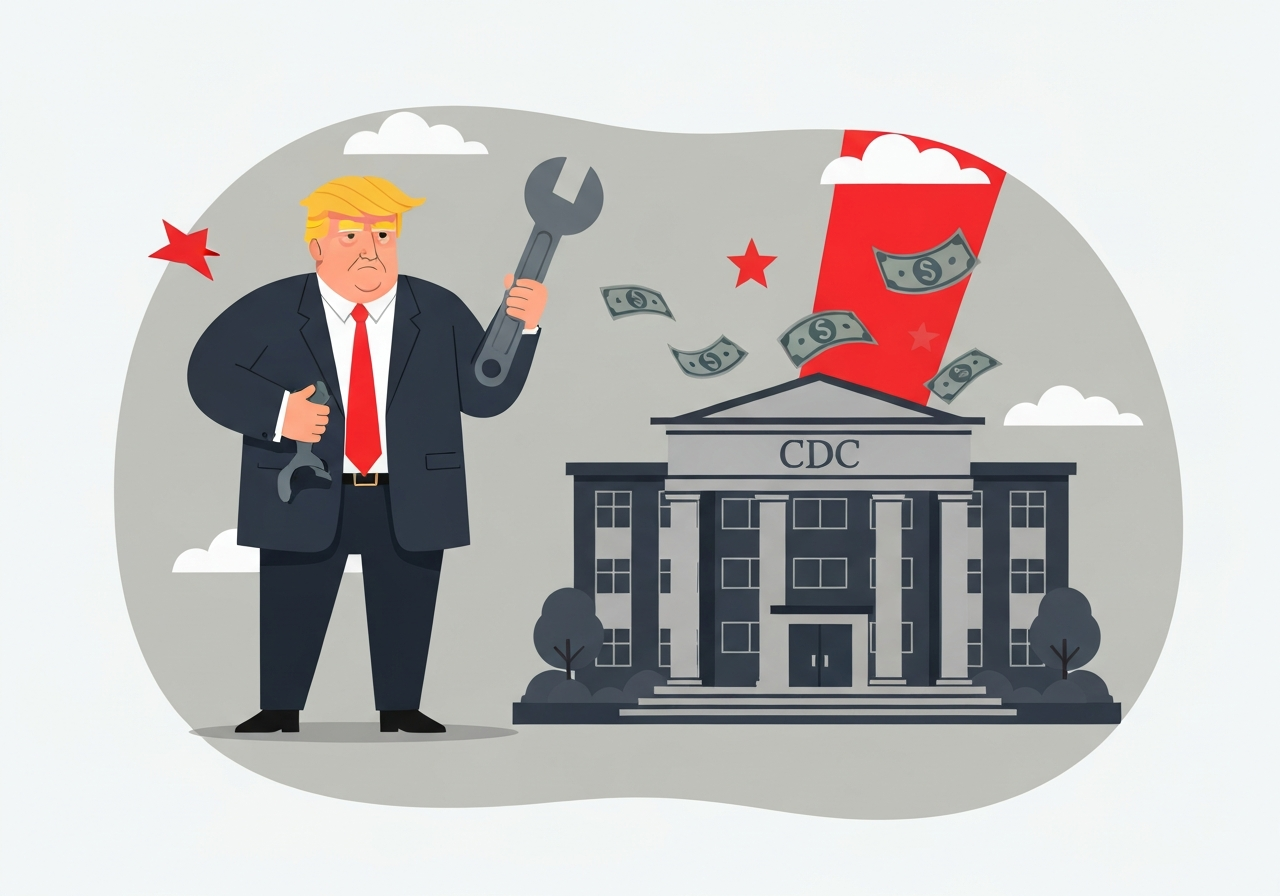
Federal agencies this week moved to cancel more than $600 million in Centers for Disease Control and Prevention grants that Congress approved and President Trump signed into law weeks earlier. The cuts targeted programs in California, Illinois, Colorado and Minnesota and prompted four state attorneys general to file suit in a federal district court in Illinois late Wednesday. A judge, U.S. District Judge Manish S. Shah, issued a temporary restraining order blocking the administration’s action late Thursday. State and local public-health officials warned the abrupt cancellations would immediately strain critical testing, prevention and community-health services.
Key Takeaways
- More than $600 million in CDC public-health grants were listed for cancellation this week, affecting programs in California, Illinois, Colorado and Minnesota.
- Four state attorneys general filed suit late Wednesday in the U.S. District Court in Illinois; Judge Manish S. Shah issued a temporary restraining order on Thursday.
- The Office of Management and Budget, led by Director Russell Vought, is the named lead defendant in the lawsuit, along with HHS and the CDC.
- Some of the grants slated for termination were included in the bipartisan HHS funding bill Congress passed and President Trump signed on Feb. 3, 2026.
- Local officials say cancellations jeopardize core functions—examples include specialized lab staff for high-threat pathogens and prevention programs for HIV, firearm injury and food access.
- House Appropriations members received emails notifying them of the cancellations three days ahead of public notice; that window enabled the rapid legal response.
- Advocates and public-health groups describe the pattern of sudden grants cancellations as outside long-standing federal practice.
Background
The cancellations fit into a broader pattern that emerged after President Trump began his second term in 2025, when federal funding decisions across multiple agencies were increasingly revised to align with new administration priorities. Historically, CDC grant awards follow multi-year cycles with predictable timelines; abrupt revocations are uncommon and typically invite review and oversight. Public-health grants fund day-to-day operations at county and city health departments, including surveillance, laboratory capacity and prevention programs that local governments rely on to meet statutory responsibilities.
In recent months the administration has signaled a tougher posture toward certain Democratic-led cities and states, and internal OMB guidance has reportedly identified funds for potential targeting. Those developments have prompted legal challenges, public outcry and occasional reversals after pressure or court rulings. The current action is notable because the affected grants were awarded and funded after Trump took office and appear in legislation the president himself signed in early February 2026.
Main Event
On Thursday morning Santa Clara County received official notice that two large CDC grants would be terminated. Dr. Sarah Rudman, director of the county public-health department, said the grants support core functions—one funds a laboratorian whose work enables testing for rare but high-consequence pathogens such as Ebola, anthrax and measles. Local officials said operations would continue for now, but speed and capacity for specialized testing and response would be immediately at risk.
Shortly after the cancellations were announced, attorneys general for the four affected states filed suit late Wednesday in federal court in Illinois seeking a temporary restraining order. The complaint named OMB Director Russell Vought, HHS and the CDC as defendants and described an internal OMB directive that identified specific funds for targeting. The next day, Judge Manish S. Shah granted a temporary restraining order, writing that recent statements by federal officials make it plausible that hostility toward so-called ‘sanctuary’ jurisdictions motivated the decision.
OMB did not provide a public comment to reporters about the directive. Officials at HHS and the CDC said the stated rationale for the cancellations was that the grants were ‘inconsistent with agency priorities.’ Republican members of Senate and House committees with oversight of HHS were contacted for comment; at the time of reporting, some had not responded.
Analysis & Implications
The legal and policy clash touches on separation-of-powers themes between Congress’s appropriation authority and executive discretion in agency priorities. Congress authorized and appropriated funds for public-health programs, and included notification provisions to increase transparency. When the executive branch withdraws funding shortly after an appropriations law is enacted, it raises legal questions about whether the administration is effectively nullifying congressional spending choices.
From an operational perspective, sudden grant terminations degrade near-term public-health capacity. Counties and cities budget and staff based on multi-year commitments; losing a single funded position or program can reduce testing throughput, delay outbreak response and interrupt prevention services such as HIV outreach or community nutrition programs. Public-health leaders emphasize that predictability in funding is a core requirement to meet legal duties and maintain population health.
Politically, the move risks intensifying partisan disputes and may prompt additional litigation and oversight actions. If courts uphold the injunctions, the administration may need to revise its approach or face additional defeats. If courts permit selective cancellations, states and localities will likely pursue statutory and constitutional remedies, and Congress could respond with tighter notification, earmarking or enforcement language in future appropriations bills.
Comparison & Data
| Item | Amount / Note |
|---|---|
| CDC grants listed for cancellation | More than $600,000,000 |
| Congressional increase to public-health infrastructure in final law | $10,000,000 increase |
| Date President signed bipartisan HHS funding bill | Feb. 3, 2026 |
| States explicitly mentioned as affected | California, Illinois, Colorado, Minnesota |
The table highlights the key numeric and timing contrasts: the administration listed more than $600 million in cuts even though Congress increased public-health infrastructure funding by $10 million in the final bill. The grants targeted are distributed across multiple local health departments and support discrete lab capacity, prevention programs and community services. That pattern makes the operational impact uneven but potentially deep in specific jurisdictions.
Reactions & Quotes
Local health officials described immediate operational concerns after notices arrived. Their statements emphasized both the practical effects on services and relief that a judge acted quickly.
Two large grants that we rely on for core functions in public health to keep people safe and healthy have now been canceled.
Dr. Sarah Rudman, Santa Clara County public-health director
Lawmakers on the House Appropriations Committee said the three days of notification allowed states to move rapidly to court.
Diseases don’t care who you voted for — Republicans, Democrats, Independents — Americans are going to be hurt by these actions.
Rep. Rosa DeLauro, Ranking Member, House Appropriations Committee
The California attorney general framed the legal response as a defense of the rule of law.
If President Trump and those who work for him want to stop losing in court, they should stop breaking the law.
California Attorney General Robert Bonta
Unconfirmed
- Whether an internal OMB ‘hit list’ explicitly instructed agencies to target funds because of jurisdictions’ immigration policies remains contested and is a central factual claim in the complaint.
- Direct evidence that President Trump personally ordered these specific cancellations has not been publicly produced.
- The full internal rationale each agency used to designate grants as ‘inconsistent with agency priorities’ has not been released and remains unclear.
Bottom Line
The episode underscores a clash between presidential administration priorities and congressional appropriations, with immediate consequences for local public-health capacity. Even as courts intervene, the dispute may prompt additional legal battles, new oversight hearings and legislative fixes to clarify how and when federal agencies may withdraw funds that Congress has authorized.
For communities, the near-term risk is concrete: reduced lab throughput, fewer prevention services and disrupted planning. Policymakers on both sides will now face pressure to resolve whether funding decisions of this type will remain within executive discretion or be constrained by statute and judicial precedent.
Sources
- NPR (news report summarizing court filings and local reactions)
- Office of Management and Budget (official agency site)
- U.S. Department of Health & Human Services (official agency site)
- Santa Clara County Public Health Department (local public-health official statements)