
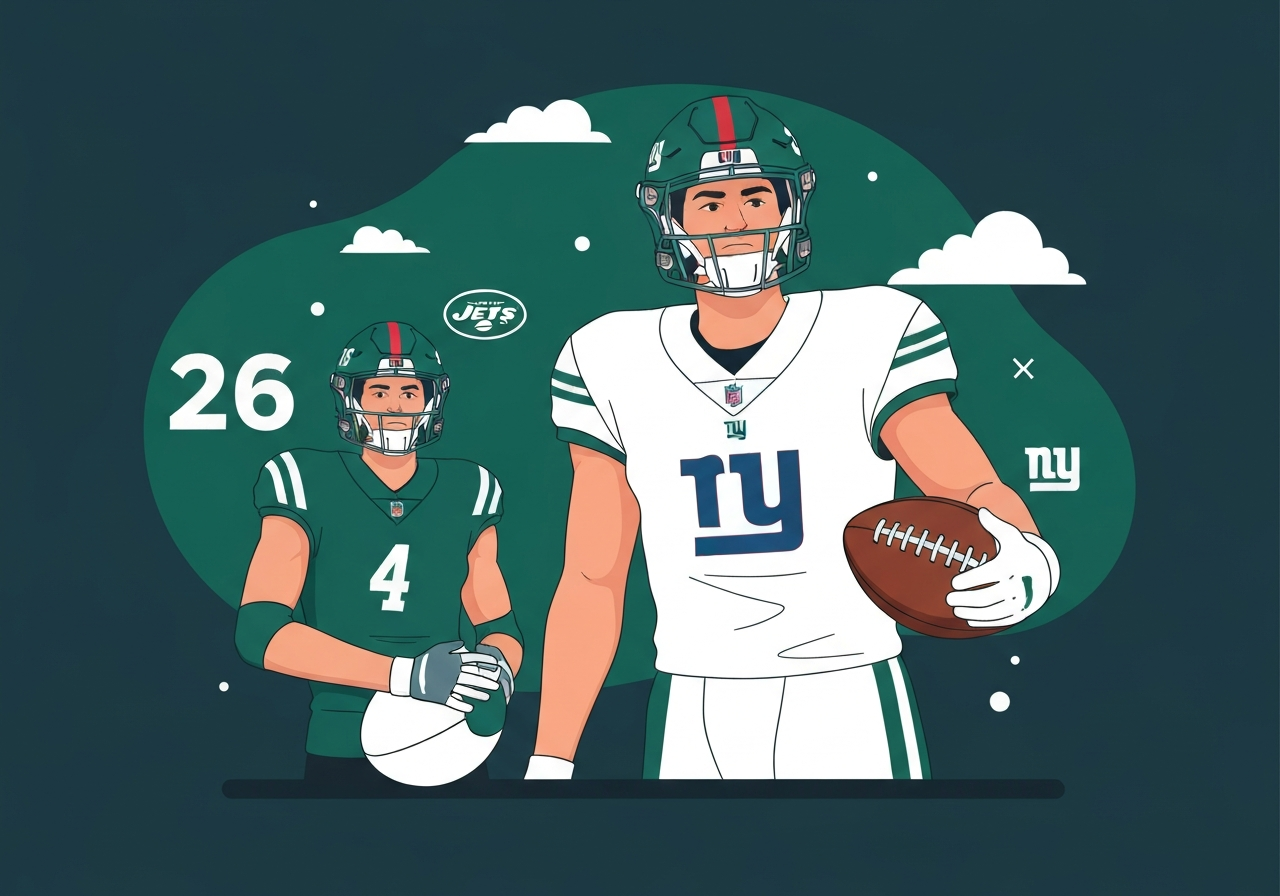
On Feb. 14, 2026, this Mock Draft 2.0 projects major roster pivots across the league, headlined by the New York Giants selecting Ohio State safety Caleb Downs at No. 5 while the New York Jets pass on a quarterback at No. 2. The projection features four Ohio State players inside the top 10 and emphasizes defensive upgrades for several teams. If realized, these selections would shift immediate starter expectations and accelerate rebuild timelines for multiple franchises. This piece lays out the full top-32 projection, context, and what the choices would mean for club strategies entering the 2026 season.
Key Takeaways
- Top pick forecast: The Las Vegas Raiders are projected to take Fernando Mendoza, QB from Indiana, as the No. 1 pick, pairing him with Klint Kubiak and veteran mentorship.
- Jets decline a QB at No. 2 and instead select Arvell Reese, LB (Ohio State), prioritizing pass-rush and off-the-ball versatility.
- Four Ohio State prospects are placed in the top 10: Arvell Reese (No. 2), Caleb Downs (No. 5), Carnell Tate (No. 7), and Sonny Styles (No. 10).
- Giants use the No. 5 slot on Caleb Downs, marking only the third time this century a safety is taken at No. 5, after Sean Taylor (2004) and Eric Berry (2010).
- Several clubs emphasize edge and line help in the top 10, including Francis Mauigoa (OT, Miami) at No. 6 and Rueben Bain Jr. (DE, Miami) at No. 9.
- Late first-round quarterback projection: Ty Simpson (Alabama) is placed at No. 21 to the Steelers as a developmental option behind veteran leadership.
- Teams with secondary needs, notably the Cowboys and Dolphins, address cornerback help early, with Jermod McCoy (CB) and Mansoor Delane (CB) selected in the teens.
Background
The 2026 draft cycle has been shaped by coaching turnover, free-agent movement, and a pronounced league tilt toward versatile defenders and edge rushers. Several franchises entering 2026 carry immediate salary-cap questions and impending unrestricted free agents, nudging general managers toward premium defenders and reliable offensive-line pieces. The Giants’ reported hiring of John Harbaugh changed their draft calculus in this projection, with a veteran-minded coach prioritizing a playmaker in the secondary to complement an established pass rush.
Historically, the No. 5 selection has rarely been used on safeties this century; Sean Taylor (Washington, 2004) and Eric Berry (Chiefs, 2010) are the two precedents cited in this mock. That rarity underscores the significance of a hypothetical Caleb Downs pick at five, framed here as a cultural and positional cornerstone. Meanwhile, the Jets are projected to emphasize front-seven playmaking, reflecting an organizational choice to defer quarterback drafting in favor of roster balance and immediate defensive upgrades.
Main Event: Projected Top 32 Overview
The top of this mock features a mix of quarterback hope, defensive difference-makers, and tackle investments. At No. 1 the Raiders take Fernando Mendoza (QB, Indiana) to pair a polished prospect with coaching continuity. The Jets at No. 2 select Arvell Reese (LB, Ohio State) rather than a quarterback, signaling a strategic bet on building from the trenches outward.
Other notable top-10 projections include Spencer Fano (OT, Utah) to the Cardinals at No. 3, David Bailey (LB, Texas Tech) to the Titans at No. 4, and Caleb Downs (S, Ohio State) to the Giants at No. 5. The middle of the first round favors line and receiving help: Francis Mauigoa (OT, Miami) to the Browns at No. 6 and Carnell Tate (WR, Ohio State) to the Commanders at No. 7.
Rounding out the first ten are Jeremiyah Love (RB, Notre Dame) at No. 8 to the Saints, Rueben Bain Jr. (DE, Miami) to the Chiefs at No. 9, and Sonny Styles (LB, Ohio State) to the Bengals at No. 10. The full projection then addresses secondary depth, interior run defense, and complementary skill players up through No. 32.
Analysis & Implications
Giants selecting Caleb Downs at No. 5 would be a statement prioritizing a playmaking safety as a defensive centerpiece. Under John Harbaugh and defensive coordinator Dennard Wilson, a top-tier safety can alter coverage calls, free linebackers to blitz, and help in single-high schemes. While safeties rarely occupy that pick slot, the mock argues Downs’ combination of range, tackling, and leadership justifies the early investment.
The Jets declining a quarterback at No. 2 in favor of Arvell Reese signals confidence in their current signal-caller situation or a preference to protect and pressure first. Adding a dynamic off-the-ball linebacker who can rush the passer would be consistent with making Aaron Glenn’s defense more disruptive. If the front office instead had chosen a quarterback, the Jets’ roster construction over 2026 would look markedly different.
Ohio State placing four players in the top 10 emphasizes the program’s continued pipeline to the NFL, particularly at linebacker, safety, wide receiver, and hybrid roles. That concentration raises scouting and developmental questions: teams must project how college-level scheme fit and athletic traits translate to pro systems. For franchises with immediate cap questions or aging starters, selecting younger blue-chip talent becomes a risk-mitigation strategy.
Comparison & Data
| Pick | Team | Player | Pos | School |
|---|---|---|---|---|
| 1 | Raiders | Fernando Mendoza | QB | Indiana |
| 2 | Jets | Arvell Reese | LB | Ohio State |
| 3 | Cardinals | Spencer Fano | OT | Utah |
| 4 | Titans | David Bailey | LB | Texas Tech |
| 5 | Giants | Caleb Downs | S | Ohio State |
| 6 | Browns | Francis Mauigoa | OT | Miami (Fla.) |
| 7 | Commanders | Carnell Tate | WR | Ohio State |
| 8 | Saints | Jeremiyah Love | RB | Notre Dame |
| 9 | Chiefs | Rueben Bain Jr. | DE | Miami (Fla.) |
| 10 | Bengals | Sonny Styles | LB | Ohio State |
The table above highlights the top 10 selections in this projection. Notably, four Ohio State players appear in the first ten picks, a concentration uncommon in most recent drafts. The mock also distributes premium offensive-line talent and edge rushers across playoff-contending rosters, reflecting league-wide emphasis on protecting quarterbacks and generating pressure.
Reactions & Quotes
Team executives and league observers typically treat mock drafts as scenario planning rather than predictions. Below are representative reactions distilled from draft commentary and analyst takes.
This mock forces a conversation about positional value versus immediate roster needs, especially when a safety is in play at No. 5.
Mock author Michael Serby
The mock’s author frames the pick at No. 5 as both a cultural and schematic choice, not simply a best-player-on-board decision. Team decision-makers would weigh leadership impact, coverage versatility, and salary-cap trajectory before choosing a safety that high.
Selecting four players from one program in the top 10 would highlight sustained college-to-pro pipeline strength, but it also raises questions about scheme translation.
Draft analyst (industry observer)
Analysts note that high-volume production at major college programs often convinces teams, but NFL fit remains the decisive factor during evaluation and pre-draft medical checks.
Unconfirmed
- Team intentions are speculative: the internal preferences and final board orders used by franchises in April 2026 are not publicly confirmed.
- Injury timelines: recovery projections for players such as Jermod McCoy, who missed 2025 with a torn ACL, are subject to team medical clearance and are not definitive.
- Coach-specific fit claims, including John Harbaugh’s exact draft priorities for the Giants, are interpretations of public signals and not formal statements.
Bottom Line
This 2026 Mock Draft 2.0 emphasizes defense-first moves, an oversized early presence of Ohio State prospects, and unconventional choices at premium slots, including a safety at No. 5. If teams follow this path, several rosters would gain immediate starters and culture-setting players, but the long-term impact depends on development, health, and how those rookies fit schematic needs.
Readers should treat the projection as a structured scenario reflecting one plausible draft landscape. Final selections on draft day will hinge on late medical checks, private workouts, and front-office moves. For teams and fans, the most immediate takeaway is how rapidly roster priorities can pivot when coaching changes and free-agent flows converge.
Sources
- New York Post (media/press) — original mock draft referenced for player placements and narrative framing