
Lead
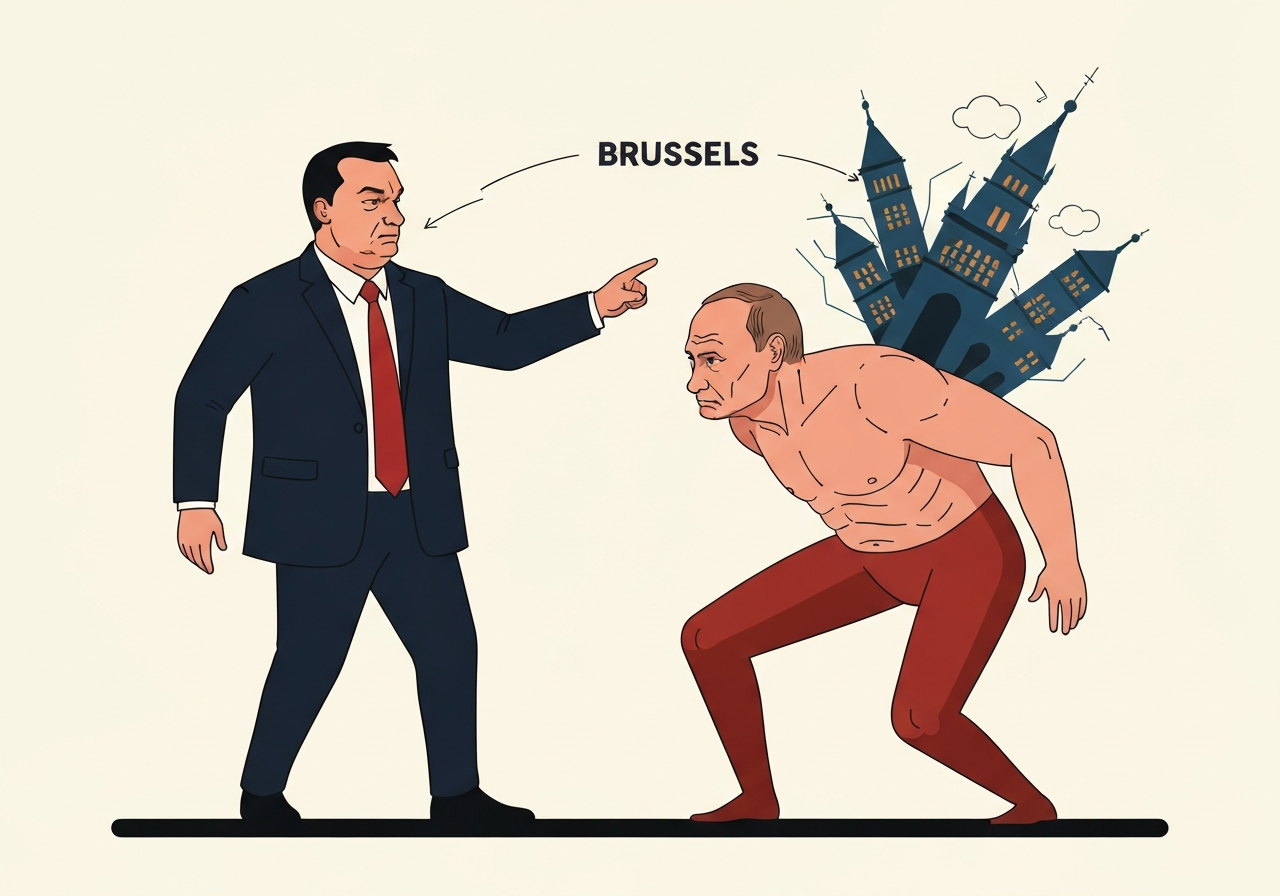
Hungary’s Prime Minister Viktor Orbán delivered his annual assessment at Várkert Bazár on 14 February 2026, warning that 21st-century Europe faces humiliation while casting Brussels — not the East — as the principal danger. He coined the term “Putining” to dismiss Western framing of Russia as an existential menace and accused the European Commission of directing censorship through social platforms. Orbán defended recent welfare pledges to be funded by special taxes on big business and vowed Hungary would not send arms or young troops to Ukraine. He also repeated that Europe is preparing for war by 2030 and described domestic opponents as agents of Brussels and global firms.
Key Takeaways
- Speech location and date: Várkert Bazár, Budapest, 14 February 2026, delivered as Orbán’s traditional annual address.
- New term introduced: Orbán labelled Western rhetoric about Russia “Putining,” calling it “primitive and frivolous.”
- Economic context: Orbán touted welfare measures ahead of the 2026 elections to be financed through special taxes on large companies.
- Past promises vs outcome: The previously promoted “flight to recovery” yielded 0.3% GDP growth in 2025, a point Orbán did not emphasize this year.
- Sanctions and energy: Hungary received a one-year reprieve from Russia-related sanctions; state oil company MOL has benefited from discounted Russian supplies and remains exempt for now.
- Foreign influence claims: Orbán accused NGOs, journalists, judges and political opponents of being “Brussels agents,” and suggested global firms also have stakes in Hungarian politics.
- Security warning: He asserted Europe is preparing for war by 2030, called the coming election potentially the “last before war,” and repeated Hungary will not provide weapons or send soldiers to Ukraine.
Background
Orbán has long framed his Fidesz government as defending Hungarian sovereignty against EU pressure on rule-of-law and social issues. Tensions with Brussels have centered on judicial independence, media freedom and conditionality tied to EU funds — disputes that have repeatedly put Budapest at odds with EU institutions. Over successive terms since 2010, Orbán’s administration has pursued nationalist policies, tightened oversight of NGOs and consolidated media influence, generating repeated criticism from Brussels and human-rights groups.
The 2026 speech follows a 2025 cycle in which the government promised economic recovery and sought to curb liberal social movements, including a pledge to ban Pride events that did not prevent large demonstrations. At the same time, Hungary negotiated temporary carve-outs on energy and trade sanctions related to Russia, allowing companies such as MOL to continue imports under exemptions — a point central to the prime minister’s economic narrative.
Main Event
In his address, Orbán framed the 21st century as a period of European decline and cast Brussels as a tangible, actionable adversary inside Hungary. He said the government had begun removing what he called foreign influence — NGOs, opposition media and judges — but conceded the effort was “half a job,” promising further action after upcoming elections. He characterised the European Commission as a “repressive machine” that uses algorithms, bureaucrats and money to shape domestic politics.
Orbán pointed to a U.S. report he said showed pressure by the European Commission on social-media platforms to remove or restrict content during elections in Romania and Moldova, using that to allege an EU-driven censorship effort. He argued that Washington’s exposure of such practices makes U.S. friendship valuable and that Hungary should fear Brussels more than the East. The phrase “Putining” was introduced to dismiss what he described as a Western habit of framing Russia and President Putin as the central threat.
The prime minister linked domestic opposition figures to global companies and former employers. He singled out energy major Shell and bank ERSTE in alleging corporate interests seek to influence any future government appointment, and claimed some companies profited from the Russia-Ukraine war. Orbán reiterated that Hungary will not supply money or weapons to Ukraine and asserted that no credible strategy exists to defeat a nuclear-armed Russia without escalation.
Analysis & Implications
Domestically, the speech is calibrated for the pre-election period: welfare promises funded by special taxes are intended to bolster support among voters weighing immediate economic concerns. By blaming Brussels and multinational firms for domestic woes, Orbán frames political opponents as instruments of external interests, consolidating a sovereignty narrative that has worked electorally in past cycles. The “half done” claim that foreign influence remains aims to position Fidesz as both defender and fixer, promising further domestic reforms once re-elected.
For EU relations, reiterating accusations of censorship and institutional overreach risks deepening the dispute over conditionality and rule-of-law mechanisms. If Budapest continues to reject EU criticism and tie domestic policy to anti-Brussels sentiment, it could complicate disbursements of cohesion funds and negotiations on shared policies. The invocation of a U.S. report as validation may be meant to split Brussels from Washington rhetorically and to portray Orbán’s stance as aligned with transatlantic scrutiny, even as Hungary resists collective EU measures on Ukraine.
On security and foreign policy, the claim Europe is moving toward war by 2030 is a stark rhetorical escalation that could influence public debate on defence spending, conscription and civil preparedness. Orbán’s categorical refusal to send arms or troops to Ukraine keeps Hungary aligned with cautious support rather than active involvement, potentially isolating Budapest within NATO discussions where burden-sharing and deterrence are central. Economically, proposed special taxes on large firms could raise short-term revenue for social measures but risk deterring investment if applied unpredictably or retroactively.
Comparison & Data
| Claim/Promise | Promised Outcome | Actual/Reported Outcome |
|---|---|---|
| “Flight to recovery” (economic growth) | Significant rebound (2025) | 0.3% GDP growth in 2025 (reported) |
| Ban on Pride Day | Prevent large public event | Hundreds of thousands attended in Budapest despite restrictions |
| Sanctions and energy | Cut off Russian oil | One-year reprieve granted; MOL continues imports under exemption |
The table contrasts prior government pledges with documented outcomes. The modest 0.3% growth in 2025 undercuts claims of a strong economic turnaround, while the failure to prevent large public demonstrations indicates limits to social restrictions. Energy exemptions and sanction carve-outs have materially affected Hungary’s energy sector and political narrative.
Reactions & Quotes
Orbán’s own phrasing was central to the speech and has been widely reported and cited in regional media.
“Putining is primitive and frivolous.”
Viktor Orbán, Prime Minister of Hungary
Observers have framed the address as a mix of electioneering and foreign-policy signalling.
“The speech aims to consolidate a sovereignty narrative ahead of elections and to reframe Brussels as the primary external threat to Hungary’s way of life.”
Central European political analyst (comment to press)
Unconfirmed
- The scale and coordination of alleged European Commission pressure on social-media firms, beyond selective citations from a U.S. report, require independent verification.
- The prime minister’s numerical claim that Shell made “tens of billions” specifically from the war is presented without detailed evidence in the speech and remains unverified here.
- Assertions that particular named individuals in opposition ranks are planted agents of banks or multinationals are allegations that have not been independently proven.
- The forecast that Europe will definitively be at war by 2030 is a political warning, not a verified strategic assessment; its likelihood and timeline are uncertain.
Bottom Line
Orbán’s 14 February 2026 address blends election-focused policy announcements with an intensifying anti-Brussels narrative and heightened security rhetoric. The introduction of “Putining” reframes debate away from Russia as the primary external danger toward a critique of EU institutions and global corporate actors. Economically, promises of welfare measures funded by special taxes signal an attempt to shore up domestic support, even as recent growth figures remain modest.
For Brussels and Budapest, the speech is likely to harden positions: EU institutions may view the address as further distancing by Hungary from collective European policy on Ukraine and rule-of-law standards, while Orbán’s supporters will see it as defending national sovereignty. Key uncertainties remain about the factual basis for some accusations and about how these positions will affect EU funding, NATO dynamics and Hungary’s role in the wider region after the upcoming elections.
Sources
- Euronews — news report of Orbán’s speech and reactions (news)