
Lead
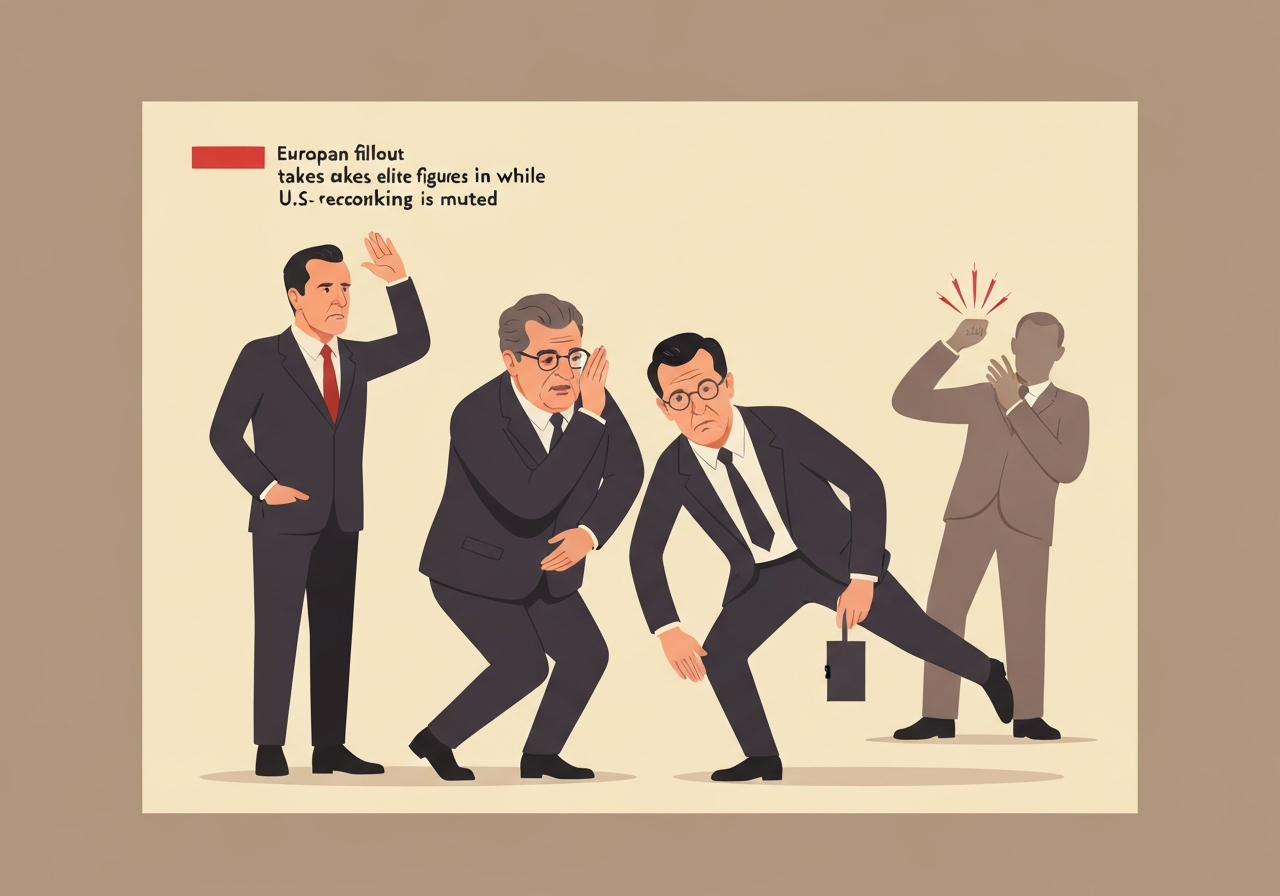
Newly released documents tied to Jeffrey Epstein have prompted a wave of consequences across Europe while producing comparatively limited political fallout in the United States. In Britain and several European countries, royals, ministers and senior officials have lost posts, faces public investigations or resigned after their names appeared in the files. In the U.S., high-profile figures named in the same documents have largely retained positions of power, and official responses have been uneven. Authorities in Europe have opened multiple probes based on the trove; U.S. agencies and political leaders have been slower to mete out comparable institutional penalties.
Key takeaways
- European investigations: Law enforcement in the U.K., Norway and other countries have opened inquiries after the latest release of Epstein-related documents by U.S. authorities.
- British fallout: Former Prince Andrew was stripped of royal titles and evicted from a royal residence; he now faces a police probe over alleged 2010 sharing of confidential trade information with Epstein.
- Senior resignations: Peter Mandelson was removed as Britain’s ambassador to the U.S. in September 2025 and resigned from the House of Lords in February 2026 amid claims he took payments and shared government documents with Epstein.
- Norwegian charges: Former prime minister Thorbjørn Jagland has been charged with “gross corruption” and faces up to 10 years in prison after emails and travel records linked him to Epstein residences.
- U.S. insulation: President Trump, Commerce Secretary Howard Lutnick and other prominent Americans named in the files have so far largely kept their posts; some senior U.S. figures have denied wrongdoing.
- Private-sector impact: Larry Summers stepped away from teaching at Harvard; Brad Karp left the chairmanship at Paul Weiss; Kathryn Ruemmler announced she will leave Goldman Sachs at the end of June 2026.
- Questions on disclosure: Critics, including former White House ethics officials, have accused the U.S. administration of selective document releases that may shield some figures while exposing others.
Background
Jeffrey Epstein, a convicted sex offender who died in 2019, amassed a cache of records that have been the subject of legal battles and public scrutiny for years. The most recent tranche of files, released by U.S. authorities in early 2026, contains travel logs, correspondence and estate documents that name a wide network of associates across continents. In Europe, the revelations have collided with political cultures that can enforce rapid accountability through resignations, loss of titles and formal criminal inquiries.
That contrast reflects institutional differences: parliamentary systems and constitutional monarchies often place greater emphasis on immediate political or reputational consequences, while U.S. separation-of-powers dynamics and campaign finance structures can blunt similar pressure. Observers note that appearance in the files does not equate to proof of criminal conduct, but in several European contexts the political and social cost of association has been swift and tangible.
Main event
In Britain the fallout has been prominent and fast-moving. Former Prince Andrew — now styled Andrew Mountbatten-Windsor — lost royal patronages and was required to vacate a royal estate following allegations tied to his visits with Epstein; he has denied sexual misconduct. The latest documents additionally prompted a new inquiry by British police into claims that he shared confidential trade-related information with Epstein in 2010, a matter Buckingham Palace said King Charles III is “ready to support” investigators on.
Peter Mandelson, a veteran Labour politician, was removed from his post as ambassador to Washington in September 2025 and resigned from the House of Lords in early February 2026 after files suggested he accepted payments from Epstein and passed on government papers. The revelations generated internal strains for Prime Minister Keir Starmer, who apologized to Epstein’s victims and faced pressure over his party’s ties to Mandelson.
Elsewhere in Europe, Jack Lang resigned as head of a Paris cultural center after the French foreign ministry sought to question him about links to Epstein. In Norway, prosecutors charged former prime minister Thorbjørn Jagland with gross corruption following evidence he stayed at Epstein properties and travelled to Epstein’s Caribbean island. Mona Juul stepped down as Norway’s ambassador to Jordan after disclosures that Epstein left $10 million in his will to her children, and Crown Princess Mette-Marit publicly apologized for vacationing at an Epstein property in Palm Beach.
In the United States, several well-known figures named in the records have faced career consequences in the private and academic sectors rather than in elected office. Larry Summers left his Harvard teaching role; Brad Karp resigned as chair of Paul Weiss; and Kathryn Ruemmler announced a scheduled departure from Goldman Sachs. Commerce Secretary Howard Lutnick acknowledged short visits to Epstein properties and a 2012 trip to Epstein’s private island during a Senate hearing but has remained in office.
Analysis & implications
The divergent responses reflect structural and cultural differences in governance and accountability between Europe and the United States. Parliamentary systems can produce immediate political consequences because party discipline, internal caucus pressure and the prospect of near-term votes make departures politically expedient. Monarchies and public institutions tied to symbolic authority also react swiftly to reputational damage.
By contrast, several features of the U.S. system can blunt rapid removal from power: fixed constitutional terms for the presidency, diffuse accountability across separate branches, and the deep financial entanglement of wealthy donors in politics. Experts argue these factors create higher barriers to immediate political consequences for well-connected Americans named in such documents.
The uneven releases and handling of documents add a layer of legal and ethical uncertainty. Critics, including former White House ethics counsel Richard Painter, have questioned whether partial disclosures influence public perception and whether selective transparency protects certain political allies. Any perceived selective disclosure risks eroding public trust and complicating cross-border cooperation on investigations.
Practically, European probes may generate more arrests, prosecutions or administrative penalties in the near term, especially where allegations intersect with existing criminal statutes. In the U.S., legal exposure for named individuals will depend on whether prosecutors secure evidence of criminal activity beyond mere association; civil suits and private-sector consequences may remain the more immediate pathway to accountability.
Comparison & data
| Region | Primary Consequence Seen (examples) | Notable Names |
|---|---|---|
| Europe | Resignations, title removals, criminal probes | Prince Andrew, Peter Mandelson, Thorbjørn Jagland |
| United States | Private-sector resignations; limited political removals | Larry Summers, Brad Karp, Kathryn Ruemmler, Donald Trump |
The table summarizes observable patterns since the files’ release in February 2026: Europe shows more immediate institutional consequences, while the U.S. shows consequences concentrated in academia and the private sector. This snapshot does not measure ongoing investigations’ outcomes, which could alter the balance over time.
Reactions & quotes
“It’s been very humiliating to see the rich and famous hobnobbing with a convicted sex trafficker.”
Richard Painter, former White House ethics lawyer (University of Minnesota Law School)
Painter used the phrase to underscore how reputational damage has translated to rapid public and institutional responses in Europe. He also critiqued perceived selective disclosure by U.S. officials and warned that financial influence can blunt accountability.
“King Charles III is ready to support investigators.”
Buckingham Palace statement
The palace statement framed the monarchy’s posture as cooperative with law enforcement after fresh document revelations prompted renewed police inquiries into Prince Andrew’s dealings with Epstein.
“I am deeply sorry for what any victim has gone through.”
Attorney General Pam Bondi, House Judiciary Committee opening remarks
Bondi expressed regret in a contentious committee hearing but stopped short of a direct apology to individual victims in the room, drawing criticism from lawmakers and victims’ advocates who said officials should offer fuller acknowledgment.
Unconfirmed
- Whether every person named in the files engaged in criminal activity: appearance in documents alone is not proof, and many entries remain unverified.
- Allegations that U.S. disclosures are being tailored to protect specific political figures: critics have raised the claim, but systematic evidence of deliberate shielding has not been publicly established.
- Pending outcomes of several European probes: some investigations are newly opened and have not yet produced charges or convictions beyond those already announced.
Bottom line
The newly released Epstein-related documents have produced a clear pattern: European institutions have reacted quickly with resignations, title removals and criminal inquiries, while the United States has seen more limited political displacement and greater private-sector consequences. Structural differences in political accountability, cultural expectations and legal processes explain much of this divergence.
Still, the story is unfolding. Ongoing investigations in Europe could yield prosecutions or further resignations, and U.S. civil suits, congressional hearings or future disclosures may increase pressure on officials and private figures named in the files. For observers, the central question is whether nominal association will translate into demonstrable legal culpability — a determination that will rely on evidence developed by prosecutors, journalists and court processes in the months ahead.
Sources
- NPR — U.S. news outlet reporting on the February 14, 2026 release and subsequent reactions.