
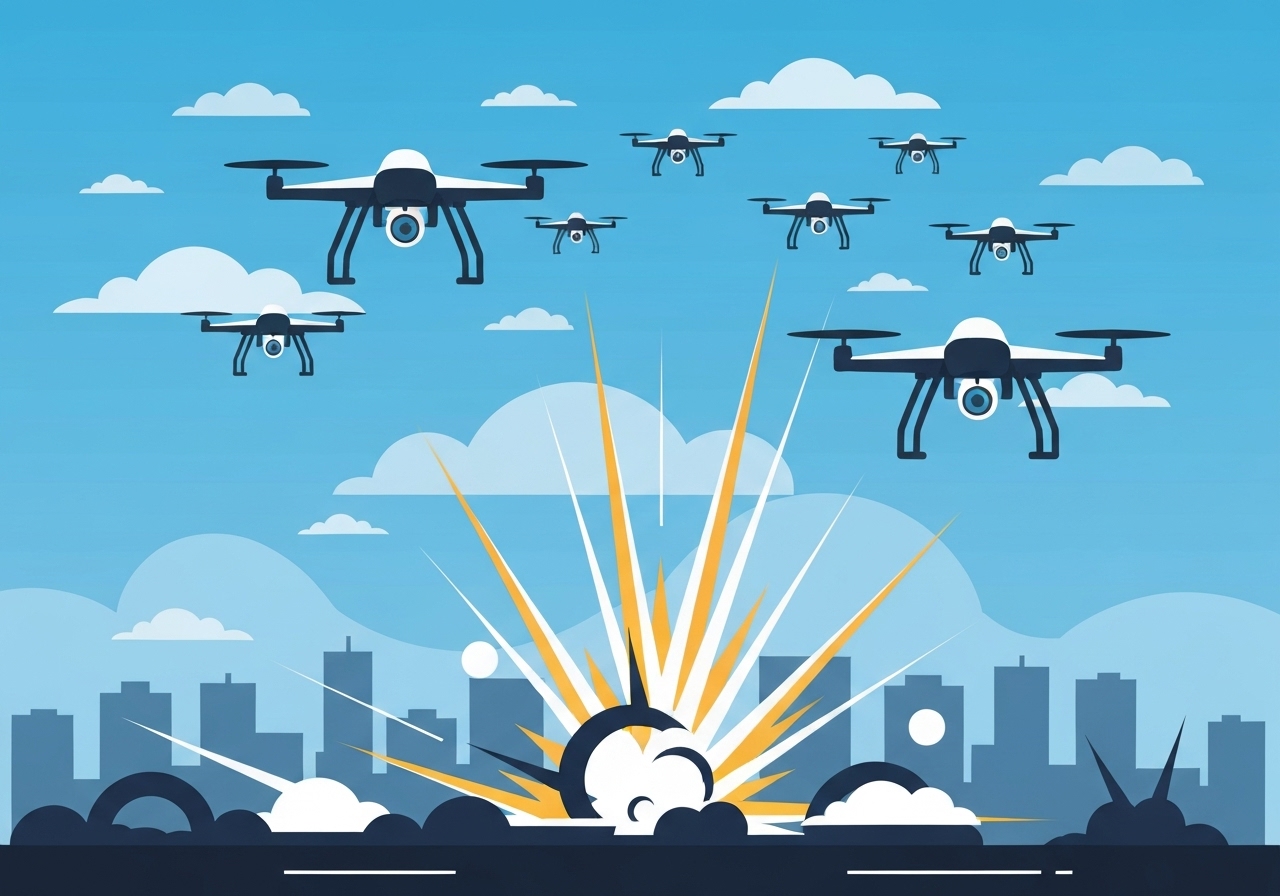
— Russian forces launched the largest single aerial strike since the 2022 invasion, firing 805 Shahed attack or decoy drones plus a number of cruise and ballistic missiles overnight, hitting Kyiv and multiple other Ukrainian cities and killing two people in the capital.
Key Takeaways
- Russia fired 805 drones, nine cruise missiles and four ballistic missiles overnight, according to Ukraine’s air force.
- Ukrainian air defences intercepted 747 drones and four cruise missiles.
- The cabinet of ministers building in central Kyiv was struck for the first time during the war; two residential high-rises were also damaged.
- At least two people were reported killed in Kyiv; other cities targeted included Kryvyi Rih, Dnipro, Odesa, Zaporizhzhia and Kremenchuk.
- This attack is the seventh since June involving more than 400 drones and follows a summer shift toward mass launches aimed at overwhelming defences.
- Ukraine and its partners are under growing pressure to supply more air-defence interceptors ahead of winter.
- Ukraine reported a counter-strike on the Druzhba oil pipeline in Russia’s Bryansk region; damage claims remain unverified.
Verified Facts
Ukraine’s military posted figures that put the strike at 805 Shahed one-way attack or decoy drones, alongside nine cruise missiles and four ballistic missiles. Air-defence units in Ukraine said they intercepted 747 drones and four cruise missiles, leaving dozens that reached intended areas.
In Kyiv, officials said a government building that houses the cabinet of ministers was hit — the first time a central government office has been struck in this conflict. Two high-rise apartment blocks were reported damaged and two civilians were killed in the capital.
Other Ukrainian cities reported damage and incoming strikes during the same overnight barrage, including Kryvyi Rih, Dnipro, Odesa, Zaporizhzhia and Kremenchuk. Emergency services responded to multiple fires and structural damage across targeted areas.
Ukrainian authorities described the scale as the largest aerial assault since the 2022 full-scale invasion. The previous single-night drone record was 539 drones in early July 2025. Ukrainian officials say Russia has increased the tempo and scale of missile and drone launches this summer to deplete Kyiv’s interceptor stocks.
Context & Impact
Analysts say Moscow’s tactic of massing low-cost drones and pairing them with missiles is intended to saturate air-defence networks, forcing defenders to use scarce interceptors and raising the risk that some munitions will get through.
Ukraine has repeatedly appealed to Western partners for additional air-defence systems and interceptors. Kyiv argues that losing stocks of interceptors ahead of winter would leave critical infrastructure, including power stations, at greater risk.
European policy responses are contested. Kyiv renewed calls for a full end to European imports of Russian oil and gas, arguing revenues fuel the Kremlin’s war effort. The EU is discussing a phased ban from 2028, but several member states dependent on Russian supplies are likely to resist rapid change.
- Military: Continued shortages of interceptors could limit Ukraine’s ability to stop future mass launches.
- Humanitarian: Increased strikes on population centres raise civilian protection and displacement concerns.
- Energy: Attacks on power infrastructure and pipelines risk further disruption ahead of winter.
Official Statements
“A strike on the cabinet of ministers is a serious escalation,”
Andriy Sybiha, Ukraine deputy foreign minister
“The world can force the Kremlin to stop the killings; all that is needed is political will,”
President Volodymyr Zelenskyy (Telegram)
Unconfirmed
- Claims that the Ukrainian strike caused “comprehensive fire damage” to the Druzhba pipeline dispatch station in Russia’s Bryansk region are reported by Ukrainian unmanned systems commanders but have not been independently verified.
- The precise number of civilian casualties and the full list of damaged infrastructure across all affected cities are still being tallied by local authorities.
Bottom Line
The overnight barrage marks a new peak in Russia’s campaign to use mass drone and missile strikes to erode Ukraine’s defences and infrastructure. Kyiv’s immediate need is more interceptors and coordinated diplomatic pressure on Moscow; the broader implications include heightened civilian risk and further strain on European energy and political fault lines.