
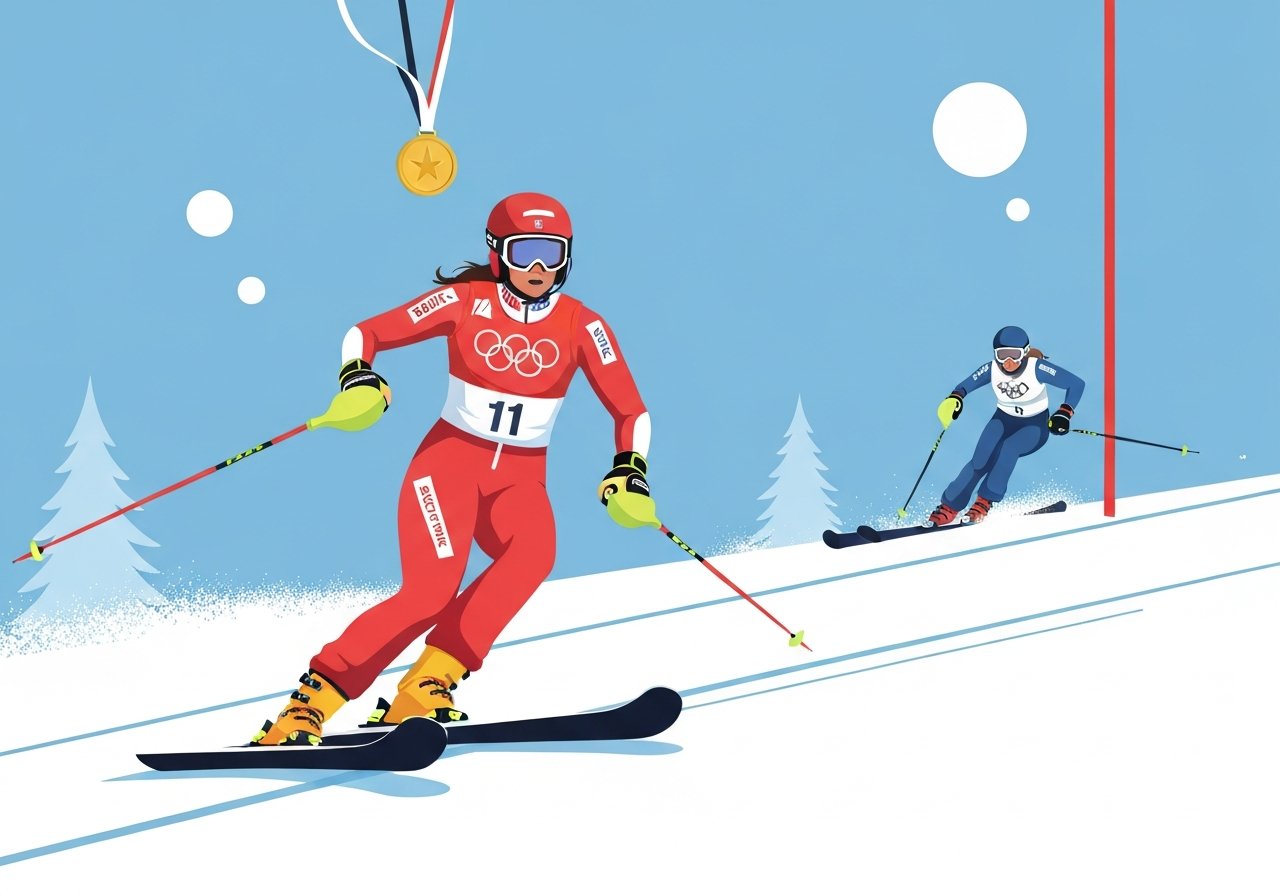
On Feb. 15, 2026 in Cortina d’Ampezzo, Italy, Federica Brignone secured her second gold medal of the home Winter Olympics by winning the women’s giant slalom, completing a comeback story that began with a super-G title three days earlier. Brignone, 35, led by 0.34 seconds after the first run and produced a clean second run to finish 0.62 seconds clear of a tied silver for Sweden’s Sara Hector and Norway’s Thea Louise Stjernesund. U.S. star Mikaela Shiffrin placed 11th, 0.92 seconds behind the winner and 0.30 seconds shy of the silver positions. The result cemented Brignone’s landmark weekend on a sunlit Olympia delle Tofane course in the Dolomites.
Key Takeaways
- Federica Brignone won the giant slalom on Feb. 15, 2026 in Cortina d’Ampezzo, claiming her second gold of these Games after a super-G victory three days earlier.
- Brignone held a 0.34-second advantage after run one and finished 0.62 seconds ahead of tied silver medalists Sara Hector and Thea Louise Stjernesund.
- Mikaela Shiffrin finished 11th, 0.92 seconds off the winning time and 0.30 seconds behind the silver medalists; she has now gone eight straight Olympic races without a medal since 2018.
- Brignone, 35, endured a major leg injury in March last year that left her unable to walk for months and required surgery with screws and a metal plate.
- The giant slalom course was set on Olympia delle Tofane under clear conditions; spectators and fellow competitors honored Brignone’s comeback with visible admiration.
- This result raises immediate questions about event-specific form, the depth of the women’s alpine field at Cortina, and Shiffrin’s prospects in the upcoming slalom on Wednesday.
Background
Federica Brignone entered the 2026 Winter Games as Italy’s most prominent alpine skier and a home favorite. She had been world champion in giant slalom in February of the previous year but suffered a March leg fracture that required surgical repair, including multiple screws and a plate, and left her unable to walk for roughly three months. Her return to competition was gradual, and she had only resumed racing about a month before Cortina, making her two golds at the Games an unusually rapid resurgence.
Mikaela Shiffrin arrived in Cortina with an established record as one of the sport’s all-time greats, yet she has not reached the Olympic podium since PyeongChang 2018, now a stretch of eight Olympic events without a medal. The U.S. star’s coaching team set the giant slalom course—reported to be by head coach Karin Harjo—and Shiffrin sought to close small time gaps rather than dominate speed sections. The contrast between Brignone’s momentum and Shiffrin’s search for Olympic form framed much of the pre-race narrative.
Main Event
The giant slalom unfolded in two runs on the sunlit Olympia delle Tofane descent. Brignone posted a strong first run to lead by 0.34 seconds, then produced a composed second run that the crowd and commentators described as technically near-perfect. The defending Olympic champion Sara Hector and Thea Louise Stjernesund matched each other closely to share the silver medal at +0.62, an uncommon tied podium placement at the Games.
Mikaela Shiffrin recorded two steady runs but lacked the outright speed of Brignone and several rivals on the relatively flat sections of the course, finishing 0.92 seconds behind the winner. After her second run Shiffrin acknowledged she was out of medal contention yet remained outwardly positive, waving to fans and noting the small margins separating her from the leaders. The race course and weather conditions were broadly regarded as fair and consistent for all competitors.
The stadium atmosphere was electric for Brignone’s finish and the Italian medal ceremony that followed, with local spectators chanting and celebrating what many described as a signature moment for Italian winter sport. Brignone acknowledged ongoing pain from her injury and emphasized that she would trade medals to be free of it, underscoring the physical toll behind the triumph. Her two golds moved her Olympic tally from one silver and two bronzes to two golds plus prior medals.
Analysis & Implications
Brignone’s double gold at her home Olympics is significant for several reasons: it caps a rapid recovery from major surgery, it boosts the profile of alpine skiing in Italy, and it alters the narrative around veteran competitiveness in technical events. At 35, Brignone’s performance challenges assumptions about peak ages in alpine skiing and highlights the role of experience and course management in giant slalom success. Nationally, her wins are likely to produce increased attention and funding for Italy’s winter programs ahead of future world championships and World Cup seasons.
For Mikaela Shiffrin, the 11th place finish is a mixed signal. The 0.30-second gap to the silver indicates she remains competitive at the highest level, while the lack of a podium result continues an Olympic medal drought that adds pressure heading into the slalom, widely viewed as her best event. Tactical adjustments, minor equipment or line changes, or simple variance in skiing rhythm could close those margins; conversely, the depth of the field means even small deficits are costly at the Games.
More broadly, the tied silver podium and the presence of multiple nations near the top illustrate a deepening competitiveness in women’s alpine events. Nations that had been less consistent in podium production are now producing medal-caliber runs, suggesting World Cup standings and Olympic medals may be less predictable moving forward. The result also demonstrates how course setting and micro-conditions can amplify small differences into decisive gaps on the Olympic stage.
Comparison & Data
| Athlete | Run 1 margin (relative) | Final margin (relative) | Medal |
|---|---|---|---|
| Federica Brignone | +0.34 lead | 0.00 (winner) | Gold |
| Sara Hector | — | +0.62 | Silver (tie) |
| Thea L. Stjernesund | — | +0.62 | Silver (tie) |
| Mikaela Shiffrin | — | +0.92 | 11th |
This table shows margins reported relative to the gold-medal time; absolute run times were not published in the source report. The 0.62-second gap separating gold and silver is substantial in modern giant slalom, while the 0.30-second difference between Shiffrin and the silver positions falls within a range that can be influenced by line choice or a single sector’s speed. Olympic giant slalom courses compress small time differences into large competitive consequences, underscoring why precision and risk management are central to medal runs.
Reactions & Quotes
Fellow competitors and observers framed Brignone’s wins as both a personal triumph and a highlight for the sport during a home Games.
That was, like, the greatest show of GS skiing that we’ve had in a really long time. Federica skied incredible.
Mikaela Shiffrin
Shiffrin’s comment, offered after her own 11th-place finish, combined respect for Brignone’s skiing with a recognition of the attention Olympic runs bring to the discipline. It reflected both sportsmanship and acceptance of narrow margins that separate medalists from the rest.
I had the suggestion that we should bow to Fede — not only because of this gold but considering her super-G win and how big a part she is of our sport.
Thea Louise Stjernesund
Stjernesund’s gesture in the finish area, kneeling alongside another silver medalist and bowing to Brignone, was interpreted by many as an acknowledgement of the Italian’s comeback and stature within the alpine community. Brignone herself described the victory as better than a dream while noting the daily pain she still feels from last year’s injury.
Unconfirmed
- Whether specific course-setting choices by any single coach materially cost or advantaged particular athletes beyond normal variance has not been independently verified.
- Long-term implications of Brignone’s ongoing pain on her future season and training plan are not confirmed and depend on medical and team decisions ahead.
- Predictions about Mikaela Shiffrin ending her Olympic medal drought in the upcoming slalom remain speculative until the event is contested.
Bottom Line
Federica Brignone’s giant slalom gold in Cortina on Feb. 15, 2026 is both a personal comeback and a national moment for Italy, turning a recent serious injury into a defining Olympic achievement. Her two golds across technical and speed-technical events in the span of days emphasize adaptability, experience, and competitive poise at age 35.
Mikaela Shiffrin’s 11th place is a reminder that even the sport’s most decorated athletes face narrow margins and occasional Olympic frustration; her proximity to the silver positions keeps the slalom on Wednesday as a genuine opportunity for redemption. The broader field’s depth, a tied silver podium, and the role of course conditions all point to a more open competitive landscape in women’s alpine skiing going forward.