
Lead
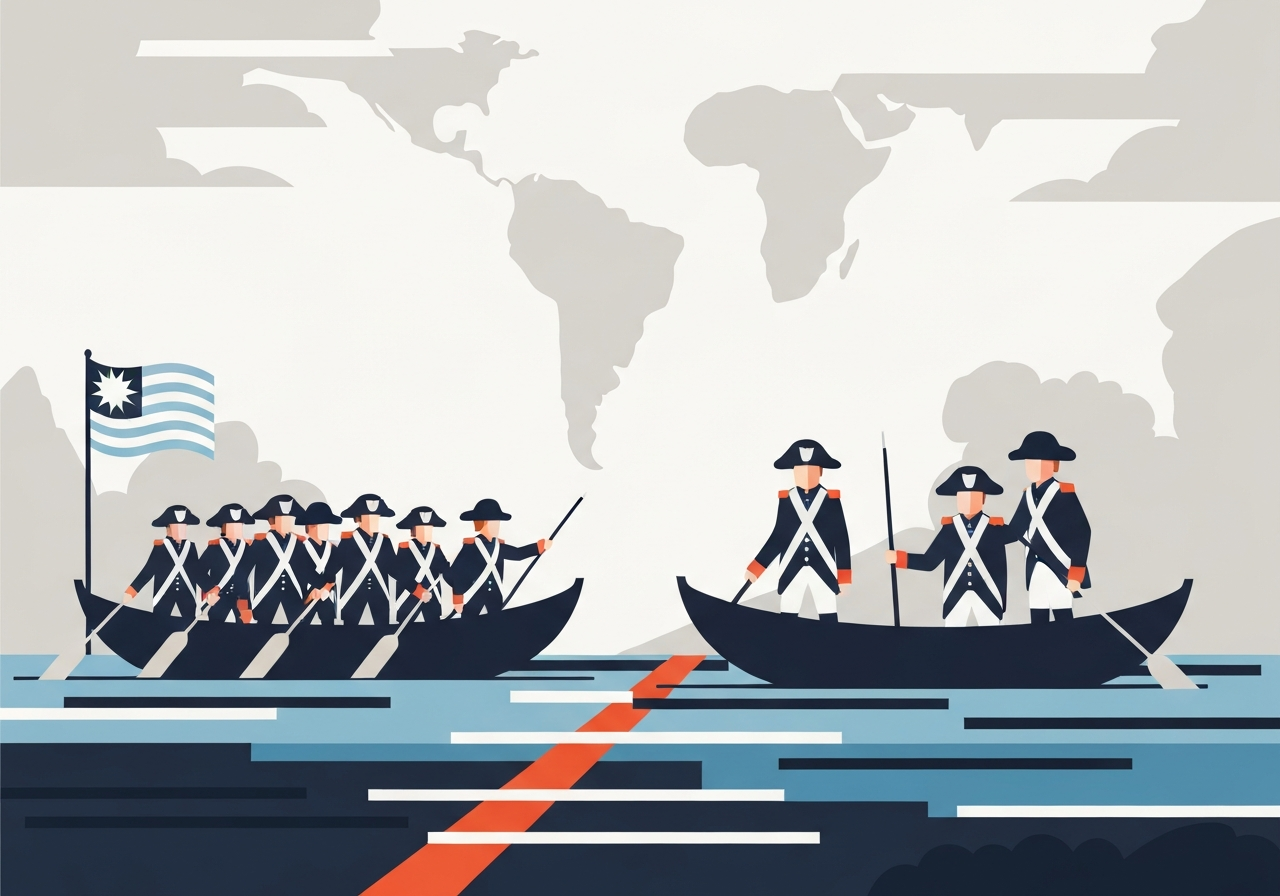
On Christmas night 1776, General George Washington led Continental troops across an icy Delaware River and won at Trenton, a reversal that revived American hopes. That freezing weather, once ordinary in the Mid-Atlantic, played a tactical role by reducing enemy vigilance and enabling surprise. Today the same landscape records an accelerating climate signal: regional winters have warmed, and long ice-core records show rising greenhouse gases since the Industrial Revolution. This story links a pivotal Revolutionary War moment to the origins and consequences of modern climate change.
Key Takeaways
- Washington crossed the Delaware on Christmas 1776, seizing surprise and scoring the Trenton victory that helped sustain the Continental Army.
- Re-enactors and historians note ice on the river was a strategic factor that evening, allowing Americans to cross while foes expected otherwise.
- Regional winter averages around Philadelphia are now about 5.5°F warmer than in 1970, according to Climate Central data.
- Ice-core analyses spanning roughly 800,000 years show atmospheric CO2 levels remained below about 300 ppm until the start of the Industrial era, after which they rose sharply.
- The Industrial Revolution’s growth in fossil-fuel combustion is the primary driver of the post-1800 rise in atmospheric CO2 and attendant warming trends.
- Warmer winters do not eliminate cold extremes, but they reduce the frequency, duration and geographic reach of sustained ice conditions once common in the 18th century.
Background
By late 1776 the Continental Army had suffered a series of defeats and lay in retreat; morale and enlistments were flagging. Washington’s decision to cross the Delaware on December 25–26 came after weeks of tactical setbacks and amid urgent pressure to produce a meaningful victory. The region’s winter climate in the 18th century was generally colder than today, as recorded in contemporary diaries and Jefferson’s meteorological notes, making substantial river ice a familiar hazard and, in this case, a possible opportunity.
At the same time that Revolutionary America was being forged, human societies in Europe and North America were beginning the rapid expansion of coal, oil and gas use that historians call the Industrial Revolution. That economic transformation increased emissions of carbon dioxide and other greenhouse gases. Glaciologists and paleoclimatologists now read that industrial signal into ice cores drilled in Greenland and Antarctica, where trapped air bubbles preserve a multi-millennial record of atmospheric composition.
Main Event
On the night of December 25, 1776, Washington’s force crossed the ice-flecked Delaware River in a coordinated riverine operation. Contemporary accounts and present-day park historians describe floating ice and bitter cold that reduced visibility and delayed an expected response from Hessian and British forces. Those conditions contributed to a successful surprise attack on Trenton on December 26, shifting momentum to the Continental side and encouraging renewed recruitment and support.
Alex Robb, an educator at Washington Crossing Historic Park, has emphasized how the cold functioned tactically: it complicated movement generally but also lowered enemy preparedness, providing a narrow window for an audacious maneuver. Re-enactments each year underscore how marginal the conditions were and how a few degrees of temperature and a few inches of ice could alter the battle’s outcome.
More than symbolic, the episode illustrates an intersection of human decisions and environmental context. The same decades that produced the U.S. Revolution also saw the early stages of large-scale fossil-fuel use. Over the following two centuries human emissions accumulated in the atmosphere, changing the baseline climate against which historical weather patterns are judged.
Analysis & Implications
The Delaware crossing is instructive because it ties a discrete historical event to long-term environmental trends. Tactical advantage depended on ice conditions that were more common in the 18th century; today, those conditions are less frequent in the Mid-Atlantic because average winter temperatures have risen. That shift does not erase short-term cold snaps, but it alters probabilities for river ice formation, freeze–thaw cycles and the duration of hazardous winter conditions.
From a climatological perspective, ice-core records provide the clearest signal of a turning point. Samples reaching back roughly 800,000 years show CO2 variations but not sustained values above about 300 parts per million; the post-1800 rise is strongly correlated with expanded fossil-fuel burning. That increase in greenhouse gases has raised global and regional temperatures, affecting precipitation patterns, storm tracks and the frequency of extreme events such as heat waves and heavy precipitation.
For planners and historians alike, the linkage matters. Heritage sites and re-enactment communities face changing weather risks that affect programming and preservation. Policymakers and infrastructure managers confront altered winter maintenance needs, riverine flood risks, and ecological shifts in species ranges. On an international scale, the same physical processes that warmed the Delaware region also contribute to sea-level rise and intensified hydrological extremes with global consequences.
Comparison & Data
| Reference | Indicator | Value / Note |
|---|---|---|
| Winter temperature (Philadelphia area) | Change since 1970 | +5.5°F (Climate Central analysis) |
| Ice-core CO2 record | Timespan | ~800,000 years; pre-Industrial values below ~300 ppm |
| Historical event | Date | Washington’s crossing: Dec 25–26, 1776 |
The table summarizes the three data threads central to this story: the historical date of the crossing, the multi-millennial ice-core CO2 record, and the measured regional warming since 1970. While local weather can still produce severe cold and river ice, the statistical baseline has shifted, making the precise conditions that aided Washington less likely over time.
Reactions & Quotes
“The cold on the Delaware complicated the crossing but also reduced enemy expectations, enabling surprise,”
Alex Robb, Washington Crossing Historic Park (educator)
Robb’s comment contextualizes the tactical calculus: harsh weather both threatens and conceals military movements. Re-enactors and historians use such assessments to explain why a marginal night became decisive.
“Ice cores let us sample air from centuries past — it’s like a time machine for climate,”
Eric Steig, glaciologist, University of Washington
Steig’s metaphor highlights why paleoclimate data are central to connecting late-18th-century weather to a longer record of atmospheric composition and change.
“Winters will still have snow and cold, but sustained cold periods are less common,”
Jennifer (Jen) Brady, senior data analyst, Climate Central
Brady’s summary points toward management and planning implications: stakeholders should expect variability but also a shifting baseline toward milder winters in many temperate regions.
Unconfirmed
- Precise year when atmospheric CO2 first exceeded 300 ppm in specific local records — ice-core datasets show the long-term upward trend, but the exact crossover year can vary by core and analysis method.
- Detailed microclimatic conditions at specific crossing points on the Delaware on Dec 25–26, 1776 — eyewitness accounts vary and re-enactments approximate rather than replicate the exact river state.
Bottom Line
Washington’s crossing of the Delaware is both a tactical military episode and a useful entry point for discussing long-term environmental change. The ice that made surprise possible in 1776 is now less common in many parts of the Mid-Atlantic as average winter temperatures have risen. That shift does not remove cold extremes but changes their frequency and duration, with implications for heritage interpretation, infrastructure and ecosystems.
More broadly, the juxtaposition of a founding-era battlefield and modern climate science underscores continuity between human history and planetary-scale environmental change. The same economic and technological choices that powered early industrialization also set in motion atmospheric shifts recorded in ice and now felt as regional warming. Observers should treat such historical moments as ways to make complex climate science tangible and relevant for policy and preservation decisions going forward.
Sources
- CBS News — news organization (original report, Feb 15, 2026)
- Climate Central — science nonprofit (data analysis cited on regional winter warming)
- University of Washington College of the Environment — academic institution (glaciology research and expert commentary)
- U.S. Ice Drilling Program — research program (logistics and context for ice-core sampling)
- Washington Crossing Historic Park — historic site (park education and interpretation)