
Lead
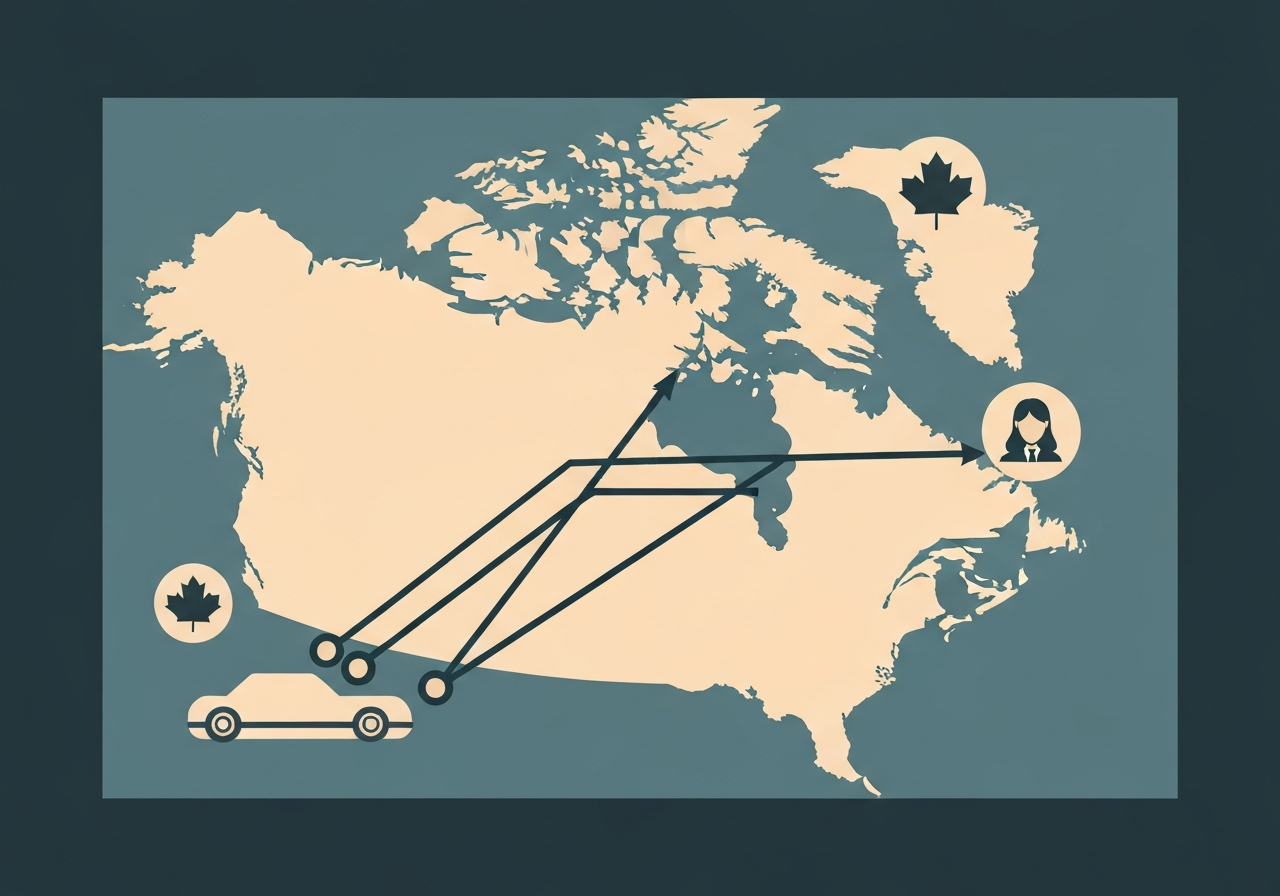
Canada will announce a new defence-industry strategy the week of Feb. 15, 2026 that redirects billions of dollars in military procurement away from U.S. defense contractors and toward Canadian suppliers. The policy, presented by Prime Minister Mark Carney in Ottawa, comes amid escalating tensions with the Trump administration, including recent tariffs and political rhetoric. The shift is intended to boost domestic capacity and reduce reliance on a partner Ottawa now regards as less predictable. Government officials say the move will reshape procurement rules and target Canadian manufacturers for major equipment buys.
Key Takeaways
- Announcement timing: The strategy is being unveiled the week of Feb. 15, 2026 and follows months of diplomatic friction with the United States.
- Financial scale: Ottawa plans to divert “billions of dollars” in planned military spending from U.S. firms to Canadian defence contractors, according to government briefings.
- Political catalyst: The shift was prompted by a series of measures from the Trump administration, including tariffs on Canadian industries and public commentary questioning Canada’s status as a reliable partner.
- Strategic rationale: Officials frame the plan as both an industrial-policy initiative and a response to alliance uncertainty, aiming to strengthen Canada’s domestic supply chain.
- Multilateral context: Officials and analysts tied the decision to broader transatlantic worries voiced at the World Economic Forum in Davos (Jan. 2026) and the Munich Security Conference (Feb. 2026).
- International echoes: German Chancellor Friedrich Merz and other European leaders have recently raised similar concerns about the rules-based order and allied reliability.
Background
The move builds on a longer Canadian debate about defence procurement and industrial offsets. For decades Ottawa awarded sizable contracts to established U.S. defense firms for platforms, components and services, citing interoperability and established supply chains. That default preference has been increasingly questioned at home as policymakers seek to preserve and grow domestic high-tech and manufacturing jobs.
Tensions with the United States escalated after a series of tariff actions and public statements by President Trump about North American relations. Those developments prompted senior Canadian officials to reconsider near-term procurement priorities and to explore policy tools that can steer spending toward Canadian firms while maintaining operational readiness.
In public addresses late 2025 and early 2026, Canadian leaders framed their approach as part of a broader effort by mid-sized powers to diversify strategic partnerships and reduce exposure to unilateral actions by major powers. The policy follows calls by political leaders and business groups for stronger industrial strategy in the face of geopolitical uncertainty.
Main Event
On Feb. 15, 2026, Prime Minister Mark Carney’s office confirmed that a formal defence-industry strategy would be released that week, outlining new procurement rules and incentives for domestic suppliers. Government communications emphasize a phased redirection of funds rather than an immediate cancellation of all existing procurement arrangements. Officials say criteria will prioritize Canadian content, domestic value-added and technology transfer in future contracts.
The strategy reportedly includes a mix of measures: stricter domestic-preference procurement clauses, targeted investments in industrial capacity, and support for small and medium-sized enterprises to meet defence standards. While details of specific contract reallocations were not published at the initial briefing, ministers signalled that major upcoming procurements would be reviewed under the new framework.
Ottawa framed the policy as both economic and strategic: creating jobs and supply-chain resilience at home while reducing the risk that political disputes with the United States could disrupt critical sustainment and delivery schedules. Officials repeatedly emphasized that interoperability with NATO partners remains a priority and that Canada will seek to avoid gaps in capability during the transition.
U.S. defense companies and Washington were not reported as consulted in advance on the announced changes, a point likely to complicate bilateral defence-industry relations. Industry groups in Canada and the United States warned that sudden policy shifts could raise costs or delay capability deliveries if not carefully managed.
Analysis & Implications
Politically, the announcement is a clear signal that Ottawa is recalibrating how it balances alliance commitments with domestic economic and political pressures. Redirecting procurement to national suppliers can shore up jobs and industry support at home, a useful domestic political payoff for the government amid trade disputes with the United States.
Economically, the plan aims to channel defence spending into industrial upgrading: investments in tooling, certification and workforce training are necessary for Canadian firms to compete for large platform contracts. That transition will take time and public investment; immediate capability gaps could appear if suppliers are not yet scaled to meet complex system requirements.
Strategically, the move reflects a wider Western reassessment of dependency on the United States for critical military supply chains. European leaders have voiced similar concerns, and Ottawa’s action may encourage allied efforts to diversify procurement footprints in ways that preserve interoperability while enhancing resilience.
However, shifting billions of dollars in procurement is operationally complicated. Contracts for major systems typically involve long lead times, multinational supply chains, and certification standards tied to existing suppliers. Ottawa will need detailed transition plans to avoid shortfalls in maintenance, training and spare parts that could degrade readiness.
Comparison & Data
| Date | Event |
|---|---|
| Jan. 2026 | World Economic Forum — Carney warns of a permanent “rupture” in world order |
| Feb. 2026 | Munich Security Conference — European leaders question allied reliability |
| Feb. 15, 2026 | Canadian government announces plan to redirect military spending to domestic suppliers |
The timeline shows how the policy announcement follows a sequence of diplomatic and public remarks in early 2026. Planners will have to align procurement calendars, industrial investments and alliance commitments over multiple fiscal years to make the shift sustainable.
Reactions & Quotes
Government spokespeople framed the strategy as protective of Canadian industrial capacity and responsive to changing alliance dynamics. Officials emphasize careful sequencing to preserve military readiness while expanding domestic production.
“There has been a permanent ‘rupture’ in the world order,”
Prime Minister Mark Carney, speech in Davos (Jan. 2026)
European leaders voiced related concerns about the international rules-based order and the need for greater strategic autonomy. Those statements have helped create political space in capitals such as Ottawa for more assertive procurement choices.
“The international rules-based order no longer exists,”
Chancellor Friedrich Merz, Munich Security Conference (Feb. 2026)
Industry groups in both Canada and the United States urged clarity and consultation to avoid disruptions. Analysts say Ottawa must balance domestic-industrial goals with the technical realities of defence procurement.
Unconfirmed
- Precise dollar breakdowns and the list of specific contracts that will be reallocated have not been publicly released by the government.
- It is unclear whether U.S. firms will be barred entirely from future competitions or simply face stronger domestic-preference criteria.
- The short-term capacity of Canadian suppliers to absorb large, complex procurements without assistance remains to be independently verified.
Bottom Line
Canada’s decision to steer billions of dollars in military procurement toward domestic suppliers is both a policy response to deteriorating bilateral political relations and a proactive industrial strategy. The move addresses domestic economic and political goals but introduces operational and timing risks that Ottawa will need to manage through careful transition planning.
For allies and industry, the announcement signals a shift in how middle powers are approaching defence independence and supply-chain resilience in an era of geopolitical unpredictability. The ultimate outcome will depend on implementation details, funding for supplier development, and the degree of coordination with NATO partners to preserve interoperability.
Sources
- The New York Times — News reporting on the Canadian announcement and related diplomatic context
- World Economic Forum — Organization, reference to Davos sessions and statements (Jan. 2026)
- Munich Security Conference — Organization, reference to Munich Security Conference (Feb. 2026)