
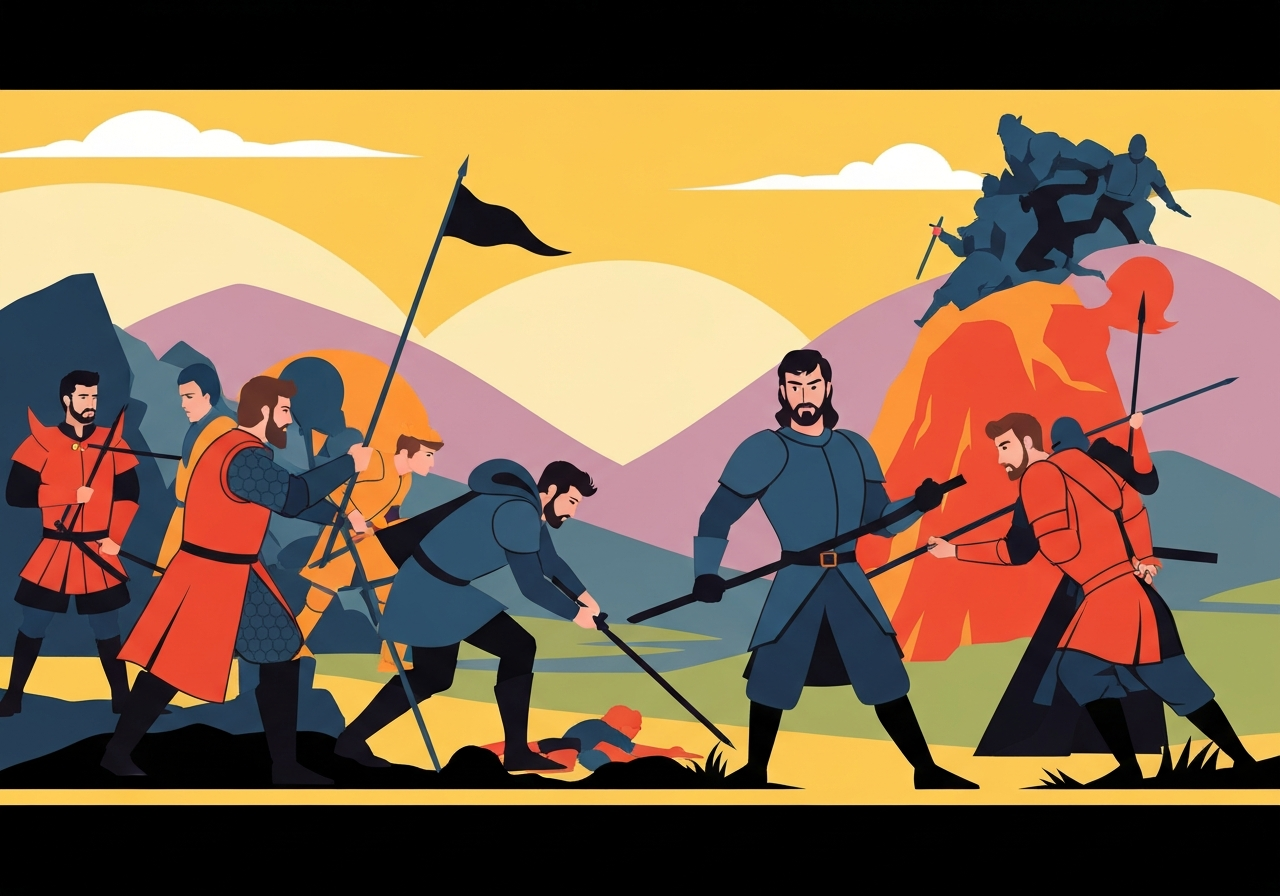
Lead: Episode 5 of A Knight of the Seven Kingdoms, titled “In the Name of the Mother,” aired on Feb 16, 2026 and centers on a brutal Trial of Seven that reshapes the season’s stakes. The installment intercuts present combat with a substantive flashback that reveals Dunk’s formative losses and moral code. The episode ends with a highborn casualty whose death carries clear political consequences for the realm. Performances, especially Peter Claffey’s, and the episode’s unflinching violence make the hour feel consequential and costly.
Key Takeaways
- Episode title: “In the Name of the Mother”; original post date: Feb 16, 2026.
- Roughly half the episode is a flashback showing young Dunk and Rafe surviving in Flea Bottom and planning to flee to the Free Cities.
- Two street-level killings occur in the flashback (a city watchman and his sidekick), and Rafe is murdered in close quarters, an event that defines Dunk’s later choices.
- The present-day sequence centers on a Trial of Seven that produces intense, close-range knight-on-knight violence and leaves Prince Baelor dead from a crushing blow to the skull.
- Principal cast notes: Peter Claffey (Dunk) turns in the episode’s strongest performance to date; Bamber Todd portrays young Dunk and Chloe Lea plays Rafe.
- Ser Arlan’s brief, half-drunk intervention establishes a moral touchstone for Dunk—his advice “Get up” recurs as a motivating refrain.
- The episode’s tone underlines that both highborn and smallfolk lives are expendable in this story—chivalry and heroism carry fatal costs.
Background
The series builds on a familiar, fraught Westerosi landscape in which status, bloodlines and violence determine outcomes as often as law or right. Hedge knights such as Dunk occupy a liminal social place: they can display true courage yet lack the protections of a lordly household. The show has consistently juxtaposed the pageantry of knighthood with the squalor of places like Flea Bottom, where poverty and disease harden young survivors into pragmatic actors.
Episode 5 deepens that contrast by going back to Dunk’s youth, showing how formative losses can harden moral instincts even while limiting options for escape. The Trial of Seven, a martial contest that pits whole factions against each other, serves narratively to compress wider political conflicts into a small, catastrophic tableau. In this episode those two threads—street-level desperation and elite combat—collide, producing consequences that could reverberate through the season’s remaining episodes.
Main Event
The hour opens in medias res with the Trial of Seven: Dunk’s side, bolstered by Prince Baelor, faces off against Prince Aerion and his supporters. Early in the sequence Dunk is rendered unconscious, which triggers the episode’s extended flashback to his childhood in Flea Bottom. That flashback occupies nearly half the runtime and establishes the bond between young Dunk and Rafe, who dream of buying passage to the Free Cities to start anew.
The pair survive by scavenging battlefields and picking pockets—an economy of scraps and risk. A city watchman confronts them repeatedly; after a final pickpocketing the watchman slits Rafe’s throat in front of Dunk, ending their escape plan and leaving Dunk bereft at a young age. Rafe’s pragmatic toughness is made apparent across these scenes, and her death functions as a blunt lesson about sudden loss and the limits of hope in Flea Bottom.
Shortly after Rafe’s murder young Dunk encounters Ser Arlan of Pennytree, who intervenes despite being intoxicated. Ser Arlan wounds the watchman and his companion, then rides away; Dunk follows and is later taken in by the hedge knight. Ser Arlan’s repeated admonition—”Get up”—becomes the episode’s moral touchstone, echoed later by Egg when Dunk must rise again in the trial.
Back in the present, the Trial of Seven delivers fierce, close-quarters violence: horses, maces and shields collide in rapid, bloody exchanges. Dunk, taking repeated punishment, eventually defeats Prince Aerion and forces him to concede. The triumph is short-lived: Prince Baelor, who sought to act with honor and oversee a fair contest, is discovered with a fatal skull fracture consistent with a mace blow believed to have come from Prince Maekar. Baelor’s death transforms a personal victory into a historical casualty.
Analysis & Implications
Narratively, the flashback reframes Dunk not as naïve but as someone whose moral impulses come from trauma-driven survival decisions. Rafe’s death explains why Dunk prizes loyalty and why he can forgive or overlook certain cruelties—his code is forged in loss. That origin story deepens the pathos of the present: Dunk’s victory in the trial does not erase the personal cost of the political moment he has helped shape.
Baelor’s death is more than a character loss; it is a political turning point. A highborn prince who acted to uphold honor dies because of the contest, which will likely inflame factional tensions and shift alliances. The apparent involvement of Prince Maekar’s mace (as observers believe) injects a plausible spark for succession disputes or retributive violence—both staples of Westerosi power politics.
On a thematic level, the episode interrogates chivalry as a dangerous ideal. The series repeatedly asks whether knightly virtues—honor, protection of the weak, fair combat—are sustainable in a world where violence is systemic and often indiscriminate. The depiction here is unromantic: bravery coexists with serendipity and misfortune, and righteous acts can produce catastrophic fallout.
From a craft perspective, the episode is designed to be sensory and immediate. The staging of the Trial of Seven emphasizes tactile impacts—mace blows, horse collisions and spurting blood—so the audience feels the physical cost of combat. That choice underlines the showrunner’s intent to strip away heroic gloss and present warfare as blunt, destabilizing force rather than cinematic glory.
Comparison & Data
| Episode | Flashback Share | Notable Deaths |
|---|---|---|
| Episode 5 (“In the Name of the Mother”) | ~50% of runtime | Rafe; city watchman; watchman’s sidekick; Prince Baelor |
| Earlier episodes | Primarily present-day action | Joust injuries and skirmishes, fewer personal-origin flashbacks |
The table highlights that Episode 5 is structurally different from prior hours: it dedicates a far larger portion of its length to origin material that reshapes character motivation. The tally of named, consequential deaths in this hour is higher than in single prior episodes, underscoring its narrative weight heading into the finale.
Reactions & Quotes
Cast and character beats have already produced strong viewer response. The sequence in Flea Bottom and the Trial of Seven have been singled out for their emotional bluntness and physical realism.
“Get up.”
Ser Arlan of Pennytree — episode dialogue
This repeated line functions as both practical advice and ethical shorthand: it frames Dunk’s arc and is echoed by other characters as a prompt to endure. In context, the phrase binds the childhood trauma scenes to the present-day trial, giving the episode structural symmetry.
“Honor can cost a life.”
Anonymous councilor (in-episode observation)
A short, emblematic remark voiced within the episode encapsulates its argument about the price of principle. It comes after Baelor’s death and is used in the show to underline that high-minded actions have real consequences in this world, a theme likely to shape political maneuvering going forward.
Unconfirmed
- Attribution of Baelor’s skull fracture to Prince Maekar’s mace is reported within the episode as the prevailing belief but is not shown definitively in sequence.
- Interpretations of Rafe’s ethnic background (noted as possibly Dornish) are speculative within the narrative and are not explicitly confirmed on-screen.
- Whether Dunk’s brief affinity for Tanselle will mirror his past relationship with Rafe remains an open narrative possibility rather than a confirmed plotline.
Bottom Line
Episode 5 is the season’s emotional fulcrum: it ties Dunk’s present trials to a trenchant origin story that explains his moral reflexes while delivering a costly political death that will reorient the plot. The balance between intimate, street-level tragedy and a spectacle of knightly violence gives the hour texture and consequence. Performances—especially Peter Claffey’s portrayal of a weathered but resolute Dunk—anchor scenes that could otherwise feel merely brutal.
For viewers, this installment underscores the series’ central claim that courage and honor do not immunize characters from misfortune; rather, those qualities can carry a price both personal and political. As the season approaches its finale, narrative momentum now tilts toward the fallout from Baelor’s death and how Dunk’s shaped conscience will respond to emergent threats.