
Lead
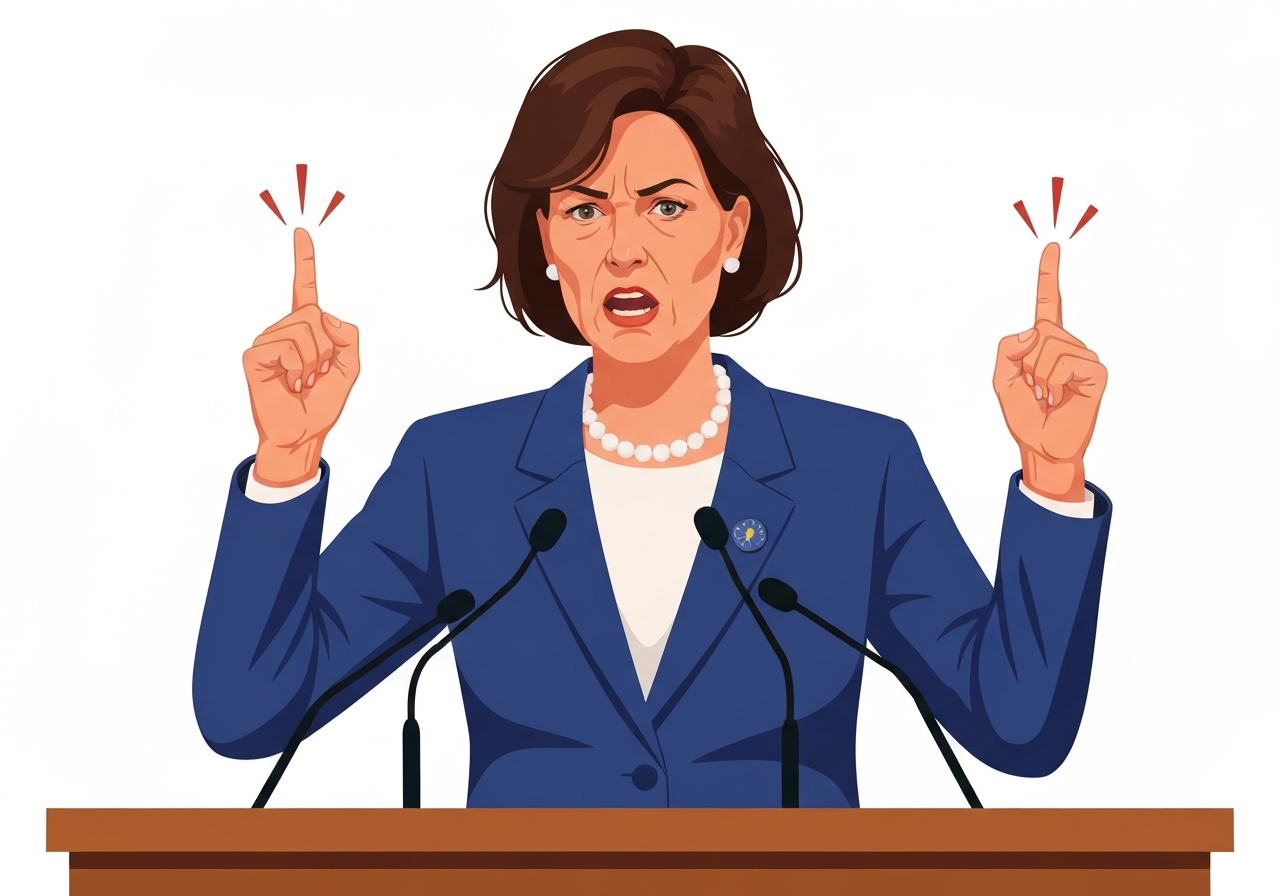
On 15 February 2026 at the Munich Security Conference, EU foreign policy chief Kaja Kallas rejected US assertions that Europe faces ‘civilisational erasure’, calling such lines of argument ‘fashionable euro-bashing’. Her remarks came amid tense transatlantic exchanges at the three-day gathering, where Ukraine, NATO burden-sharing and migration loomed large. Kallas also warned the US it cannot resolve the war in Ukraine without Europe’s consent and participation, underscoring the continent’s continued strategic relevance.
Key Takeaways
- Kaja Kallas publicly rebuked US criticism at the Munich Security Conference on 15 February 2026, calling US-led ‘euro-bashing’ fashionable despite Europe’s strengths.
- US Secretary of State Marco Rubio offered a conditional partnership, saying Washington prefers to act with Europe but can act alone if necessary.
- Kallas cited Estonia’s second-place ranking in the global press freedom index versus the US at 58th as a counter to US media-freedom criticism.
- Five European intelligence agencies concluded Alexei Navalny was poisoned with a toxin derived from South American dart frogs; the US did not join their joint statement.
- Kallas described a 2027 EU accession date for Ukraine as unrealistic, signaling caution about rapid enlargement.
- Rubio traveled to Bratislava after Munich and declined to explain why US intelligence agencies were not part of the Navalny statement.
- UK leader Keir Starmer said UK-US intelligence cooperation is closer than ever despite frictions highlighted at Munich.
Background
The Munich Security Conference, held across a three-day span in mid-February 2026, has become the regular forum for public airing of transatlantic strategic disagreements. This year’s agenda was dominated by the war in Ukraine, debates over burden-sharing inside NATO, and disputes over migration and trade that reflect broader political currents in Washington and European capitals. Tensions have been heightened by a series of high-profile disagreements between European leaders and recent US administrations on defense spending, trade policy and approaches to Russia.
Kaja Kallas, Estonia’s former prime minister turned EU foreign policy chief, has been an outspoken critic of Russian aggression and a frequent interlocutor with US officials. Her interventions at Munich followed speeches that framed part of Washington’s message as conditional: the US signaled willingness to partner closely with Europe if Europe adjusts policies on migration, trade and defense. Those conditions, and the public manner of their delivery, have prompted debate about whether the US is privileging domestic political signaling over quiet diplomacy.
Main Event
Marco Rubio delivered a keynote that combined diplomatic tone with firm demands: the US urged Europe to adapt on migration policy, deepen market openness and raise defence spending. Rubio framed the two continents as linked by history and interest but made clear US cooperation would be contingent on changes he said were necessary for a shared global strategy. He described the US as willing to act alone but preferring collaborative leadership with Europe when possible.
Kallas responded on the conference’s closing day by rejecting characterisations that Europe is in decline. She argued Europe still projects values that attract partners worldwide and pointed to anecdotal evidence she was given — including a remark about Canadian interest in the EU — to illustrate continued appeal. She also disputed critiques about media freedom by citing Estonia’s high ranking in the press freedom index compared with the US.
The conference also touched on the poisoning of Russian opposition figure Alexei Navalny. Five European intelligence agencies issued a coordinated finding that he was poisoned with a toxin derived from South American dart frogs and held the Russian state responsible. Rubio did not sign that statement and later said the European agencies conducted their own coordinated analysis; he declined to detail why US agencies were not party to that effort.
UK prime minister Keir Starmer used the forum to underscore close UK-US intelligence ties, telling delegates cooperation on intelligence was ‘closer than ever’ even as broader transatlantic rhetoric grew more pointed. The juxtaposition of public sharpness and private cooperation illustrated the complex, layered nature of the alliance discussions at Munich.
Analysis & Implications
The public airing of conditionality by a senior US official underscores a strategic friction: Washington seeks a stronger European contribution to shared security tasks while also asserting leadership preferences. That posture risks alienating European publics and leaders if perceived as coercive rather than collaborative, complicating NATO cohesion at a time when unity is critical for deterrence against Russia.
For the EU, Kallas’s forceful rebuttal signals a desire to defend Europe’s normative standing and to resist narratives that undercut European political legitimacy. Emphasising press freedom rankings and popular attraction to EU norms aims to reframe the argument from decline to resilience, which may strengthen the EU’s bargaining position in transatlantic negotiations but risks hardening stances on both sides.
On Ukraine, Kallas’s caution about offering a firm accession timetable—calling 2027 unrealistic—points to an emerging realism in Brussels about enlargement mechanics and political readiness. A slower accession process would preserve EU credibility by avoiding premature promises, but it could also frustrate Kyiv and its supporters who seek rapid integration as a political and security guarantee.
Intelligence cooperation surfaced as a central, if sensitive, fault line. The fact that European agencies publicly presented conclusions the US did not join raises questions about intelligence-sharing norms, differing analytic approaches and the political calculus behind public attribution. If unresolved, such divergences could hamper joint responses to malign actors that require synchronized diplomatic, economic and security measures.
Comparison & Data
| Indicator | Europe (Example) | United States |
|---|---|---|
| Press Freedom Index (rank) | Estonia — 2 | United States — 58 |
| Reported public interest in EU membership (anecdotal) | Canada — cited ‘over 40%’ | — |
The table highlights two data points discussed at Munich: Estonia’s high press freedom ranking and an anecdotal figure Kallas cited about Canadian interest in the EU. The press freedom ranking is drawn from widely used global indices and serves as a concrete counterpoint to claims about European backsliding. The Canadian interest figure, by contrast, was presented as an impression Kallas received while traveling and should be treated cautiously until corroborated by survey data.
Reactions & Quotes
Before quoting, note the following: each excerpt below is short and placed in context of the speaker’s wider remarks at Munich and subsequent stops.
‘Euro-bashing is very fashionable despite all the good things Europe actually has to offer.’
Kaja Kallas, EU foreign policy chief
Kallas used this line to frame her rebuttal to what she described as dismissive narratives about Europe. She followed the remark by pointing to Europe’s normative appeal and specific indicators of civic health, aiming to undercut the idea of an inevitable European decline.
‘While we are prepared, if necessary, to do this alone, it is our preference and it is our hope to do this together with you.’
Marco Rubio, US Secretary of State
Rubio’s comment, delivered in a major policy speech, was meant to combine a reassurance of continued partnership with an insistence on conditionality. Delegates interpreted the line as a strategic nudge: the US seeks greater European alignment on migration, trade and defence but signals willingness to act unilaterally if cooperation falters.
‘Cooperation between the UK and the US on intelligence is closer than ever.’
Keir Starmer, UK Prime Minister
Starmer’s intervention aimed to reassure allies that personnel-level ties remain robust despite public disagreements. He framed intelligence cooperation as a stabilising factor that helps offset more visible diplomatic frictions discussed at Munich.
Unconfirmed
- The statement that ‘over 40% of Canadians have an interest in joining the EU’ was presented anecdotally by Kallas and lacks public polling data cited in her remarks.
- The specific reasons US intelligence agencies did not join the European statement on Alexei Navalny’s poisoning have not been publicly disclosed and remain unclear.
- Attribution about the domestic political audience for some US remarks, while plausible, is inferential and not formally confirmed by US officials.
Bottom Line
Munich 2026 laid bare a familiar but intensifying dynamic: shared threats that require allied unity are colliding with public rhetoric and conditional offers that risk widening political distance. Kaja Kallas’s public rebuttal sought to defend European legitimacy and to remind partners that outcomes on Ukraine and other security challenges require European consent and active participation.
For policymakers, the episode is a reminder that alliance management will demand both firm diplomacy and attention to public signalling. Moving forward, leaders on both sides of the Atlantic will need mechanisms for private problem-solving and clearer, mutually accepted frameworks for burden-sharing if transatlantic cooperation is to remain effective.