
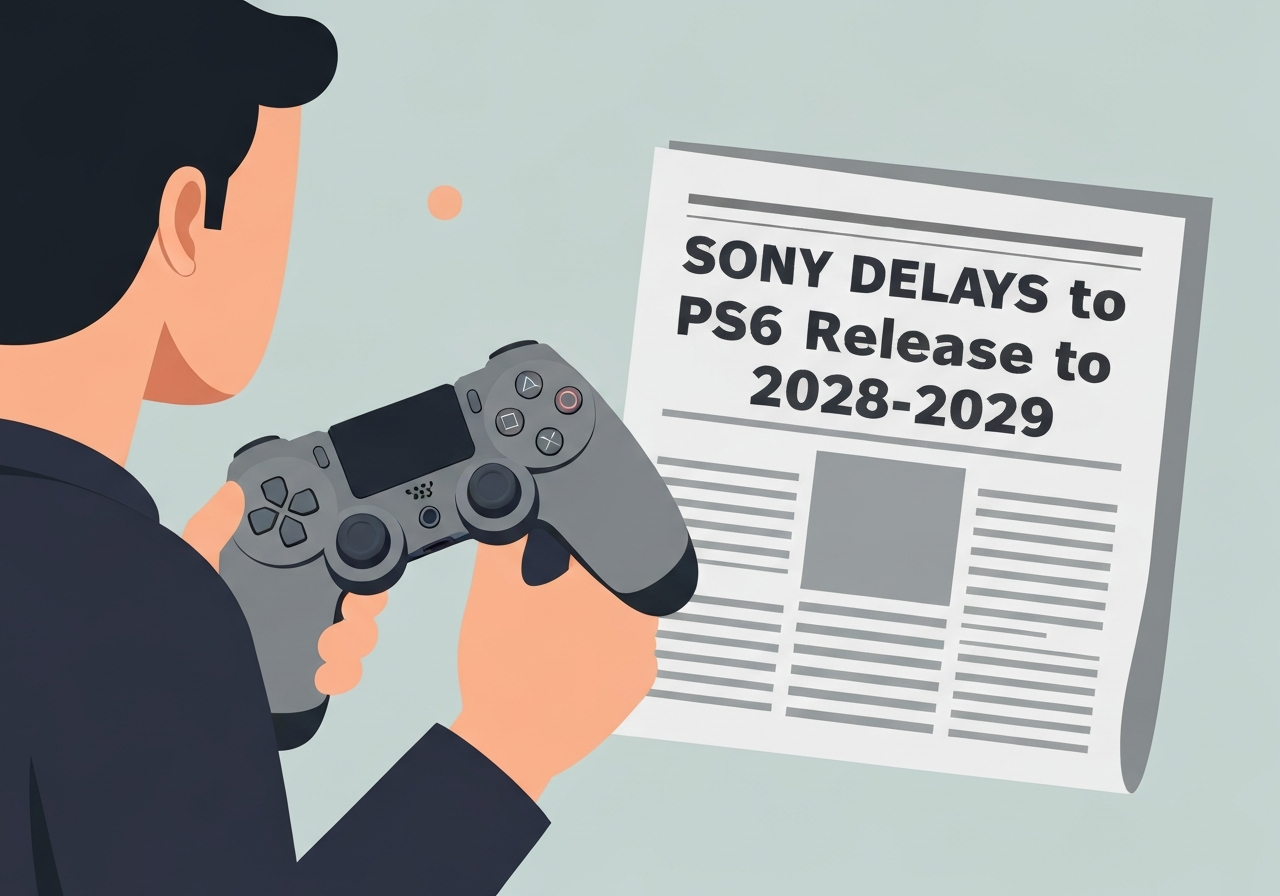
Bloomberg, cited by Push Square in February 2026, reports that Sony is considering delaying the PlayStation 6 launch from an earlier 2027 target to 2028 or even 2029. The possible postponement is being linked to rising RAM prices and stronger chip demand driven in part by AI workloads. Industry analysts and company insiders say the move would alter Sony’s multi-year plan to bridge engagement between hardware generations. Sony and Nintendo did not provide comment to reporters on the report.
Key takeaways
- Sony is reportedly weighing moving the PS6 debut to 2028 or 2029, according to Bloomberg as relayed by Push Square.
- Chip and RAM market pressures—attributed in part to AI-driven demand—are cited as primary drivers of the possible delay.
- Sony had been widely understood to target a 2027 launch window; several late-2025 and early-2026 reports suggested that timetable was under strain.
- AMD CEO Lisa Su has said Microsoft will have a “next-gen Xbox” in 2027, indicating Microsoft’s roadmap may remain on the earlier cadence.
- Sony says it has sufficient supply for the 2026 Christmas season, but components for a PS6 launch beyond that period are the concern.
- Nintendo’s Switch 2 helped push storage-card demand in 2025, and Nintendo is reportedly considering a price increase for that device in 2026.
- An MST Financial analyst commented that the PS6 release is likely to be delayed longer than many expected, reinforcing analyst skepticism.
Background
Console makers typically plan hardware launches several years in advance and synchronize software, manufacturing and logistics to maximize market impact. The historically orchestrated cadence lets platform holders sustain user engagement with incremental hardware, services and exclusive titles between generations. Over the past two years, two market forces—accelerated investment in AI and a surge in high-performance computing demand—have tightened the global semiconductor supply chain.
RAM and flash-storage pricing are closely linked to gaming console economics because memory is a significant component cost in modern systems. In 2025, Nintendo’s new Switch 2 drove a notable uplift in storage-card purchases, tightening some segments of the aftermarket and pushing component suppliers’ capacities. Against that backdrop, platform holders have to weigh launch timing against component availability, launch costs and the risk of undermining a multi-year content roadmap.
Main event
According to the Bloomberg report cited by Push Square, people familiar with Sony’s thinking say the company is “considering pushing back the debut of its next PlayStation console to 2028 or even 2029.” Sources tell reporters that the discussion is driven by sustained increases in RAM prices and broader chip demand. Those trends are, in turn, linked in part to rising investment in AI systems that require large memory footprints and fast storage.
Bloomberg framed the potential shift as a significant disruption to Sony’s plan to maintain engagement between hardware generations. The outlet noted that a delayed PS6 would change Sony’s timing for software exclusives, first-party launch titles and promotional windows designed to bridge from PS5 to a new generation. Push Square’s piece reiterates the Bloomberg sourcing and places the possible delay in the context of late-2025 reporting that already flagged supply concerns.
The report also contrasts Sony’s deliberations with Microsoft’s schedule: AMD CEO Lisa Su has said Microsoft will have a next-generation Xbox in 2027, which AMD is supporting. Industry commentary suggests that if Microsoft ships a next-gen Xbox earlier, Sony could face competitive pressure on content, services and marketing. Push Square also points to rumors that Nintendo may alter Switch 2 pricing in 2026, noting those moves affected accessory demand in 2025.
Analysis & implications
A delayed PS6 would have immediate implications for Sony’s commercial strategy. Pushing a flagship launch into 2028 or 2029 compresses the window for first-party exclusives to carry the PS5 lifecycle and would likely increase reliance on services such as subscription bundles and digital storefront promotions to retain players. For developers, a later hardware cycle can create ambiguity around engine targets, optimization plans and release windows for cross-generation titles.
From a supply-chain perspective, a delay buys Sony time to negotiate contracts and secure memory allocations at more stable prices, but it also risks higher per-unit platform earnings foregone if competitors move earlier. If Microsoft ships a next-gen Xbox in 2027 as indicated by AMD’s CEO, Sony could lose transient momentum in the premium-console segment. Conversely, launching into a market with inflated memory costs could force higher retail prices or slimmer margins for Sony.
Consumers may react in multiple ways: some will prefer waiting for PS6 advancements, while others could shift toward the next Xbox or premium PC offerings if price or perceived value diverges. Retailers and accessory makers will also need to adjust inventory plans. For the broader industry, continued AI-driven demand for semiconductors may lengthen product cycles as hardware makers balance technology readiness against component economics.
Comparison & data
| Company | Prior target year | Reported current status |
|---|---|---|
| Sony | 2027 | Considering delay to 2028 or 2029 (Bloomberg) |
| Microsoft | — | AMD CEO says next-gen Xbox in 2027 (Lisa Su) |
| Nintendo | — | Switch 2 drove storage demand in 2025; price change considered for 2026 |
The table summarizes reported target windows and public statements from industry sources. It does not attempt to quantify component-price movements because public, consolidated market indices for RAM pricing can vary by memory type and contract terms; however, multiple industry reports in late 2025 and early 2026 signaled an upward trend in memory costs linked to AI and data-center procurement.
Reactions & quotes
Media coverage and analysts offered immediate responses to the Bloomberg reporting, emphasizing supply-chain drivers and competitive timing.
“Considering pushing back the debut of its next PlayStation console to 2028 or even 2029…”
Bloomberg (news outlet)
This phrasing, as reported, frames the decision as internal deliberation rather than a finalized shift.
“The PS6’s release is likely to be delayed longer than many expected.”
MST Financial (analyst commentary)
Analysts cited by gaming outlets warned that component shortages and price volatility could lengthen console cycles beyond initial forecasts.
“Microsoft will have a ‘next-gen Xbox’ in 2027,”
Lisa Su, AMD CEO (public statement)
AMD’s public comment suggests Microsoft’s supply partners are preparing for a 2027 introduction, a timeline that would contrast with Sony’s reported deliberations.
Unconfirmed
- Whether Sony has set a formal internal deadline for a PS6 launch remains unconfirmed; reporting describes deliberations rather than a definitive decision.
- The exact scale and timeline of RAM-price increases attributable solely to AI demand are not fully quantified in public sources.
- Reports that Nintendo will raise Switch 2 pricing in 2026 are based on anonymous sources and have not been confirmed by Nintendo.
Bottom line
The Bloomberg report, relayed by Push Square, indicates Sony is actively weighing a later PS6 launch—potentially into 2028 or 2029—primarily because of memory- and chip-market pressures. A delay would reshape Sony’s content and service roadmap, create competitive dynamics with Microsoft should Xbox ship in 2027, and influence pricing and inventory decisions across the gaming ecosystem.
For consumers and developers, the immediate watch items are formal announcements from Sony, inventory guidance for 2026–2027, and any moves by Microsoft that firm up a 2027 Xbox timetable. For investors and suppliers, the key metrics will be memory-price trajectories, contract coverage that manufacturers secure, and Sony’s public statements on launch timing and component commitments.
Sources
- Push Square — gaming news outlet reporting on Bloomberg’s coverage.
- Bloomberg — international business news outlet cited for reporting on Sony’s internal considerations and industry supply trends.