
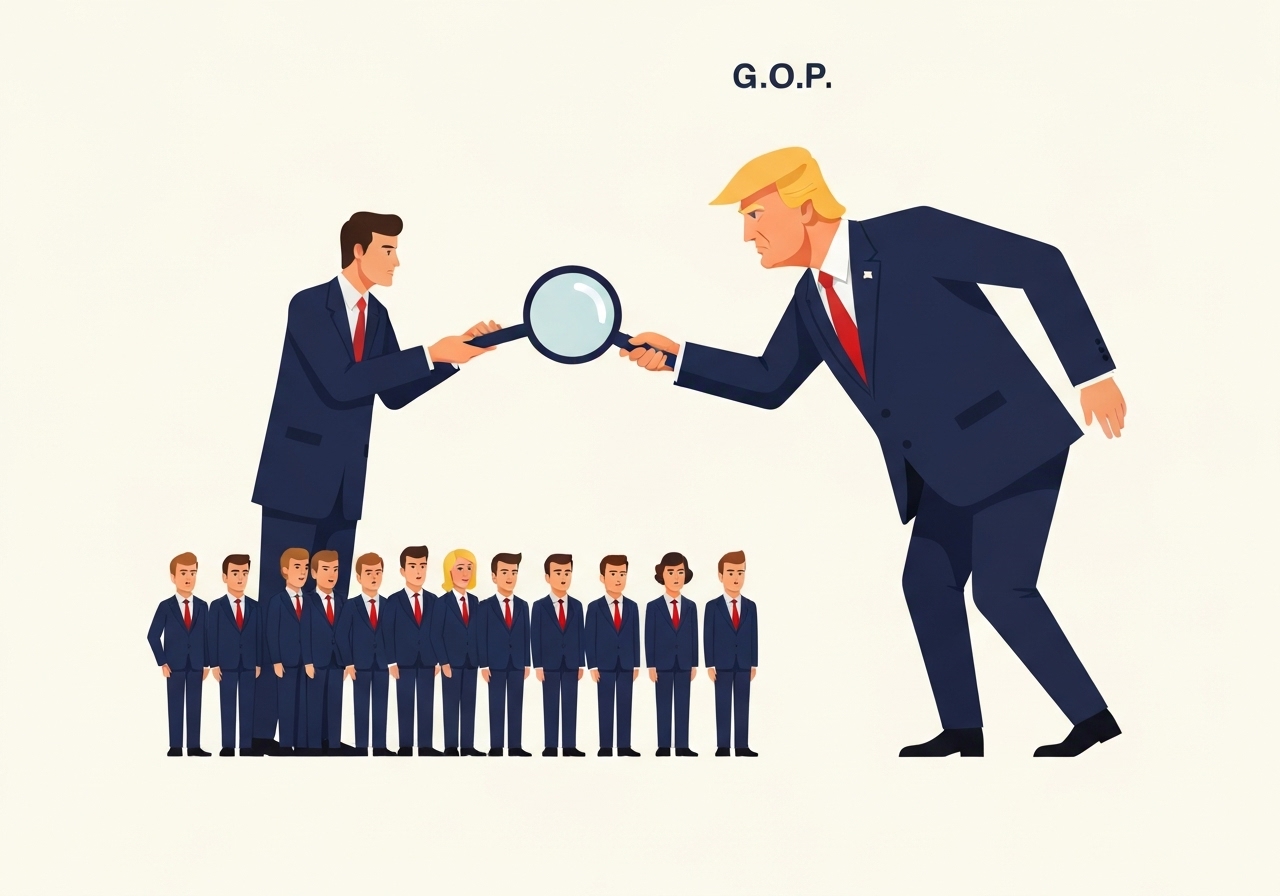
Trump Shrinks Congress’s Authority as G.O.P. Largely Stands Aside
Lead: Since early September 2025, the Biden-era shift reversed as the Trump administration, through personnel changes, covert operations and a plan to rescind nearly $5 billion in approved foreign aid, has reduced congressional oversight and spending control while Republican leaders in Congress have offered minimal resistance.
Key Takeaways
- The Pentagon blocked a Senate Intelligence visit to the National Geospatial-Intelligence Agency.
- U.S. forces began operations off Venezuela targeting alleged cartel vessels without a new congressional authorization.
- The White House announced a maneuver to rescind about $5 billion in foreign aid that Congress had approved.
- Health Secretary Robert F. Kennedy Jr. removed the CDC director weeks after her confirmation and proposed rules that could limit access to Covid vaccines.
- Multiple agency leaders confirmed by the Senate were dismissed shortly after taking office.
- Republican congressional leaders have mostly criticized tactically but stopped short of formal oversight actions.
- Intelligence committees report restricted access to classified assessments, complicating civilian oversight of spy agencies.
Verified Facts
In early September 2025 the Pentagon denied Senator Mark Warner, vice chair of the Senate Intelligence Committee, permission for an oversight visit to the National Geospatial-Intelligence Agency after pressure from outside commentators; Defense officials stated they would allow only bipartisan delegation visits. The restriction marked an unusual limitation on committee access to a modern intelligence component.
Defense and administration officials announced off-coast operations near Venezuela aimed at alleged drug-trafficking groups. Lawmakers and outside legal experts said no new congressional authorization for the action had been reported; the White House did not publish a formal legal justification at the time of reporting.
The White House informed Capitol Hill of plans to use a rarely used executive maneuver to claw back nearly $5 billion in foreign aid that Congress had approved, a move Senate appropriators and some Republicans described as an encroachment on Congress’s power of the purse.
Within weeks of confirmation votes, several agency leaders—across the Centers for Disease Control and Prevention, the Internal Revenue Service and other bodies—were removed or pressured out. Health Secretary Robert F. Kennedy Jr. dismissed the recently confirmed director of the CDC and proposed policy changes that federal public-health officials warned could restrict vaccine access.
Context & Impact
Separation-of-powers tensions have grown as presidents historically expand executive authority in areas such as foreign operations and intelligence. What is notable now is the scale of personnel turnovers, unilateral financial moves and reluctance among congressional Republicans to mount formal challenges.
Reduced access to classified assessments and limits on committee visits make it harder for Congress to perform its oversight role, especially over intelligence and covert operations. That narrowing of oversight could weaken accountability for military and clandestine actions and complicate bipartisan consensus on national-security policy.
On appropriations, a successful rescission or unilateral reallocation of funds would set a new precedent for executive control over spending enacted by Congress, prompting legal and legislative countermeasures in future sessions.
- Possible legislative responses include tightened reporting requirements, funding riders preventing rescissions mid-year, and expedited hearings on withheld information.
- Judicial review or Senate procedural steps could be used to challenge executive moves, but such remedies are often slow and uncertain.
“Congress must not cede its core funding and oversight responsibilities,”
Sen. Susan Collins (paraphrase)
“Blocking committee access undermines independent review of intelligence work,”
Sen. Mark Warner (paraphrase)
Official Statements
Some Republican leaders warned privately and in limited public comments about the pace of firings and the need to protect congressional prerogatives, but they have not announced comprehensive oversight hearings or legislative counterplans.
Senate leadership offices (paraphrase)
Unconfirmed
- Whether the administration plans a formal legal justification for the Venezuela operations beyond internal legal opinions.
- Whether the new requirement for bipartisan congressional visits to certain intelligence sites is a permanent policy or a one-off decision.
- The full scope and timeline of planned rescissions affecting the nearly $5 billion in foreign aid.
Bottom Line
Recent actions by the executive branch have meaningfully narrowed Congress’s practical ability to oversee national security, federal spending and agency leadership choices. Unless congressional leaders—particularly Republicans who control key committees—launch sustained oversight or legislative fixes, these changes may become entrenched precedents that reshape interbranch checks for years.