
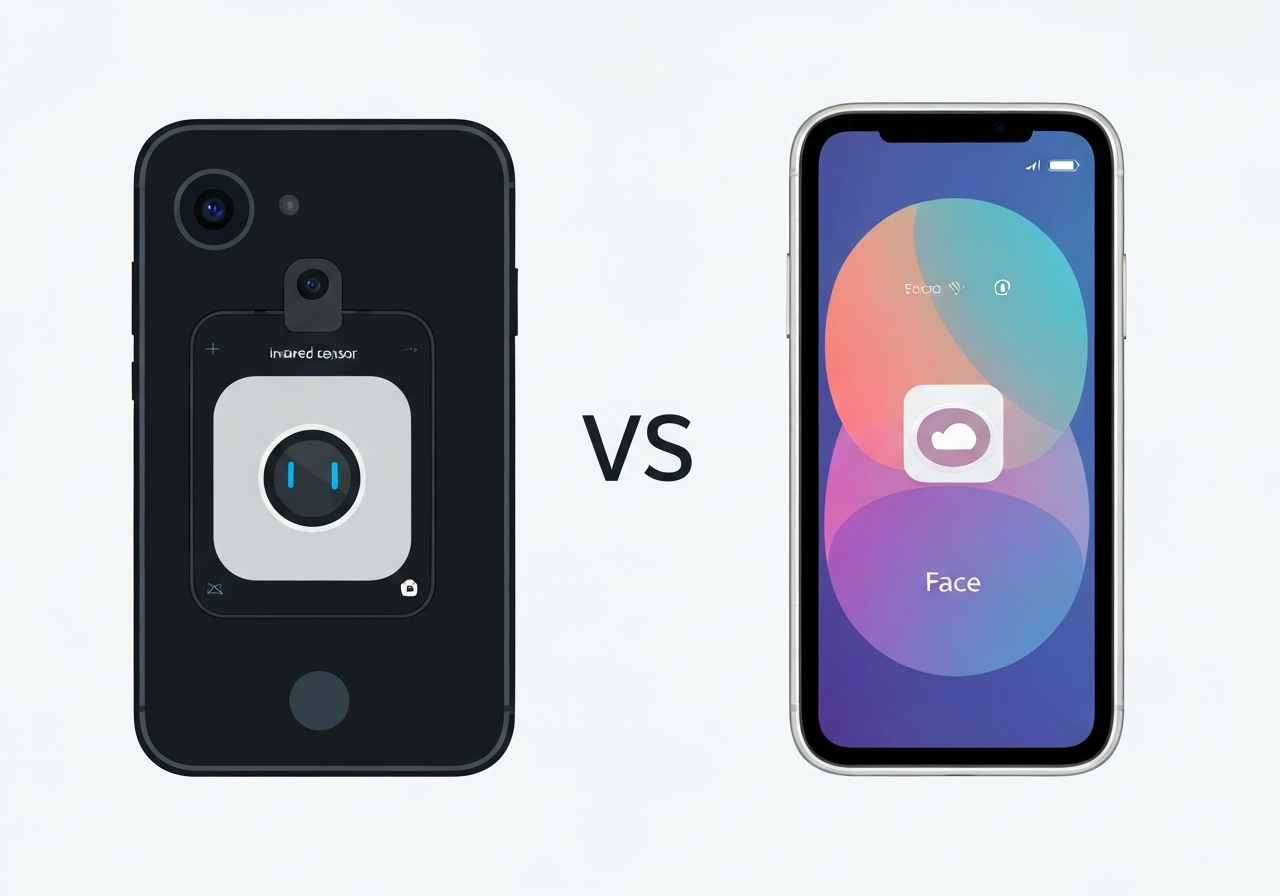
Lead: Google is said to be developing “Project Toscana,” a hardware-focused upgrade to face unlock that would appear on future Pixel phones and some Chromebooks, according to reporting on Feb. 17, 2026. The reports claim the system operates from a single hole‑punch camera cutout and performed “as quickly as” Apple’s Face ID in various lighting conditions, possibly using infrared assistance. If accurate, the move would mark a renewed, broader push by Google to match flagship biometric performance across its device lineup. Google has not issued a formal announcement about Project Toscana.
Key Takeaways
- Project Toscana is reported to be a hardware upgrade to Pixel face unlock, intended for phones and Chromebooks, first reported on Feb. 17, 2026.
- Sources say the system uses a single hole‑punch camera area and may include infrared (IR) components to improve low‑light performance.
- Reporters noted performance “as quickly as Face ID” in multiple lighting conditions, though full technical details are not confirmed.
- Pixel 4 previously shipped with an IR‑based face system but the feature was later dropped; Pixel 7 added camera‑based face unlock and Pixel 8 added secure‑apps support.
- There are continuing rumors that Pixel 11 and Tensor G6 could support under‑display IR, but those claims remain speculative.
- Project Toscana aims to deliver reliable face unlock without extra visible hardware, potentially narrowing the gap with Apple’s Face ID.
Background
Biometric authentication — primarily fingerprint and facial recognition — is now standard on most smartphones. Historically, Android manufacturers have prioritized fingerprint sensors, whether under‑display or rear‑mounted, while Apple standardized on Face ID with a dedicated TrueDepth array and infrared projector. Google has experimented with full IR arrays before: the Pixel 4 shipped with comprehensive IR hardware to support face unlock comparable to Face ID, but later Pixel models removed that arrangement.
Timing played a role in Google’s earlier retreat from a full-face hardware approach. The Pixel 4 arrived months before the COVID‑19 pandemic made mask‑wearing common, undermining the user experience and adoption rate for face unlock at that moment. In subsequent generations, Google rebuilt face unlock software capabilities: the Pixel 7 introduced camera‑based face unlock but restricted it from authenticating secure apps, a limitation that Google addressed on the Pixel 8.
Main Event
On Feb. 17, 2026, outlets reported Google quietly testing “Project Toscana,” described as a hardware enhancement to face unlock on Pixels and selected Chromebooks. Reporters who saw a demonstration said the prototype used a single hole‑punch front camera area yet delivered quick recognition in varying lighting conditions, a capability often linked to IR‑assisted systems. The coverage emphasized speed and low‑light reliability when compared informally to Apple’s Face ID.
The reports indicate Google is pursuing a solution that does not rely on an obvious array of sensors or a large bezel. Instead, the system reportedly aims for a minimal, hole‑punch front camera footprint while keeping performance robust. For Chromebooks, the same hardware approach could offer faster, more reliable biometric login across Google’s wider hardware ecosystem.
Details remain sparse on the security architecture. The demonstrations focused on recognition speed and lighting tolerance, but did not confirm elements such as a dedicated secure enclave, template storage location, anti‑spoofing measures, or regulatory certifications. Google’s public materials currently do not list Project Toscana, and the company has not released technical or rollout timelines.
Analysis & Implications
If Google can deliver face unlock that matches Face ID’s speed and lighting tolerance from a single hole‑punch window, it would represent a meaningful step for Pixel hardware and user convenience. Faster, more reliable facial authentication would reduce friction at unlock and broaden the contexts where face biometrics can replace or supplement fingerprint sensors, particularly on devices where under‑display fingerprint hardware is absent or less reliable.
From a security perspective, the crucial questions are how biometric templates are stored and protected, what anti‑spoofing technologies are in place, and whether the system uses secure, isolated hardware processing (a TPM or secure enclave equivalent). Face ID’s market advantage is not just speed but the integration of depth sensing and a secure processing chain; Project Toscana’s security posture will determine how directly it can be compared.
Economically and strategically, bringing a robust face system to both phones and Chromebooks could deepen Google’s vertical integration and ecosystem parity with Apple. For users, the convenience benefit is straightforward; for enterprises and developers, certified secure biometric paths for authentication and payments would be the important outcome. However, if the implementation relies mainly on software without dedicated secure hardware, adoption by banks and regulated services may lag.
Comparison & Data
| Feature | Apple Face ID (established) | Project Toscana (reported) |
|---|---|---|
| Primary hardware | TrueDepth array (IR dot projector & flood illuminator) | Single hole‑punch camera area; possible IR assistance |
| Low‑light performance | Designed to work in low light | Reported to work in various lighting, including low light |
| Visible hardware | Not visible to casual view; notch or housing required | Minimal visible hardware (hole‑punch) |
| Secure app support | Supported and widely accepted | Pixel 8 added secure app support; Project Toscana status unconfirmed |
The table summarizes public, confirmed aspects of Face ID and the current reporting on Project Toscana. Key security and implementation details for Toscana, including storage and anti‑spoofing, are not disclosed in the reports and will determine practical parity.
Reactions & Quotes
“In hands‑on impressions, the system reportedly ‘worked just as quickly as Face ID’ across varied lighting,”
Android Authority (tech media report)
The Android Authority demonstration described recognition speed and lighting tolerance as comparable to Apple’s system, highlighting the potential user experience improvement.
“Pixel 7 added face unlock using the camera but initially it could not unlock secure apps; Pixel 8 addressed that limitation,”
9to5Google (tech media report, Feb. 17, 2026)
9to5Google summarized the evolution of Pixel face unlock capabilities, noting the Pixel 8 added functionality for secure app authentication that earlier generations lacked.
“Face ID uses the TrueDepth camera system to securely authenticate users with depth sensing,”
Apple Support (official)
Apple’s public documentation frames Face ID as a depth‑enabled, secure facial authentication technology. Project Toscana’s claimed parity will depend on whether Google matches depth sensing and secure processing elements.
Unconfirmed
- Whether Project Toscana uses under‑display IR or another hidden IR configuration has not been independently validated.
- The presence or design of a dedicated secure enclave or hardware‑based template storage for Toscana is unconfirmed.
- Specific rollout timing for Pixel phones or Chromebooks and whether Pixel 11 will adopt this system remain speculative.
- Claims about parity with Face ID are based on early hands‑on reports and are not backed by full technical tests or vendor confirmation.
Bottom Line
Project Toscana, as described in recent reporting, signals Google’s renewed investment in making face unlock a first‑class biometric across Pixel hardware and potentially Chromebooks. The most consequential outcomes will depend less on headline speed comparisons and more on security architecture and certification: whether biometric templates are stored and processed in hardware‑isolated environments and whether robust anti‑spoofing measures are included.
For users, a fast, low‑light capable face unlock delivered through a minimal front‑camera design would boost convenience and parity with Apple’s ecosystem. For enterprises and payment providers, adoption will hinge on verifiable security guarantees. Until Google publishes technical details or releases a product, the industry should treat current impressions as promising but preliminary.
Sources
- 9to5Google — tech media report (Feb. 17, 2026)
- Android Authority — tech media report (hands‑on coverage cited)
- Apple Support — official documentation on Face ID and TrueDepth camera system