
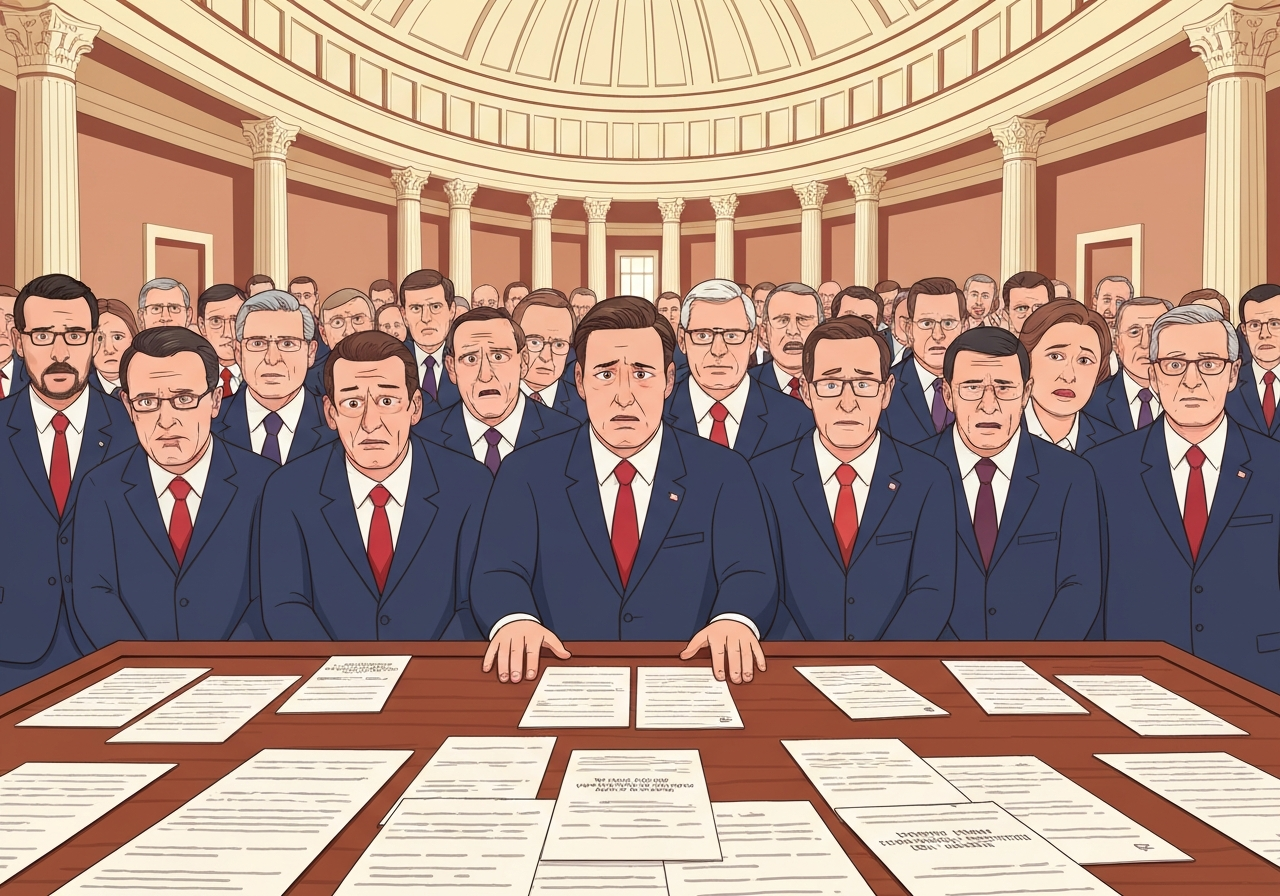
Lead: In mid-February 2026, House Republicans accelerated a push for new federal voting restrictions as they prepare for competitive midterm contests and respond to President Trump’s repeated, but false, claims of widespread voter fraud. A strict voter-identification measure cleared the House on a near-party-line vote, and Representative Bryan Steil (R-Wis.) has unveiled a broader package that would ban universal vote-by-mail and require proof of U.S. citizenship to register. Backers say the measures protect election integrity; critics call them partisan attempts to shrink the electorate. With the Senate and courts likely to block many provisions, the bills’ main impact may be political messaging ahead of November.
Key Takeaways
- The House passed a stringent voter ID bill on a near-party-line vote in mid-February 2026; Republicans cite election security as the rationale.
- Rep. Bryan Steil’s “Make Elections Great Again Act” would ban universal mail voting and bar counting ballots received after Election Day, while requiring proof of citizenship to register.
- Supporters argue federal rules are needed to prevent illegal voting; multiple courts and election scholars have found no evidence of widespread fraud in recent federal elections.
- Provisions granting Department of Homeland Security access to voter rolls would shift administrative responsibilities and raise federalism and privacy concerns.
- Legal experts predict many provisions face significant hurdles in the Senate and federal courts, potentially delaying or blocking implementation before the 2026 midterms.
- Republican strategy blends legislative action with political messaging to energize the base and delegitimize potential Democratic wins, according to analysts.
- Opponents warn the measures could disproportionately affect minority, younger and low-income voters who rely on absentee and flexible voting methods.
Background
Efforts to tighten voting rules have gained momentum within the Republican majority in the House amid concerns about preserving electoral advantages and responding to President Trump’s persistent assertions of systemic fraud after 2020. State-level voting changes since 2020 have varied widely, with some states expanding access and others imposing new ID or absentee ballot restrictions. The current federal push represents an attempt to set uniform national standards on contested issues such as mail voting, ballot receipt deadlines and registration requirements.
Republicans advancing the legislation frame it as correcting gaps they say were exposed in recent elections, emphasizing voter ID and citizenship verification. Democrats and voting-rights groups counter that those problems are minimal and that stricter rules will suppress turnout among groups that tend to favor Democrats. The debate also revives long-standing tensions over federal authority versus state control of election administration, a point that will be central in judicial reviews if the bills pass both chambers.
Main Event
The immediate legislative flashpoint came when the House approved a hardline voter-identification measure in a party-line vote in mid-February 2026. That bill requires specific forms of photo ID for in-person voting and imposes stricter verification steps for absentee ballots. Republican proponents framed the measure as a straightforward integrity reform; Democrats called it unnecessary and harmful to access.
Representative Bryan Steil, chairman of the Committee on House Administration, has proposed a more expansive package titled the “Make Elections Great Again Act.” Steil’s plan would prohibit universal vote-by-mail programs, forbid counting ballots delivered after Election Day, mandate documentary proof of citizenship to register, and provide the Department of Homeland Security greater access to state voter rolls. Supporters describe it as a comprehensive federal standard to prevent illegal voting.
Republican lawmakers and conservative commentators have used the bills to amplify President Trump’s claims about illegal voting by noncitizens, despite courts and government audits finding no evidence of mass fraud. Representative Tim Burchett (R-TN) told a conservative outlet that enacting these measures “will save America,” reflecting the political tone Republicans are using to rally supporters. Democrats and voting-rights advocates say the bills are designed to tamp down turnout among key Democratic constituencies rather than secure legitimate elections.
Analysis & Implications
Legally and practically, many provisions face long odds. Senate Democrats (and some Senate Republicans) have signaled resistance to sweeping federal takeover of election administration, and any enacted federal rules would almost certainly draw prompt litigation over states’ rights and the Voting Rights Act. Courts will scrutinize claims about fraud and the proportionality of restrictions to any identified problems, making implementation uncertain before the 2026 midterms.
Operationally, banning universal mail voting and tightening receipt deadlines could create administrative stress for election officials who schedule staff and counting operations around existing state rules. Shorter receipt windows increase the risk that legitimately cast absentee ballots arrive late and are discarded, potentially disenfranchising voters who rely on postal services, early processing, or third-party delivery. Municipal and county election boards could face additional costs and legal exposure if federal mandates conflict with state law.
The policy choices also carry demographic and political consequences. Analyses of past turnout indicate that stricter ID and absentee rules tend to disproportionately affect younger, lower-income, and Black and Hispanic voters. If enacted, such changes could alter turnout patterns in closely contested districts and states, potentially shaping control of the House and Senate. Even where courts block enforcement, the political messaging alone may alter voter mobilization and campaign strategies ahead of November.
Comparison & Data
| Provision | Save America Act (House) | Make Elections Great Again Act (Steil) |
|---|---|---|
| Require proof of citizenship to register | Yes (federal verification) | Yes (documentary proof) |
| Ban universal vote-by-mail | No (limits absentee rules) | Yes (prohibits universal programs) |
| Count ballots received after Election Day | Allows some late counting (varies) | Prohibits counting late-arriving ballots |
| DHS access to voter rolls | Permitted | Grants broader DHS access |
The table summarizes core differences between the recently passed House measure and Rep. Steil’s proposal. While both expand federal oversight, Steil’s plan is more prescriptive on mail voting and ballot deadlines. Election administrators warn that differences in state infrastructure and postal reliability mean uniform federal deadlines could have uneven effects across jurisdictions.
Reactions & Quotes
Republican supporters characterize the bills as necessary fixes. Representative Tim Burchett framed the legislation as existential in an interview, emphasizing the stakes he sees for the midterms and beyond.
“As President Trump told me last week, it really will save America,”
Rep. Tim Burchett (R-TN)
Democratic leaders and voting-rights groups argue the measures are partisan and likely to suppress turnout among vulnerable voters. Election law scholars stress that the scale of fraud alleged by some Republicans has not been substantiated in federal reviews.
“These proposals impose barriers that are unlikely to address documented problems and are more likely to reduce participation among eligible voters,”
Voting-rights advocate (organization)
Election administrators have expressed concern about operational feasibility and the legal workload of adjusting state procedures to fit new federal rules, especially close to an election cycle.
“Uniform federal mandates could clash with state election laws and create confusion for local election officials,”
State election official (association)
Unconfirmed
- Exact scale of ineligible or noncitizen voting in recent federal elections remains contested; major audits and court rulings have not substantiated claims of mass fraud.
- Whether the full package of Steil’s proposals can pass the Senate or survive court challenges before the 2026 midterms is unresolved.
- Projected effects on turnout in specific states depend on implementation details and are subject to uncertainty pending legal and administrative developments.
Bottom Line
The House GOP’s recent legislation and Rep. Steil’s broader proposal mark a coordinated push to recast federal election rules ahead of a high-stakes midterm cycle. While supporters frame the measures as essential for election integrity, many provisions are likely to face robust legal and political resistance that could limit immediate implementation.
Even if courts or the Senate block major elements, the bills serve a strategic purpose: shaping public narratives about election legitimacy and mobilizing partisan bases. Voters, administrators and judges will all play roles in determining whether these proposals translate into durable law or remain instruments of pre-election messaging.
Sources
- The New York Times — news media report on House vote and proposals (Feb. 17–18, 2026).
- House Committee on Administration — official committee site for bills and press statements (official).