
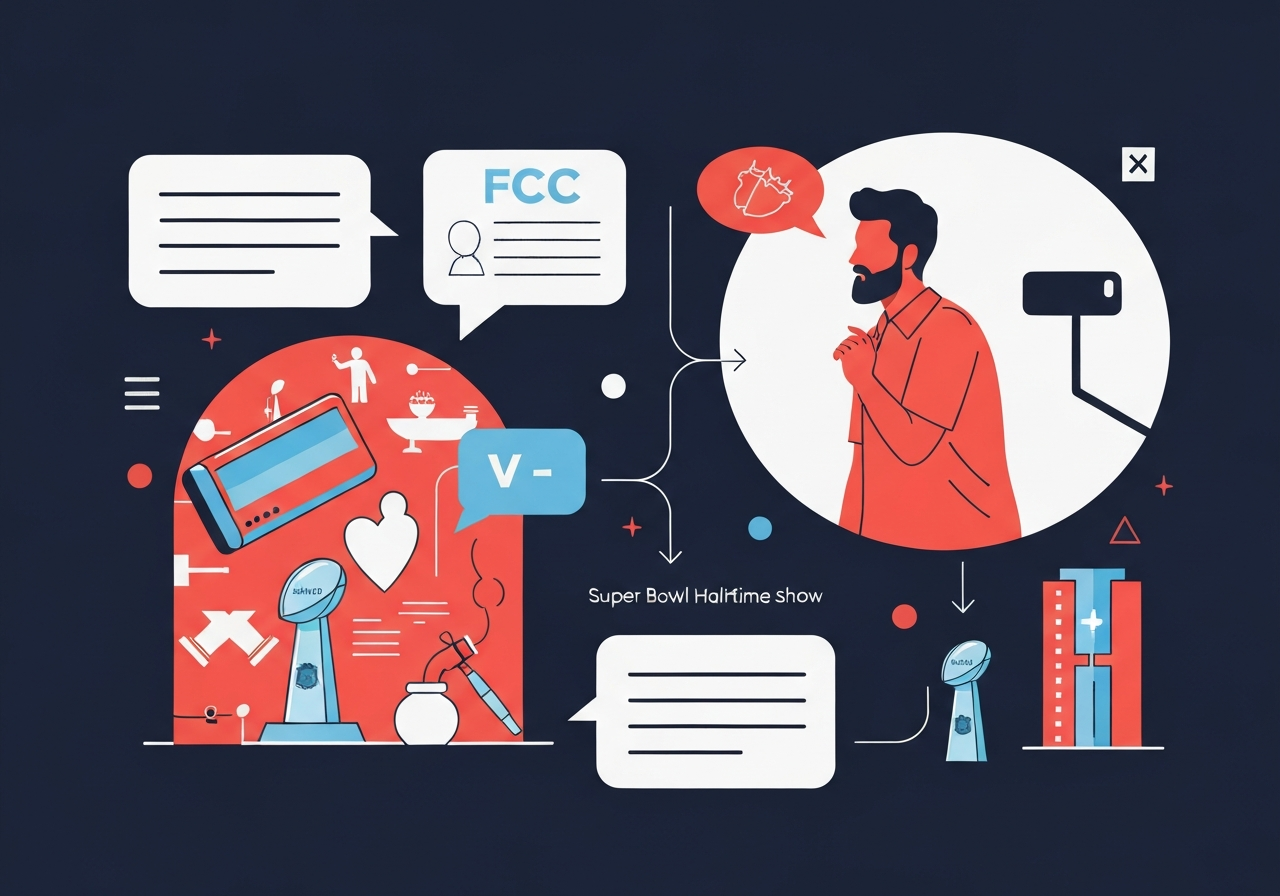
FCC Requests Transcripts of Bad Bunny Super Bowl Halftime Performance
Lead: The Federal Communications Commission sought Spanish‑language transcripts of Bad Bunny’s 2026 Super Bowl halftime set after complaints from Republican lawmakers that the broadcast may have breached federal indecency rules. FCC Commissioner Anna Gomez said she reviewed the transcripts supplied by Comcast/NBC and found no violation of commission rules. The inquiry follows public outrage from several GOP officials and a separate conservative-organized rival halftime show. The FCC appears unlikely to pursue enforcement unless new evidence emerges.
Key Takeaways
- The FCC requested Spanish‑language transcripts of the February 2026 Super Bowl halftime broadcast from Comcast/NBC following complaints from Republican lawmakers.
- Commissioner Anna Gomez reviewed the transcripts and stated she found no violation of FCC rules or grounds to sanction the broadcaster.
- Multiple Republican figures, including Rep. Randy Fine and Rep. Andy Ogles, publicly objected to the performance and shared translated screenshots of lyrics.
- Bad Bunny, 31, was the first solo act to perform the Super Bowl halftime show entirely in Spanish, and the first Latin solo headliner for the slot.
- The New York Post reported some graphic sexual lyrics were omitted from the live broadcast, a claim not independently confirmed by the FCC.
- The FCC source cited by some outlets said the agency does not plan further review absent additional evidence.
- Conservative critics and former President Trump criticized the performance; Turning Point USA organized an alternative “All‑American Halftime Show.”
Background
The FCC enforces federal rules on broadcast indecency, a framework that typically focuses on explicit sexual content aired during hours when children are likely to be watching. Live network broadcasts are routinely monitored, and complaints from viewers or lawmakers can prompt the agency to request materials, including transcripts, to determine whether an enforceable violation occurred. Historically, high‑profile live broadcasts have drawn FCC scrutiny; the regulatory process involves review of context, lyrics and timing before any formal action is taken.
The 2026 Super Bowl halftime slot has become an intensely visible cultural stage, and choices of performers now carry political as well as entertainment significance. Bad Bunny’s decision to perform entirely in Spanish marked a first for a solo headliner and amplified debate about language, culture and representation on national television. Conservative lawmakers and media figures have increasingly targeted cultural events they view as misaligned with their constituents’ values, turning individual performances into broader political flashpoints.
Main Event
After the halftime show aired, Florida Rep. Randy Fine posted translated screenshots of certain lyrics and called the performance “illegal,” urging an FCC investigation. Tennessee Rep. Andy Ogles also attacked the set, saying the lyrics glorified sexual acts; both lawmakers described the material as unsuitable for children. In response to the complaints, the FCC formally requested Spanish‑language transcripts of the live broadcast from Comcast, which distributes NBC.
Commissioner Anna Gomez — who is one of the five FCC commissioners — said she personally reviewed the Spanish transcripts provided by Comcast/NBC. Gomez concluded there was no contravention of the agency’s indecency rules and voiced opposition to what she described as harassment of broadcasters over a typical live performance. FCC officials and Comcast/NBC did not issue broader public statements beyond acknowledging the document request in reporting.
Separately, media reports including the New York Post said some graphic sexual references that appear in published lyrics were not present in the live television feed. A source familiar with FCC deliberations told outlets the commission does not plan further review absent additional evidence that the broadcast contained indecent material. The post‑show conversation also included political leaders and opinion outlets escalating the debate, with former President Trump criticizing both the performance and Bad Bunny’s language choice.
Analysis & Implications
The episode highlights enforcement challenges the FCC faces with performances in languages other than English. Reviewers must assess whether translations accurately reflect what viewers heard, and whether context — such as artistic intent or editorial choices during a live set — affects indecency findings. That technical and linguistic complexity raises the evidentiary bar for any sanction and makes outright fines less likely unless the agency identifies clear, verifiable violations.
Politically, the incident underscores how cultural events can become proxy battlegrounds for broader debates over identity, language and media standards. Complaints from lawmakers may aim less at securing enforcement and more at mobilizing political bases and shaping media narratives. Broadcasters and event producers may respond by tightening lyrics review, greater rehearsed staging controls or enhanced delay mechanisms for live television.
For the NFL and advertisers, sustained controversy can prompt reputational calculations: some sponsors may request assurances about content vetting for future shows, while networks may weigh the risks of live, uncensored segments. Yet the public and critical acclaim for Bad Bunny’s performance — as a landmark Spanish‑language halftime set — suggests significant audience demand for greater diversity in high‑profile broadcasting slots.
Comparison & Data
| Year | Artist | Notable Context |
|---|---|---|
| 2004 | Janet Jackson / Justin Timberlake | Wardrobe incident prompted FCC fines and long‑term broadcast caution |
| 2026 | Bad Bunny | First solo halftime show performed entirely in Spanish; prompted transcript request |
Comparing past controversies shows two patterns: incidents that involve clear, observable broadcast events (e.g., wardrobe malfunctions) tend to produce definitive FCC action, while disputes over lyrics or language often require transcript analysis and are less likely to produce sanctions unless the content is unambiguous. The Bad Bunny review fell into the latter category, where translation and context are central to any enforcement determination.
Reactions & Quotes
“I reviewed them carefully, and I found no violation of our rules and no justification for harassing broadcasters over a standard live performance.”
Anna Gomez, FCC Commissioner
Gomez’s statement frames the transcript review as thorough and concludes there was no regulatory basis for action, signaling the agency’s current stance absent new evidence.
“Bad Bunny’s disgusting halftime show was illegal. Had he said these lyrics … the broadcast would have been pulled down and the fines would have been enormous.”
Rep. Randy Fine (R‑FL)
Fine’s assertion reflects political outrage and relies on translated excerpts he posted publicly; however, the FCC’s transcript review did not corroborate an enforceable violation.
“Nobody understands a word this guy is saying, and the dancing is disgusting, especially for young children …”
Former President Donald J. Trump (public comment)
Trump’s broader cultural critique helped amplify conservative calls for an alternative halftime lineup, culminating in a separate event organized by Turning Point USA.
Unconfirmed
- Whether the screenshots of translated lyrics shared by lawmakers precisely match the live broadcast audio shown on NBC has not been independently verified.
- Reports that the FCC will definitively close the matter are based on a cited source; the agency has not announced a formal closure to the public record.
Bottom Line
The FCC’s transcript request highlights the regulatory and political frictions that accompany high‑visibility live broadcasts, especially when performances break linguistic or cultural expectations. Commissioner review found no actionable violation in this case, making enforcement unlikely unless new, verifiable evidence emerges. Broadcasters and artists should expect continued scrutiny and potential politicization of future halftime selections, and may adapt production practices accordingly.
Observers should watch for any additional complaints or newly surfaced recordings that could alter the FCC’s posture. For now, the episode functions as a prominent example of how cultural expression, language, and regulatory frameworks intersect in today’s polarized media environment.
Sources
- The Independent — news outlet (report on FCC transcript request and reactions)