
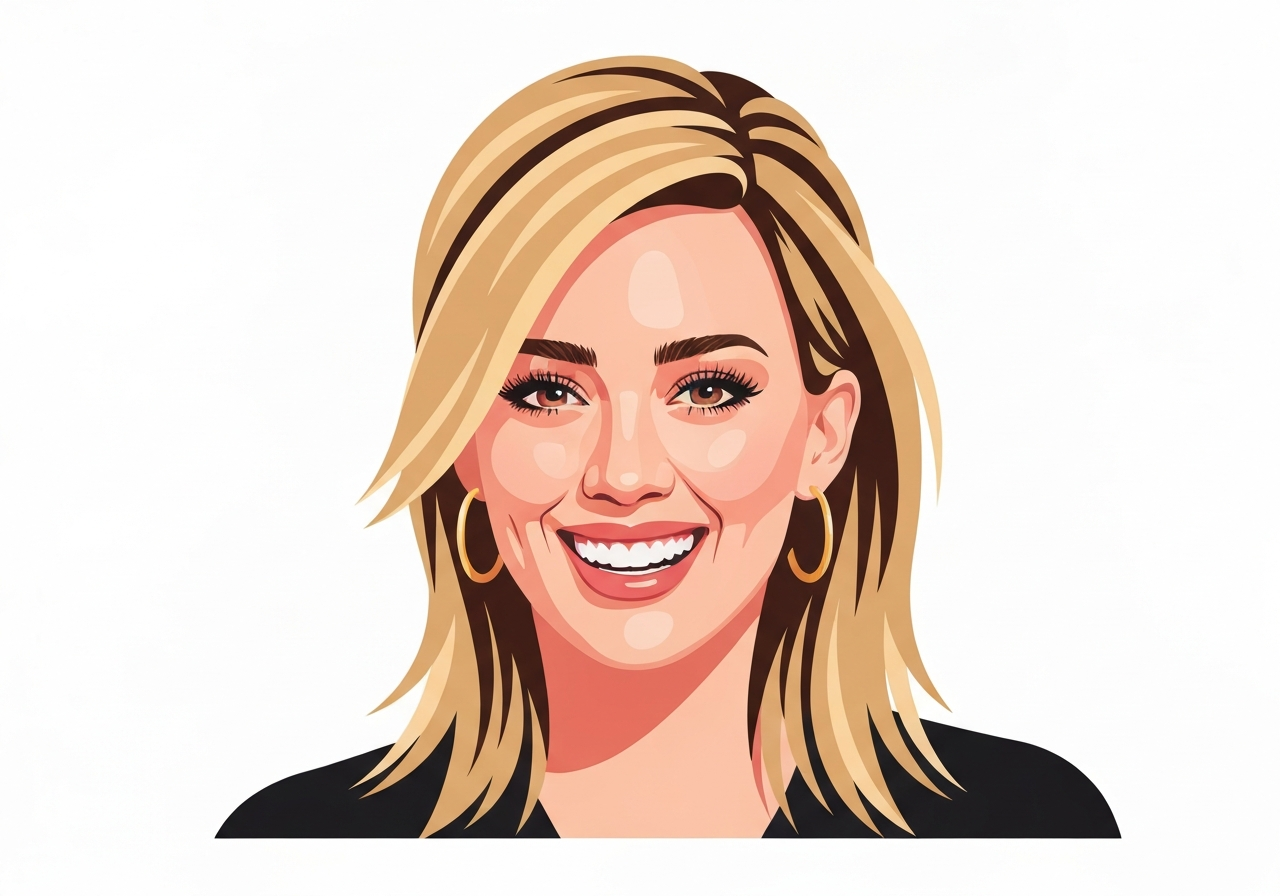
Lead: Hilary Duff, 38, is returning to pop with her first full-length record in over a decade, Luck … or Something, due Feb. 20 via Atlantic. Speaking by Zoom in late January, the former child star described the album as an honest update on motherhood, marriage and the passing of time and said its release marks a deliberate reentry into public life. She recorded the album with husband and co-writer Matthew Koma and producer Bryan Phillips and has already begun a string of intimate shows that precede a planned world tour. The immediate result: renewed fan fervor and a conversation about what mid-career pop reinvention looks like in the streaming era.
Key Takeaways
- Luck … or Something is scheduled for release on Feb. 20 via Atlantic; it is Duff’s first major record since 2015.
- Duff, 38, co-wrote the album with husband Matthew Koma (age 38) and produced it with Bryan Phillips, citing a desire to make music that felt personally authentic.
- The record foregrounds themes of motherhood, marriage and aging and includes tracks such as “Adult Size Medium,” “Roommates,” “The Optimist,” “We Don’t Talk” and “Growing Up.”
- Duff teased a comeback in September 2025 and has staged an intimate run called Small Rooms, Big Nerves before announcing a wider Lucky Me Tour.
- She played her first major concert in 18 years in London and performed in Brooklyn on Jan. 27 with family present backstage.
- The album samples Blink-182’s “Dammit” on the track “Growing Up” and nods to early-2000s pop sonics on opener “Weather For Tennis.”
- Social-media reaction has been intense, ranging from nostalgic embrace to sharp commentary; Duff and Koma say they approached the record without outside expectations.
Background
Duff’s career began as a television fixture: Lizzie McGuire and a string of family films made her one of the most recognizable faces of early-2000s pop culture. Her 2003 album Metamorphosis helped cement that crossover appeal; by the mid-2010s she had moved between acting, family life and occasional music work. The last widely noted music release tied to Duff was in 2015, making this new album the artist’s first major studio return in more than a decade.
The cultural moment amplifies Duff’s return. A wave of 2000s nostalgia has produced younger audiences discovering her catalogue alongside longtime fans. At the same time, social media has shifted how artists measure success and take criticism; Duff has described the internet’s immediacy and permanence as a real concern when deciding to release new material. That tension—between craving public creative work and guarding private family life—frames the record and its rollout.
Main Event
Recording for Luck … or Something was largely a close-family affair. Duff and her husband, musician-producer Matthew Koma, co-wrote the album, and Koma and Bryan Phillips handled production duties. Duff has said the album’s title was inspired by a lyric in the synth-forward single “Adult Size Medium,” which asks, essentially, whether life’s outcomes are luck or something more deliberate.
The songs move between upbeat pop hooks and candid, at times stark lyrics. Tracks such as “The Optimist” pair sparse instrumentation with lines about family pain and longing, while “Holiday Party” frames domestic anxieties in a bright, ironic manner. Duff purposely avoided making a record that simply catalogs the logistics of parenting; instead she explores how those responsibilities have reshaped her identity.
Touring has been part of the relaunch strategy. Duff tested material on an intimate run called Small Rooms, Big Nerves and then announced a larger Lucky Me Tour. At a recent Brooklyn show on Jan. 27 Duff’s children were backstage; audiences have responded enthusiastically, and the singer is experimenting with mixing older hits—“So Yesterday,” “Come Clean,” “What Dreams Are Made Of”—with the new material.
Internet speculation has followed specific moments: a London performance was noted as her first major show in 18 years, and a televised appearance featuring a mustard-colored sofa led fans to read symbolic meaning into staging choices. Duff has pushed back on overreaching interpretations, while acknowledging she accepted the vulnerability of placing personal songs on the record.
Analysis & Implications
Duff’s reemergence illustrates a broader pattern of early-2000s pop acts reclaiming cultural relevance as nostalgia cycles renew interest among younger listeners. That multi-generational appeal can translate into strong streaming numbers and sold seats on the road, especially when an artist pairs familiar hits with a well-crafted new record. For Duff, balancing legacy songs with candid new material helps retain longtime fans while attracting those discovering her for the first time.
The production choices—drawing on synth textures and early-2000s songwriting approaches—make the album feel timely amid current pop trends that complete with nostalgic touchstones. Yet modern exposure also brings risks: social platforms amplify both celebration and critique. Duff and Koma’s stated strategy—creating without expectation—reduces commercial pressure but does not eliminate reputational stakes tied to public commentary and media narratives.
Commercially, an established name like Duff benefits from multiple revenue streams: streaming, single sales, sync licensing, and touring. The intimacy of the initial shows suggests a demand for personal, performative experiences, which are often more lucrative and brand-sustaining than cleanly segmented pop promotion. If Duff’s record resonates critically and with fans, it could spur similar mid-career returns among peers and shape how legacy artists approach new music in the social-media era.
Comparison & Data
| Year | Milestone |
|---|---|
| 2003 | Metamorphosis released; breakthrough era |
| 2015 | Last major music release prior to hiatus |
| 2026 | Luck … or Something due Feb. 20 (first major full-length in over a decade) |
The table highlights the spacing between landmark points in Duff’s recording career. An 11-year gap between 2015 and 2026 underscores the recalibration many artists undertake when returning after a long pause. The 18-year gap referenced for large-scale concerts points to a performance hiatus that makes current tour stops notable for fans and the marketplace.
Reactions & Quotes
Duff and Koma positioned the project as something made for personal fulfillment rather than external expectation. They described a recording process focused on clarity and emotional honesty, with Koma emphasizing creative simplicity.
“We’re not doing this for anybody.”
Matthew Koma
That comment was framed by Koma’s account of encouraging Duff to make what she would want to hear in the car—the guiding principle for the record’s tone. Duff has also spoken directly about the album’s mix of contentment and complication.
“I am happy with who I am, but the ‘or something’ is really the meat of the answer.”
Hilary Duff
Observers have noted fan responses ranging from exuberant praise—some calling her return a revival for pop—to more skeptical online commentary. Duff has said she was surprised by the intensity of reactions when she first teased new music in September 2025, describing a moment when she wondered whether bot activity was driving sudden viral chatter.
Unconfirmed
- The specific intended subject of “We Don’t Talk” has not been officially confirmed by Duff and has been widely debated online.
- Fan theories that the mustard-colored sofa was a deliberate ‘Easter egg’ pointing to a private dispute are speculative and not substantiated by the artist’s team.
- Claims that early social-media praise was generated by bots are unverified; Duff expressed surprise at the volume of reaction but did not present evidence of automated activity.
Bottom Line
Hilary Duff’s Luck … or Something is a carefully staged reappearance that trades nostalgia for candid reflection. By working closely with Matthew Koma and retaining control over tone and production, Duff has produced a record that speaks to where she is now rather than simply reproducing past hits.
The release and accompanying tour will test how legacy artists can reinsert themselves into a crowded, platform-driven pop landscape. If Duff’s balance of familiar hooks and personal songwriting continues to land with audiences, the campaign could become a model for similarly situated performers seeking a low-pressure but high-impact return.
Sources
- Rolling Stone — feature article and interview (media)