
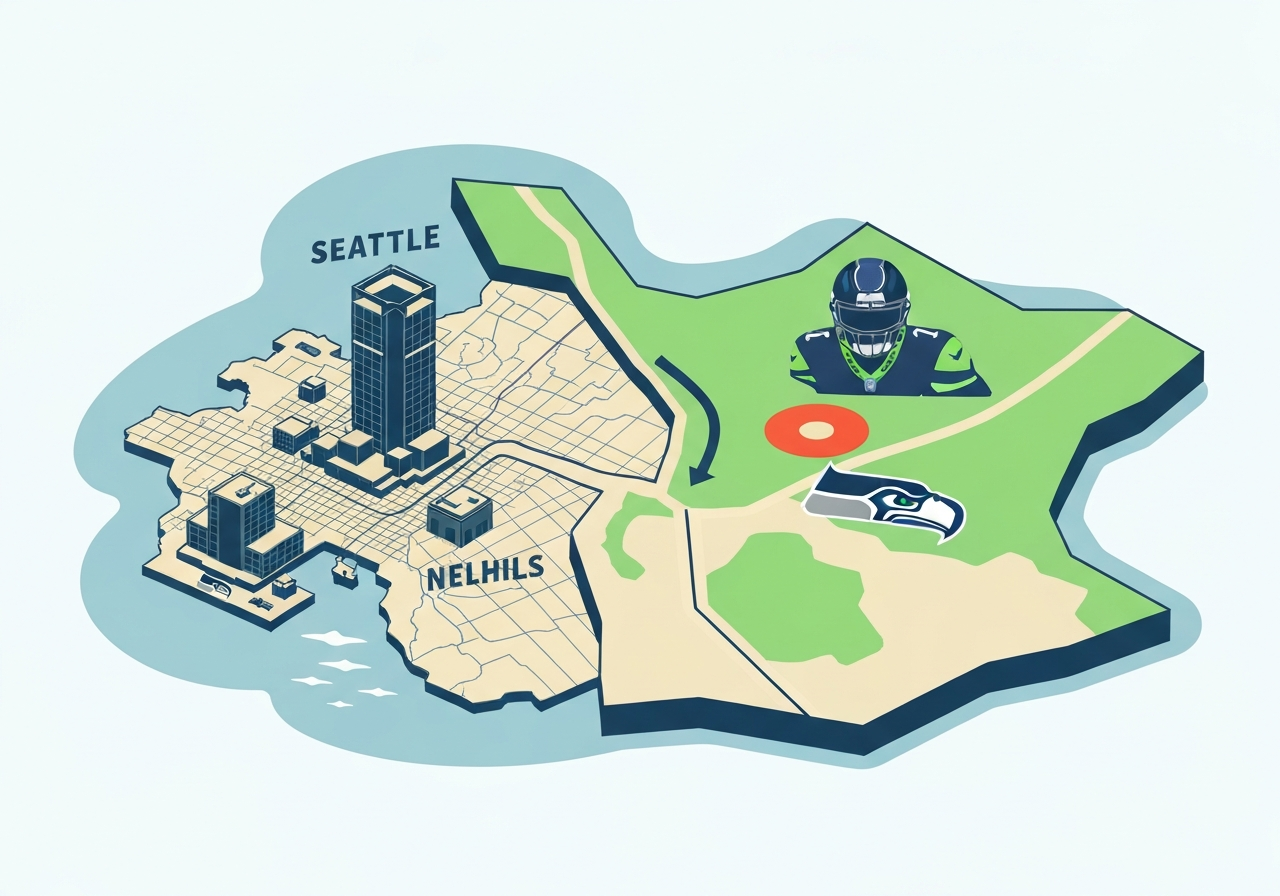
The Seattle Seahawks were formally placed on the market Wednesday, beginning a process that is expected to deliver a fourth owner in the franchise’s more than 50-year history within roughly the next year. The sale follows the Paul G. Allen estate’s decision to list the team after a clause tied to Referendum 48 — which would have required a 10% state rebate of gross proceeds on any sale before May 2024 — expired. Jody Allen, acting as executor after Paul Allen’s death in October 2018, has led the estate through the transition. While the announcement has prompted questions about price and possible relocation, current leases and NFL rules make an immediate move unlikely.
Key Takeaways
- The Seahawks were put up for sale Wednesday; the franchise is likely to have its fourth owner within about a year, ending the Allen family’s stewardship that began in 1997.
- Referendum 48 contained a clause requiring a 10% rebate to Washington state on a sale completed before May 2024; that clause has expired, removing a major financial disincentive to list the team.
- The franchise has sold out every home game since 2003 and holds a lease at Lumen Field through 2031 with three consecutive 10-year renewal options, a structural anchor to Seattle.
- Initial price estimates place the Seahawks in the $7–8 billion range; comparable recent transactions include the $6.05 billion Commanders sale in 2023 and a $10 billion valuation placed on the Los Angeles Lakers in 2024.
- NFL ownership rules require a primary controlling owner with at least 30% equity and cap minority investors at 24; the league approved limited private-equity stakes (3–10%) in August 2024, but those are nonvoting and must be held for at least six years.
- Experts say the Seahawks’ recent Super Bowl success may boost market interest but is unlikely to be the dominant factor in a long-term valuation.
Background
The Seahawks’ modern era of ownership began when Paul Allen purchased the team in 1997 for $194 million. After Allen’s death in October 2018, his sister Jody Allen assumed control as executor of his estate. From that point many observers expected the team to be sold eventually; the timing was influenced by legal and financial constraints tied to stadium funding tools used decades earlier.
Referendum 48 — the voter-approved measure that helped finance what is now Lumen Field — included a provision aimed at keeping the team in Seattle by imposing a financial penalty on any sale completed before May 2024. Once that clause lapsed, the estate had greater flexibility to list the asset. Separately, the NFL’s longstanding ownership model bars corporate-style ownership structures like the Green Bay Packers’ publicly held arrangement, cementing a market in which individual controlling owners (or family-controlled groups) are the norm.
Main Event
The Paul G. Allen estate announced Wednesday that the Seahawks are for sale and estimated the process could continue through the 2026 offseason. The statement marked the formal start of a process that league approval and purchaser financing could stretch into the coming year. The timing followed months of reporting and speculation and came after a public reminder from the estate that Paul Allen had directed an eventual sale.
League sources and local observers suggested the NFL had offered the Allen family time to manage the transition; once Referendum 48’s restrictive clause expired, league pressure to move toward sale appears to have accelerated. When reports surfaced earlier in the season — shortly after the Seahawks clinched a Super Bowl berth — the estate briefly said the team was “not for sale” at that time while confirming a future sale remained in Paul’s plan.
Fans have naturally raised relocation concerns based on Seattle’s past experience with the SuperSonics. But the Sonics’ move followed a failed arena negotiation and a buyer intent on relocation; the Seahawks’ circumstances are different. The franchise’s consistent sellout record since 2003, the ongoing investments in Lumen Field and the existing lease through 2031 reduce the immediate likelihood of a move.
Analysis & Implications
Valuation will be a central battleground in the sale process. The Commanders sold for $6.05 billion in 2023, and the Lakers’ $10 billion valuation last summer set a high-water mark for North American sports franchises. Early market chatter places a Seahawks sale in the $7–8 billion range, and some analysts say scarcity of NFL franchises (just 32 exist) and recent transaction multiples could push the price higher.
Winning a Super Bowl shortly before a sale can lift fan enthusiasm and short-term media attention, but most prospective buyers and financiers evaluate multi-decade revenue streams — media rights, stadium economics, sponsorships and local market strength — when valuing a franchise. Experts interviewed for this analysis suggested the championship will be a favorable headline, but long-term economics will dominate an institutional buyer’s assessment.
Ownership structure rules also shape who can buy the team. The NFL requires a single principal owner with at least 30% control and limits minority investors. The league’s August 2024 policy allowing private-equity stakes of 3–10% creates another pool of capital, but those holdings are passive and time-locked for six years, limiting quick-turn speculative plays.
Comparison & Data
| Franchise | Year | Reported Price / Valuation |
|---|---|---|
| Washington Commanders | 2023 | $6.05 billion (sale) |
| Los Angeles Lakers | 2024 | $10 billion (valuation) |
| Seattle Seahawks | 2024 | Initial estimates $7–8 billion |
| Seattle Seahawks (purchase) | 1997 | $194 million |
The table illustrates the rapid escalation in franchise values over the last three decades. Even a conservative sale price in the low-end estimate would represent an order-of-magnitude increase from the 1997 purchase price. Local revenue stability — consistent attendance, corporate sponsorships and a stadium lease through 2031 with multiple options — make Seattle a comparatively secure market, which supports higher valuations.
Reactions & Quotes
“We’ve already said that will change at some point per Paul’s wishes,” the estate said when earlier asked about the possibility of a sale.
Paul G. Allen Estate (statement)
The estate’s earlier wording has been read as both a reassurance that a sale would be orderly and a reminder of Paul Allen’s stated intentions. That framing set expectations for the timing once contractual obstacles — notably the Referendum 48 clause — were removed.
“I would think they would be smart if they would say they are not moving the team and have no plans to move the team and begin to win over the city,”
Dr. Natalie Welch, Seattle University (sport management)
Dr. Welch’s view highlights the public-relations dimension a new owner will face: securing community trust and demonstrating local commitment, especially given Seattle’s prior loss of an NBA franchise.
Unconfirmed
- Potential buyer identities and their intentions: specific suitors mentioned in media speculation (including local billionaires) have not publicly confirmed offers or relocation plans.
- Final sale price: early estimates range $7–8 billion and higher, but a definitive sale figure will not be known until a transaction closes and the league publishes confirmed details.
- Timeline for completion: the estate’s estimate reaches through the 2026 offseason, but league vetting, financing and negotiations could shorten or lengthen that window.
Bottom Line
The Seahawks’ listing marks a major transition for a franchise that has been in the Allen family since 1997. Structural anchors — a long-term lease at Lumen Field, robust attendance records and NFL ownership rules — make an immediate relocation unlikely, even as the team’s championship profile increases market desirability.
Price will be closely watched: scarcity of NFL franchises and recent record sales elsewhere could push bids above early estimates, but long-term revenue projections and league vetting will ultimately determine value. For Seattle, the most important near-term variables will be the identity of the buyer, any public commitments they make about staying in the city, and the details of how ownership capital is sourced and structured.
Sources
- The Seattle Times — local news reporting and estate statement (news).
- NFL — league policies on ownership and private-equity guidance (official announcement and governance).
- ESPN — reporting on franchise valuations and ownership structures (sports media).
- Seattle University — academic program and expert affiliation for Dr. Natalie Welch (academic/program information).