
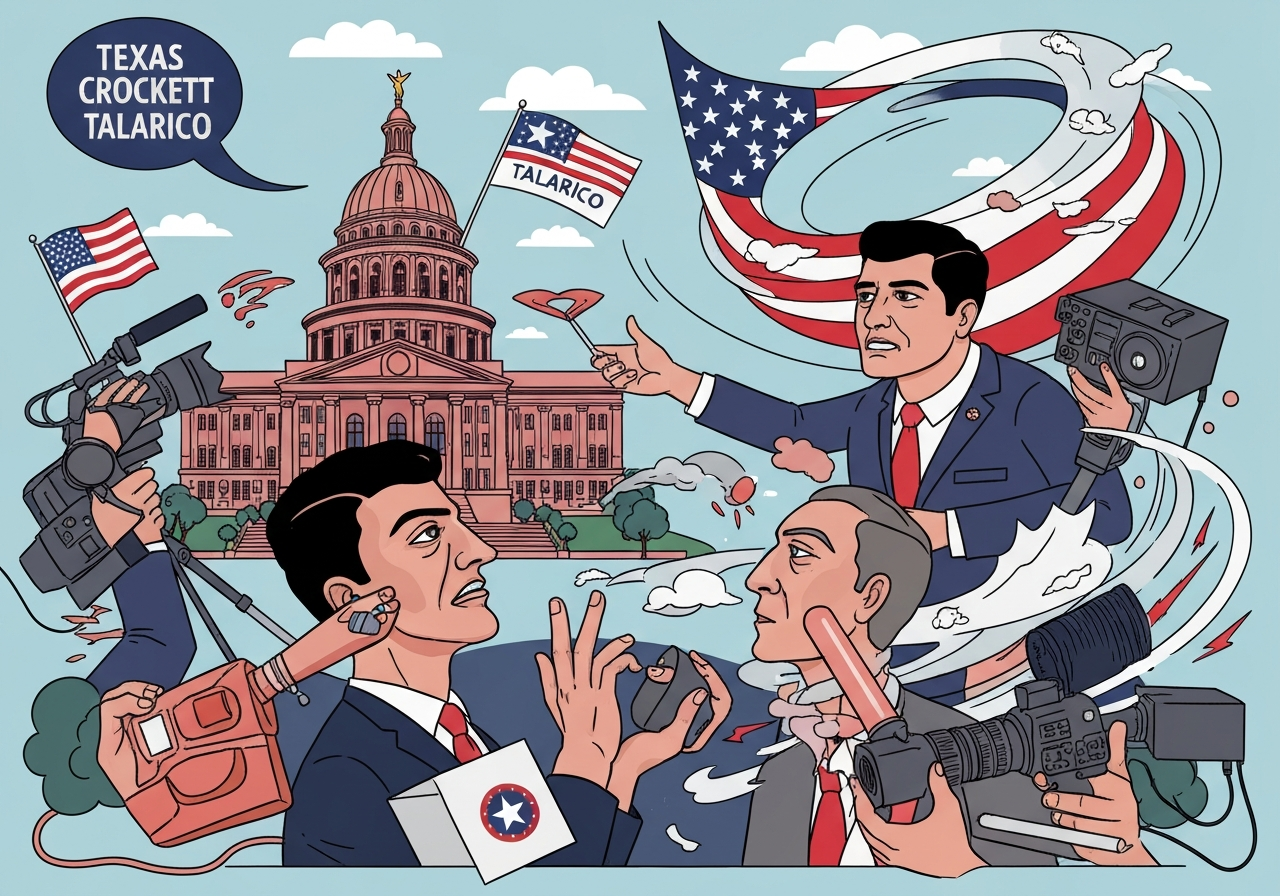
As Texas’ March 3 primary approaches, Democratic U.S. Rep. Jasmine Crockett and state Rep. James Talarico are escalating campaigns across the Dallas–Fort Worth area after a high-profile interview with late-night host Stephen Colbert was barred from broadcast. The Colbert segment was posted online and drew national attention; Talarico’s campaign reported a $2.5 million fundraising surge in the 24 hours after the TV airing was canceled. Early voting has already begun in the nation’s first major contest of the 2026 midterms, and both candidates are pressing supporters in precincts where Democrats see opportunity despite no statewide victory since 1988. Campaign stops in Fort Worth and Austin have emphasized experience, grit and the stakes of the November general election.
Key takeaways
- The Texas primary is March 3, 2026, and early voting is underway across the state.
- Talarico’s pulled TV interview with Stephen Colbert was posted online and had nearly 8 million YouTube views as of Thursday.
- Talarico’s campaign reported raising $2.5 million in the 24 hours after the broadcast was blocked by network lawyers.
- Crockett campaigned in Dallas and Fort Worth, stressing experience and a confrontational approach toward Republican priorities.
- Democrats have not won a statewide Texas race since 1988 but view this cycle as a chance if Republicans nominate a polarizing nominee.
- The episode has sparked debate about broadcast rules and FCC guidance under Chair Brendan Carr.
Background
Texas’ open U.S. Senate contest has drawn national attention; the seat is held by four-term Republican Sen. John Cornyn, who is facing a difficult primary that includes Texas Attorney General Ken Paxton and U.S. Rep. Wesley Hunt. Democrats Jasmine Crockett and James Talarico entered the Senate contest after building name recognition through viral moments and statehouse profiles. Crockett is known for aggressive floor and media confrontations with Republicans, while Talarico has tied his positions to his Christian faith and often uses faith language in his rhetoric.
The March 3 primary is the first big test of 2026, and both campaigns have sought to convert national attention into local votes. Historically, Democrats have not carried a statewide election in Texas since 1988, which shapes strategic calculations and fundraising priorities for both parties. Local officials and activists are watching turnout closely in urban and suburban counties where shifting demographics have offered Democrats incremental gains in recent cycles.
Main event
James Talarico began a statewide tour this week and recorded a segment with Stephen Colbert’s late-night program. On Monday night, Colbert announced that lawyers at CBS advised against airing the interview on television because of concerns tied to regulatory guidance from the current administration, though the show nonetheless posted the segment online. The online clip drew large viewership quickly; the campaign and supporters framed the removal from broadcast as evidence of political pressure.
Talarico’s campaign reported it raised $2.5 million within 24 hours after the broadcast was barred, a figure the campaign said reflected energized grassroots and small-dollar responses. In Houston, Harris County Democratic Chair Mike Doyle called the fundraising and attention bump “undeniable,” while acknowledging it is unclear whether that surge will translate into long-term advantage at the ballot box.
Crockett has used the episode to underscore her emphasis on tested experience and a confrontational posture toward Republican leadership. On the campaign trail in Fort Worth, she urged voters not to “let up off the gas,” framing the contest as consequential for democracy and warning against complacency even amid Democratic enthusiasm in parts of North Texas. Supporters at events described craving a candidate they view as fearless and experienced in federal-level fights.
Analysis & implications
The Colbert episode elevated a state primary into a national conversation, amplifying fundraising and name recognition for Talarico at a critical pre-primary moment. A rapid $2.5 million infusion can materially extend ad buys, staffing and GOTV operations over the final days of early voting, but converting short-term attention into durable support depends on ground organization and targeted turnout.
For Crockett, the incident presents both a liability and an opportunity: it gave Talarico a public boost, yet it also allowed Crockett to reframe the race around experience and steady resistance to Republican policy. Her stops in Fort Worth and Dallas are aimed at consolidating support among voters who prioritize policy track records and combative representation in Washington.
Beyond Texas, the dispute highlights friction between broadcasters, regulatory officials and political actors over the scope of equal-time questions for talk shows. FCC Chair Brendan Carr has signaled interest in reassessing exemptions that have historically protected comedy and talk programming from candidate access rules. Any change to that framework would create new legal and editorial constraints for networks and hosts nationwide.
Comparison & data
| Metric | Reported figure |
|---|---|
| 24-hour fundraising after pulled interview | $2.5 million |
| YouTube views of posted interview (as of Thursday) | Nearly 8 million |
| Primary date | March 3, 2026 |
The rapid inflow of funds and the large online audience are measurable ways the event shifted the race’s dynamics. Fundraising bolsters paid media and field operations; online virality increases name ID but does not by itself generate votes. Campaigns will need to convert attention into turnout in precincts that decide the March 3 outcome.
Reactions & quotes
“Now, I’m not saying that this moment is easy, but at least ya’ll know exactly how I operate in this moment on the federal level.”
Rep. Jasmine Crockett, campaign event in Fort Worth
Context: Crockett used the line to stress continuity in her approach to federal fights and to appeal to voters seeking a proven, combative representative.
“Whether or not it pans out long-term, who knows?”
Mike Doyle, Harris County Democratic Chair
Context: Doyle acknowledged the short-term boost for Talarico but cautioned that early excitement may not determine final results without organized turnout.
“It was an honor to vote in this election. It was my name on the ballot.”
James Talarico, after voting early in Austin
Context: Talarico framed his campaign as part of a broader movement to reshape Texas politics, positioning the campaign as both personal and collective.
Unconfirmed
- That CBS bowed to explicit pressure from the Trump administration — the network characterized its guidance as legal advice and called it a risk assessment.
- That the post-interview fundraising surge will translate directly into higher turnout for Talarico on March 3.
- Any formal FCC enforcement action tied to this particular segment — regulators have raised questions about exemptions but have not announced a related penalty here.
Bottom line
The pulled Colbert broadcast has injected new momentum and media attention into an already competitive Texas Democratic primary in the closing days of early voting. The immediate effects are measurable: a large online audience and a reported $2.5 million fundraising spike for Talarico, and intensified field activity from Crockett aimed at voters who prioritize experience and toughness.
How those dynamics translate into votes on March 3 will depend on which campaign turns attention into organized turnout. Beyond the state, the episode has renewed debate about the intersection of network legal advice, federal guidance and the differing rules that apply to broadcast versus online political content.