
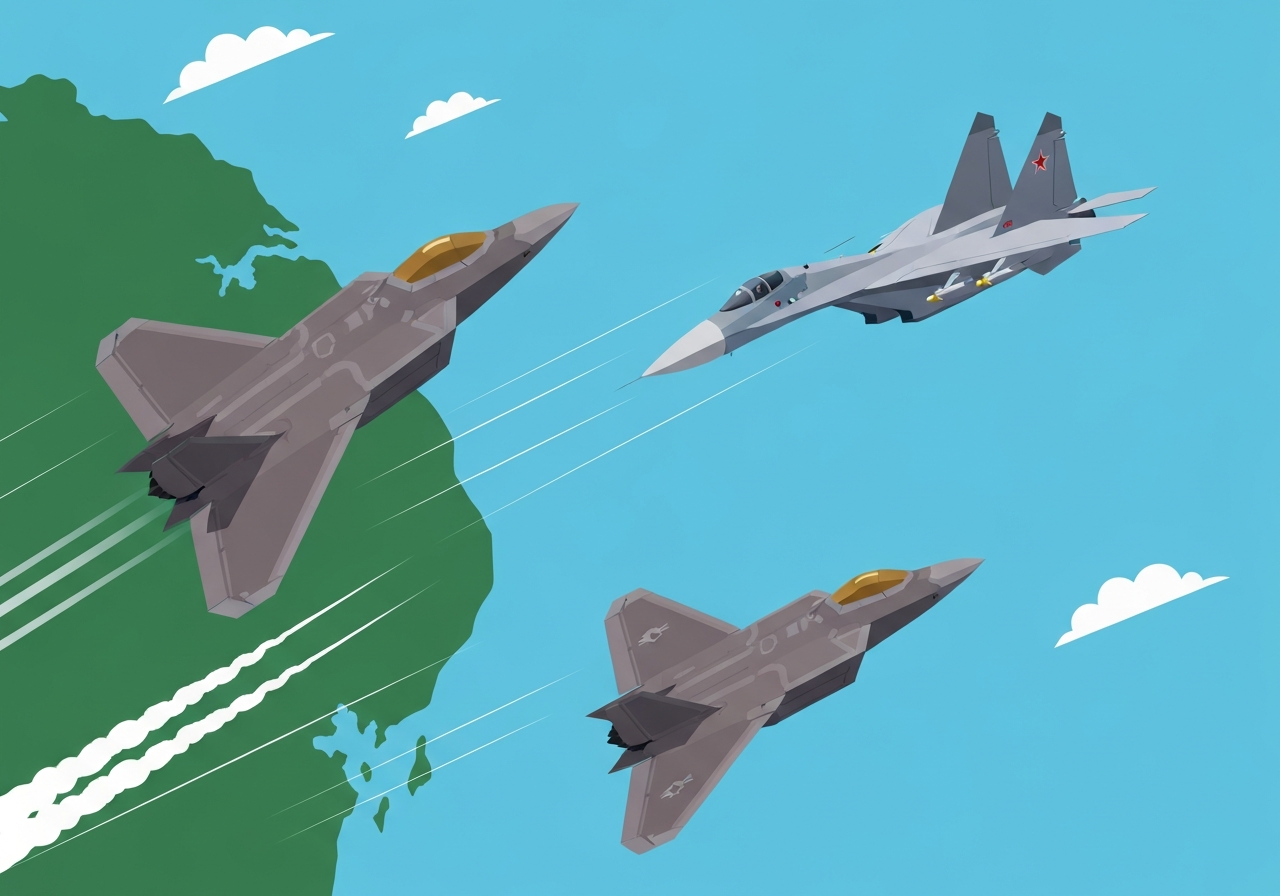
On Feb. 19, 2026, U.S. military aircraft were scrambled after multiple Russian long-range aircraft were detected near Alaska. NORAD reported two Tu-95 bombers, two Su-35 fighters and an A-50 surveillance plane in the Alaskan Air Defense Identification Zone; U.S. F-16s and F-35s, supported by KC-135 tankers, escorted the formation until it left the area. Officials said the Russian aircraft did not cross into U.S. or Canadian sovereign airspace and the activity was not assessed as a direct threat. The incident marks the latest in a series of similar detections around Alaska over recent years.
Key Takeaways
- NORAD detected two Tu-95 bombers, two Su-35 fighters and an A-50 early warning aircraft in the Alaskan ADIZ on Feb. 19, 2026.
- The U.S. launched two F-16s, two F-35s and four KC-135 aerial refueling tankers to identify and escort the Russian formation.
- NORAD and U.S. officials reported the Russian flight remained in international airspace and did not enter U.S. or Canadian sovereign airspace.
- Officials described the mission as routine surveillance activity, not an immediate threat to North American security.
- This follows previous intercepts: September 2025 (Tu-95s, Su-35s), August 2025 (IL-20 intercepted repeatedly), September 2024 (close overflight video) and July 2024 (joint Russian-Chinese bomber activity).
Background
The Alaskan Air Defense Identification Zone (ADIZ) is a buffer of international airspace that begins where U.S. and Canadian sovereign airspace ends; its purpose is early identification of aircraft approaching North America. NORAD monitors the ADIZ to ensure timely detection and response to aircraft that could affect continental defense. Russian long-range aviation has conducted periodic sorties that transit international waters and airspace near U.S. and Canadian approaches; many are publicly characterized by Moscow as routine patrols. Over the past two years, such missions near Alaska have increased in frequency, drawing repeated NORAD intercepts and public attention.
Historical patterns show a mix of strategic signaling and routine operations: Tu-95 “Bear” bombers, Su-35 fighters and Soviet-era reconnaissance models like the IL-20 have all been involved in past episodes. Washington and Ottawa treat ADIZ incursions seriously because they test response procedures and readiness of intercept forces, even when flights remain outside sovereign airspace. The presence of aerial refueling tankers in the U.S. response underscores how intercepts can require sustained airborne operations. Policymakers from both countries track these patrols as part of broader Arctic and Pacific security concerns.
Main Event
According to NORAD’s situational update, radar and airborne sensors detected the Russian formation in the Alaskan ADIZ on Feb. 19, 2026. Early in the event, two U.S. F-16 fighters and two F-35s were launched to conduct visual identification and escort duties; four KC-135 tankers were also dispatched to support extended on-station time. Pilots made routine identification passes and maintained safe separation; commanders reported no violation of sovereign airspace by the Russian aircraft. NORAD officials characterized the response as standard procedure to ensure positive identification and maintain regional situational awareness.
The Russian formation comprised two Tu-95 strategic bombers, two Su-35 air superiority fighters and an A-50 airborne early warning aircraft, according to NORAD. The A-50’s presence is consistent with long-range flights that include surveillance and command-and-control elements. U.S. assets shadowed the formation until it departed the ADIZ and returned to international airspace; no engagements or dangerous maneuvers were reported. Military spokespeople emphasized the intercepts were defensive and aimed at preserving the safety of North American airspace.
Local air traffic and civilian flights were not disrupted, officials said, as the intercepts occurred over international waters beyond sovereign routes. NORAD reiterated that identification and escort missions are routine in the ADIZ context and meant to clarify intentions of approaching aircraft. The event was logged and shared with allied partners as part of standard information-sharing practices in continental defense. Military analysts noted the pattern of repeated intercepts suggests both continued operational reach by Russian long-range aviation and sustained readiness by U.S. and Canadian forces.
Analysis & Implications
Operationally, the Feb. 19 intercept demonstrates NORAD’s layered detection and response model: space- and ground-based sensors cue airborne assets, while fighters and tankers provide the ability to identify and sustain contact with distant aircraft. The combination of F-16s and F-35s reflects a mix of legacy and fifth-generation capabilities used to maintain visual and electronic identification. Presence of KC-135s indicates planners anticipated extended flight durations and the need to keep interceptors on station for longer periods. This operational posture reinforces deterrence by signaling responsiveness in high-latitude approaches.
Strategically, recurring Russian flights near Alaska serve multiple purposes: routine training, testing allied reaction times, and signaling geopolitical reach in the North Pacific and Arctic approaches. For Moscow, long-range aviation sorties are a visible demonstration of endurance and command reach; for Washington and Ottawa, they are an instrument to exercise continental air defense. While these sorties have so far stayed in international airspace, they increase the tempo of encounters that can heighten miscalculation risks if aircraft operate unsafely. Continued frequency could prompt further investment in surveillance, intercept training and allied coordination across the Arctic region.
Politically, intercepts are likely to attract attention in capitals and to be used rhetorically by both sides: Western officials point to the need for persistent defense readiness, while Russian statements typically emphasize sovereign training and routine patrols. For NATO and partner states, the pattern reinforces the importance of integrated air and maritime domain awareness in northern approaches. Economically, higher operational tempo can stress maintenance cycles and logistics for air forces operating at range, increasing demand for aerial refueling and forward support. Over time, persistent patrols and intercepts could accelerate force posture adjustments in Alaska and the North Pacific.
Comparison & Data
| Date | Detected Aircraft | U.S./NORAD Response |
|---|---|---|
| Feb. 19, 2026 | 2 Tu-95, 2 Su-35, 1 A-50 | 2 F-16s, 2 F-35s, 4 KC-135 escorts |
| Sept. 2025 | Tu-95s, Su-35s | Fighter intercepts (scrambled) |
| Aug. 2025 | IL-20 (recon) | Intercepted multiple times in one week |
| Sept. 2024 | Russian fighter (close pass) | Short-range intercept; video released |
| July 2024 | Russian and Chinese bombers | Joint entry; U.S. intercepts |
The table highlights a multi-year pattern of Russian long-range flights near Alaska and occasional cooperative sorties with other states. Although each episode differs in aircraft mix and tactics, the recurring nature underlines a persistent demand on NORAD assets. Data-sharing with allied partners helps place individual intercepts within a broader pattern of activity across the North Pacific and Arctic.
Reactions & Quotes
“We launched aircraft to identify and escort the detected formation until it left the Alaskan ADIZ; the flight did not enter sovereign U.S. or Canadian airspace and was not considered a threat,”
NORAD (official statement)
“Russian long-range aircraft repeatedly transit international airspace near North America as part of planned operations,”
Russian Defense Ministry (official statement)
“Routine intercepts test readiness and response procedures, and repeated sorties put a premium on timely detection and sustained airborne support,”
U.S. defense official (anonymous)
Unconfirmed
- Whether the Russian aircraft were carrying live ordnance during the Feb. 19 flight is unconfirmed by independent open sources.
- The precise operational objectives or mission orders for the Russian sortie have not been publicly disclosed and remain unverified.
- Any classified sensor data or intercept audio recordings that could provide additional detail have not been released for independent review.
Bottom Line
The Feb. 19, 2026 intercept near Alaska fits a sustained pattern of Russian long-range aviation exercising routes near North American approaches. NORAD’s rapid scramble of F-16s, F-35s and KC-135 tankers demonstrates the established protocols for identification and escort in the ADIZ, and officials maintain the flights did not cross into sovereign airspace. Repeated encounters, while routine in official accounts, raise operational demands and underscore the importance of persistent surveillance and allied information-sharing in high-latitude approaches.
Looking ahead, expect continued monitoring and occasional intercepts as long-range patrols persist; policymakers will likely weigh investments in Arctic-domain awareness, aerial refueling capacity and joint training to sustain readiness. Transparency on both sides—limited by operational security—will remain constrained, so open-source tracking and official statements will be the primary public windows into future incidents.
Sources
- CBS News — national news outlet reporting on the Feb. 19, 2026 intercept.
- NORAD Newsroom — official continental defense statements and situational updates (official).
- Russian Ministry of Defense — official statements on Russian long-range aviation operations (official).