
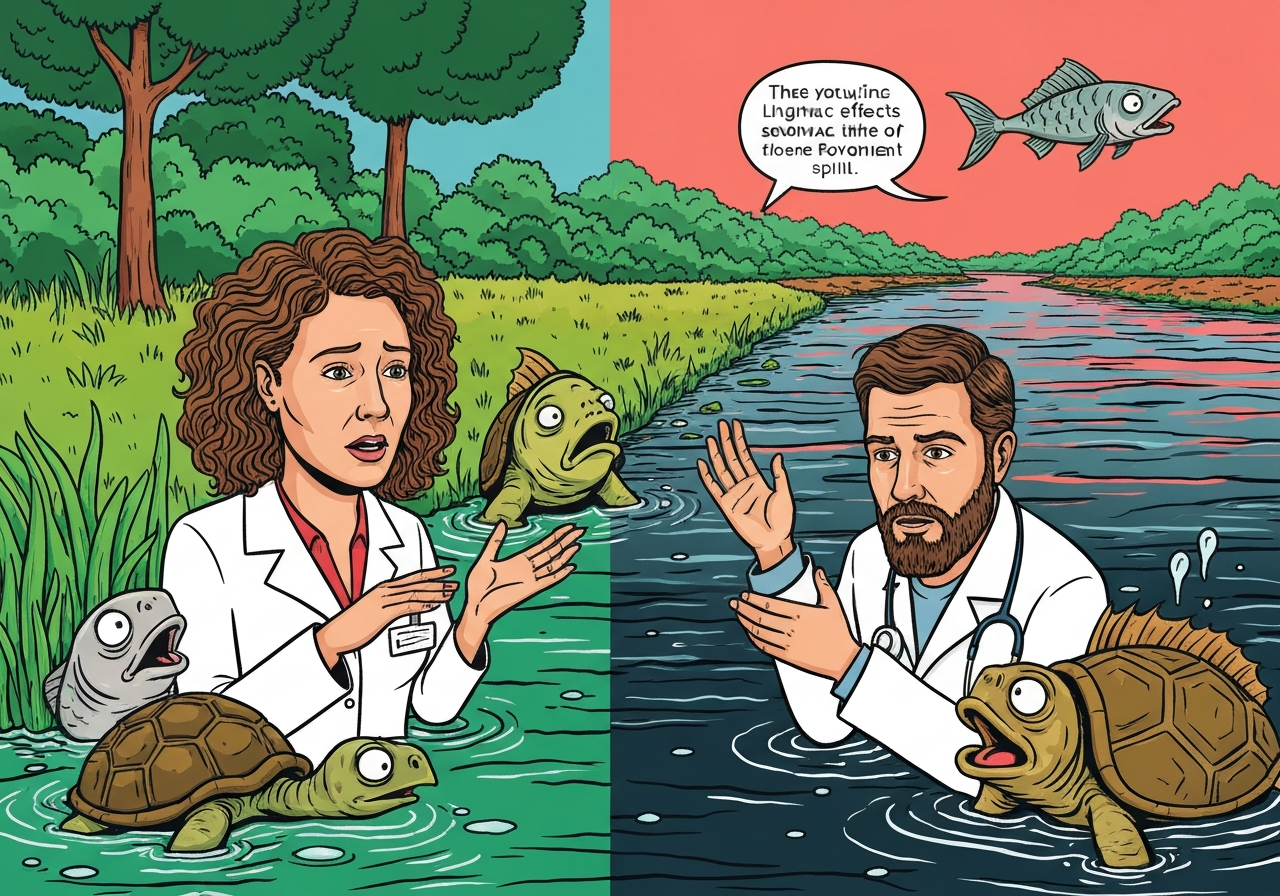
In January 2026 a decades-old sewer line collapsed on the Maryland bank of the Potomac River northwest of Washington, D.C., releasing raw wastewater into the river. Utility operators reported more than 200 million gallons escaped in the initial days, with some accounts citing about 243 million gallons in total; crews have since installed pumps and a steel bulkhead to divert flows while repairs are planned. Local officials say the municipal drinking supply has not been contaminated, but scientists and advocates warn of lingering ecological harm to the Potomac watershed and downstream Chesapeake Bay. Federal and local agencies are coordinating response actions even as questions remain about the collapse and the spill’s long-term consequences.
Key Takeaways
- Magnitude: The broken sewer line released more than 200 million gallons of raw sewage in January 2026; some reports cite roughly 243 million gallons released downstream.
- Infrastructure age: The pipe dates to the 1960s and showed signs of corrosion during inspections roughly a decade ago, according to DC Water.
- Public health: Officials report no contamination of the region’s treated drinking water, but E. coli levels were elevated at the overflow site.
- Ecological risk: Scientists warn of risks from bacteria, nutrients, pharmaceuticals and other contaminants that can sink to sediments, spark algal blooms, and harm fish and bird reproduction.
- Downstream impact: Waste will travel through the Potomac to the Chesapeake Bay, a 200-mile estuary central to regional fisheries and recreation.
- Policy angle: Experts say population growth, aging pipes and more intense storms driven by climate change compound system stress and make such events more likely.
Background
The Potomac watershed supports cities, suburbs and agricultural land across multiple jurisdictions and drains into the 200-mile Chesapeake Bay. Sewage and stormwater systems in many U.S. cities were built decades ago and were not designed for today’s population densities or the heavier, more concentrated rainfall events scientists attribute to a warming climate. Systems that combine sewage and stormwater are particularly vulnerable to overflow when flows exceed pipe capacity.
For years, environmental groups and water utilities have documented chronic overflows and urged upgrades, including separation of storm and sanitary flows, rehabilitation of corroded mains, and increased monitoring. In inspections about ten years ago, DC Water found corrosion on the affected section of the 1960s-era main and had planned targeted rehabilitation work, officials say. That plan did not prevent the January collapse, leaving regulators, utility managers, and river communities to weigh immediate cleanup, compensatory measures, and longer-term investment choices.
Main Event
The failure occurred in January 2026 when a large-diameter sewer conduit ruptured near the Potomac bank northwest of Washington, D.C. Over subsequent days, crews mobilized pumps and constructed a steel cofferdam and temporary bypass to stop active discharge and route flows around the damaged segment for repair work. DC Water described the response as rapid deployment of containment and diversion assets while engineering teams prepared for excavation and pipe rehabilitation.
Field sampling at the overflow site has shown elevated concentrations of E. coli and other indicators of untreated wastewater. Agency officials emphasize that treated municipal water systems were not compromised, but they caution swimmers, boaters and waterfront users to avoid contact until advisories are lifted. Local leaders sought federal disaster support; on February 2026 D.C. Mayor requested reimbursement for response costs and infrastructure repair.
The spill attracted national attention because of its size and the symbolic risk to the Chesapeake Bay cleanup efforts. Environmental groups said remediation will require sediment monitoring, targeted habitat assessments, and evaluation of sublethal effects on aquatic organisms tied to pharmaceuticals and household chemicals flushed into the sewer system. Meanwhile, engineers are preparing for excavation and pipe replacement work that could take weeks to months depending on the scope of damage discovered.
Analysis & Implications
Ecological effects are likely to be complex and multi-year. Raw sewage contains pathogens, high nutrient loads, organic matter and chemical contaminants including prescription drugs and personal-care products. Together these stressors can reduce dissolved oxygen, trigger harmful algal blooms in warmer months, and disrupt reproductive cycles of fish and invertebrates through contaminant exposure and habitat alteration.
Contaminants that bind to sediments pose particular long-term risks because they can remain in the riverbed, becoming a slow-release source of pollution that moves with dredging, storms or seasonal flow changes. Scientists emphasize that cold winter water suppresses bacterial growth now, but as river temperatures rise in spring and summer the biological and chemical consequences could amplify, creating windows of acute ecological stress.
From a policy perspective, the event underlines the trade-off cities face between immediate repairs and systemic upgrades. Utilities such as DC Water say many assets predate modern environmental standards and require significant capital investment. Environmental and public-finance experts note that addressing thousands of miles of aging pipes will be costly and will demand federal, state and local coordination as well as prioritization frameworks based on public health and ecosystem risk.
Comparison & Data
| Metric | Value / Context |
|---|---|
| Reported spill volume | More than 200 million gallons; specific estimates cited around 243 million gallons |
| Chesapeake Bay length | Approximately 200 miles (mid-Atlantic estuary) |
| Pipe era | 1960s construction; documented corrosion noted ~10 years ago |
| Immediate public-health finding | Elevated E. coli at overflow site; treated drinking supply not reported contaminated |
The table places the spill in local geographic and infrastructure context. While single large releases are easier to identify, utilities also contend with frequent smaller overflows that cumulatively contribute to watershed pollution. Monitoring sediment and biota will be necessary to convert short-term sampling into a robust picture of ecological impact.
Reactions & Quotes
“There’s a ton of nasty stuff in raw sewage. It’s not just waste and bacteria, but you have all sorts of pharmaceuticals that end up in the pipe system.”
Gary Belan, American Rivers (clean water program)
Belan highlighted the chemical diversity in sewage and the risk that compounds will settle into sediments and affect aquatic life. His group urged accelerated sediment testing and targeted habitat remediation where contamination accumulates.
“It is absolutely a climate problem that will continue to get worse.”
Gussie Maguire, Chesapeake Bay Foundation (Maryland staff scientist)
Maguire linked the failure to broader trends in storm intensity and infrastructure stress, saying planners must factor in more intense rainfall when prioritizing upgrades.
“Once you put 243 million gallons of raw sewage into a river, any river, you’re not getting it back out.”
Dean Naujoks, Potomac Riverkeeper
Naujoks emphasized public trust and long-term ecological consequences, calling for transparent monitoring data and public outreach to restore confidence among waterfront users.
Unconfirmed
- The precise mechanical cause of the January collapse has not been publicly confirmed; investigations are ongoing and DC Water reported prior corrosion but has not released a final failure analysis.
- The full scale of pharmaceutical and chemical contamination in sediments and biota remains to be quantified by comprehensive sampling and lab analysis.
- Long-term ecological outcomes, including whether the spill will trigger persistent harmful algal blooms or chronic population impacts among fish and invertebrates, are not yet established.
Bottom Line
The Potomac spill is one of the largest recent sewage releases in the United States and serves as a stark example of how aging infrastructure, population pressure and changing rainfall patterns can converge to produce outsized environmental harm. Immediate response actions—pumps, cofferdams, sampling and public advisories—are necessary to reduce acute exposure, but they do not eliminate contaminants that have already entered the river system.
Addressing the root causes will require sustained investment in underground systems, clearer prioritization of repairs based on public-health and ecological risk, and federal-state-local funding partnerships to scale upgrades. For residents and resource managers, transparent monitoring and a multi-year remediation plan will be essential to restore ecological function and public trust in the Potomac and the downstream Chesapeake Bay.
Sources
- NPR — news report summarizing the spill and initial responses (media)
- DC Water — utility managing the line and leading repairs (official utility)
- U.S. Environmental Protection Agency (EPA) — federal agency offering coordination and support (government)
- Chesapeake Bay Foundation — regional environmental NGO providing scientific and policy analysis (NGO)
- American Rivers — national clean-water advocacy organization (NGO)