
Lead
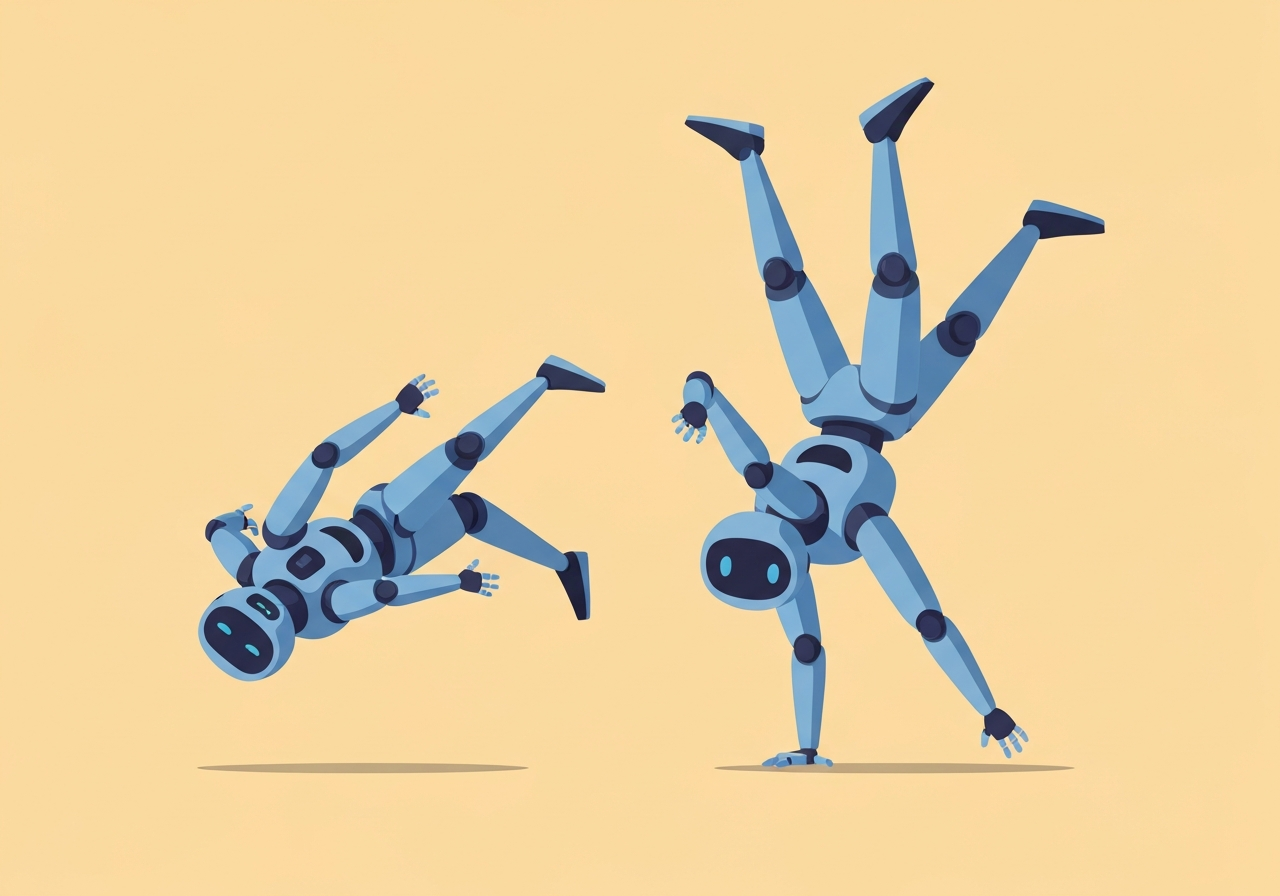
On Feb. 16, 2026, humanoid robots from multiple Chinese startups performed martial-arts routines, choreographed dances and gymnastic moves at the Spring Festival Gala in Beijing, an event watched worldwide. Videos from the gala circulated widely online and showed markedly smoother, more dexterous machines than the wobblier demos seen a year earlier. The display prompted both admiration for rapid technical progress and renewed debate about economic and geopolitical implications. Analysts say the performance underscores significant short-term gains while leaving important technical questions unresolved.
Key Takeaways
- Performance date and venue: The Spring Festival Gala in Beijing on Feb. 16, 2026, showcased multiple humanoid robots in martial-arts and gymnastic sequences.
- Scale of installations: Barclays estimates roughly 15,000 humanoid robot installations in 2025, with China accounting for more than 85% and the U.S. about 13%.
- Commercial shipments: Unitree—one of the companies featured—told local media it expects between 10,000 and 20,000 shipments in 2026.
- Price differentials: Unitree advertises a base price of $13,500 for its G1 humanoid; Tesla’s Optimus production cost was cited at under $20,000 only at a 1 million annual output scale.
- Technical progress: Routines included aerial flips and weapon handling, signaling advances in balance and dexterity beyond last year’s folk-dance demonstrations.
- Remaining limits: Analysts caution robots still need stronger reliability in unstructured, human-centered settings and better task chaining and reasoning.
- Geopolitical angle: China’s vertically integrated supply chain and production scale are cited as reasons it will likely lead humanoid deployment for the next few years.
Background
The Spring Festival Gala is widely regarded as one of the world’s most-watched television events, offering a national stage that amplifies new technologies and cultural moments. In the 2025 gala, humanoid robots appeared in simpler, slower demonstrations—twirling handkerchiefs in a folk-dance routine that highlighted basic motion but exposed limits in balance and control. Throughout 2025 public demos produced mixed coverage: a widely noted April robot marathon drew attention for stumbles, collisions and mechanical breakdowns that fed skepticism about practical readiness.
Behind those public displays, China’s robotics ecosystem expanded rapidly. Analysts point to a near-vertical integration of supply chains—from rare earth inputs and magnet production to component assembly and battery supply—that lowers production costs and shortens development cycles. Government support, industrial policy and dense manufacturing clusters have also helped startups scale hardware output quickly. That combination of capital, supply-chain depth and state support helps explain why Chinese firms account for a dominant share of installations reported last year.
Main Event
At the Feb. 16 gala, several startups unveiled coordinated segments that mixed kung fu choreography, synchronized dance and acrobatic flips. The routines included moments of weapon handling in staged sequences and aerial maneuvers that would have been difficult for earlier-generation hardware. Viewers online compared footage with the 2025 gala and noted a clear improvement in fluidity, balance and limb coordination.
Unitree’s robots featured prominently on stage; company executives told local media before the show that they expect substantial shipments in 2026. The startup’s G1 model is advertised with a base price of $13,500, a figure analysts cite as illustrative of China’s cost advantage. Audience reaction ranged from technical applause to unease about the implications for human labor and national competitiveness in robotics.
Industry analysts present in coverage stressed that the gala was a curated performance environment. Organizers control lighting, floor surfaces, choreography and timing—conditions that can mask reliability issues that arise in unstructured real-world settings such as homes, hospitals or cluttered factories. Still, the visible increase in agility and coordinated motion represents a meaningful engineering step compared with last year’s public demos.
Analysis & Implications
China’s advantage in humanoid robot deployment is driven as much by manufacturing scale and supply-chain depth as by software improvements. Barclays and other research groups point to the concentration of component suppliers, magnets and battery capacity within China as a cost and speed advantage that will be difficult for other markets to match quickly. That advantage helps explain bar charts of installations and the pace of commercial shipments announced by several firms.
Nevertheless, analysts warn that raw motion capability—flips, kung fu poses, synchronized choreography—does not equate to reliable autonomy in diverse human environments. Progress in AI models that enable long-duration task planning, multi-step chaining, fine manipulation and robust perception will be decisive for real-world value in care, maintenance and household tasks. Technical hurdles remain in generalization, safety, and predictable behavior under noisy, dynamic conditions.
Economically, lower hardware prices and higher shipment volumes could open new use cases in logistics, light assembly and hazardous operations where physical endurance and repeatability matter more than advanced reasoning. But meaningful displacement of jobs that require social intelligence, complex judgment or nuanced dexterity is not imminent; analysts emphasize a phased adoption pattern where robots first augment rather than replace human workers.
Comparison & Data
| Metric | 2025 Figure / Note |
|---|---|
| Estimated global humanoid installations (2025) | ~15,000 (Barclays estimate) |
| China share (2025) | >85% (~12,750 installations) |
| U.S. share (2025) | ~13% (~1,950 installations) |
| Unitree G1 base price | $13,500 (advertised) |
| Tesla Optimus cost target | Potential < $20,000 at 1,000,000 annual units (Elon Musk, Jan. 2025) |
The table highlights how concentrated deployment was in 2025 and underscores the price gap between firms. China’s high share of installations—over 85%—translates to thousands of units on the ground, while U.S. installations remained a small fraction. Price points cited by manufacturers suggest divergent near-term strategies: lower-cost production for broad deployment in China versus volume-driven cost reductions that U.S. firms may need to realize over time.
Reactions & Quotes
Analysts and industry figures offered measured reactions that balanced technical praise with caution about next-step challenges.
“People should absolutely be taking these robots seriously. After this spring gala demonstration, they’re becoming visibly more lean, fluid, and capable,”
Reyk Knuhtsen, SemiAnalysis (industry analyst)
Knuhtsen framed the gala as evidence of rapid physical improvements while noting more work is needed on reasoning and task chaining for real economic value.
“The fundamental advantage that China has is a nearly vertically integrated robotics value chain: from rare earths and high-performance magnets to the physical components, and the batteries,”
Zornitsa Todorova, Barclays (thematic FICC research lead)
Todorova emphasized that integration lowers costs and accelerates production—a structural advantage that helps explain the shipment and installation figures reported for 2025.
“They still need to prove reliability in unstructured, human-centric environments for delicate tasks like healthcare or household assistance,”
Lian Jye Su, Omdia (chief analyst)
Omdia’s comment highlights the difference between staged performances and everyday operational reliability, a gap that many researchers say will define the timeline for broad adoption.
Unconfirmed
- Immediate large-scale job displacement: Claims that the gala performance signals imminent, broad unemployment due to humanoid robots lack direct evidence and depend on adoption, regulation and task suitability.
- Exact shipment totals for 2026: Unitree’s 10,000–20,000 shipments figure is a company projection reported to local media and has not been independently audited.
- Superhuman capabilities timeline: Suggestions that humanoid robots will soon deliver sustained superhuman performance across contexts remain speculative without peer-reviewed demonstrations in unstructured tasks.
Bottom Line
The Spring Festival Gala on Feb. 16, 2026, offered a vivid public demonstration that Chinese humanoid robotics has made visible gains in motion, coordination and commercial scale since 2025. Those gains reflect concentrated manufacturing, supply-chain depth and targeted engineering work on balance and actuation, enabling routines that looked implausible a year ago.
But the gala was a staged environment; the crucial next tests will be reliability, perception and task-composition in messy, human-centric settings. The AI models that enable long-duration planning and safe, generalizable behavior remain the key determinant of economic and societal impact. Policymakers, employers and researchers should watch deployments, model advances and independent reliability data closely over the next 12–24 months.
Sources
- CNBC — media report summarizing gala, company comments and analyst views (journalism)
- Barclays — thematic research referenced for installation and market-share estimates (financial research)
- SemiAnalysis — industry analysis and commentary from Reyk Knuhtsen (industry research)
- Omdia — market and technology analysis cited for capability caveats (market research)
- Unitree — company product and pricing information (company website)