
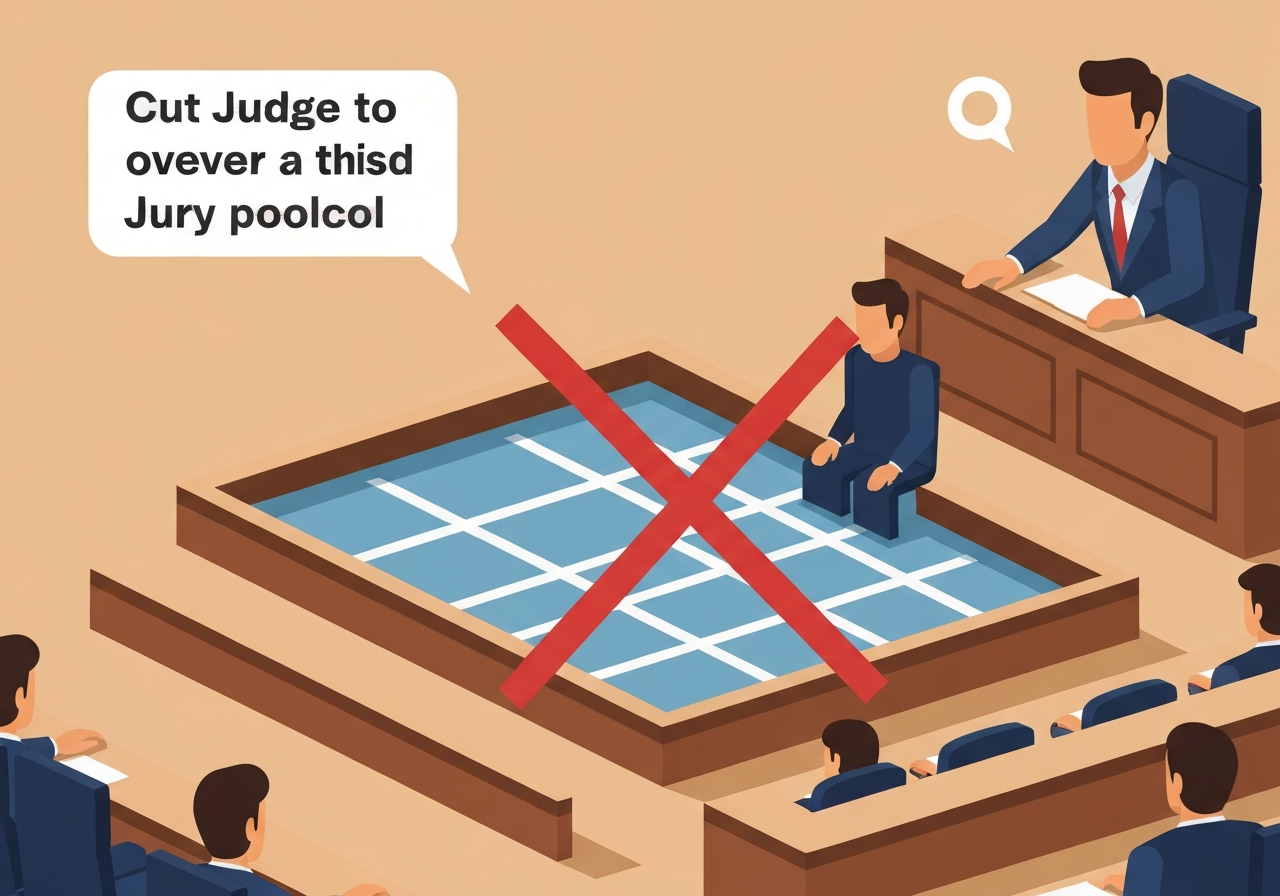
Federal Judge Charles Breyer removed more than a third of a 93-person jury venire in San Francisco on Thursday after many prospective jurors signaled they could not set aside preexisting views about Elon Musk. The voir dire took about five hours and produced a nine-person civil jury for a March trial over Musk’s 2022 purchase of Twitter. Investor plaintiffs contend Musk violated securities laws by omitting material information and making false statements that moved the company’s stock; Musk denies those allegations. The judge emphasized that jurors must decide the case on evidence presented in court, not broader opinions about the defendant.
Key takeaways
- Judge Charles Breyer excused over one-third of a 93-person jury pool after many venire members said they could not be impartial.
- The case is a civil securities suit tied to Elon Musk’s 2022 acquisition of Twitter; trial is scheduled to begin in March.
- A final jury of nine people was seated after roughly five hours of selection and questioning.
- Reportedly, several prospective jurors expressed strong negative views about Musk’s politics, business conduct and role at Twitter.
- Musk’s lawyer, Stephen Broome, argued for removing more candidates who revealed bias in their questionnaires and answers.
- Press reports from Law360, Bloomberg Law and Courthouse News Service were present and provided contemporaneous coverage of the selection.
Background
The lawsuit centers on investors who say Musk’s conduct during his 2022 purchase of Twitter violated federal securities law by leaving out material facts and making misleading statements that harmed shareholders. Those plaintiffs seek remedies tied to the market effects they attribute to Musk’s announcements and filings. Musk, who is a high-profile business and political figure, has denied wrongdoing and framed the claims as unfounded.
High-profile defendants routinely complicate jury selection because public commentary, social media, and news coverage shape prospective jurors’ preconceptions. Federal judges rely on questionnaires and oral voir dire to identify venire members who cannot abide by the court’s instruction to decide only on the admissible evidence. In civil trials federal and local rules allow for both cause removals and discretionary peremptory strikes; judges must balance the parties’ rights with ensuring an impartial panel.
Main event
During Thursday’s session in the Northern District of California, many prospective jurors answered a pre-selection questionnaire with statements indicating strong views about Musk and his companies. When roughly three dozen people raised their hands saying they could not ignore those views, Judge Breyer dismissed them from the venire. The judge repeated that jurors must follow the evidence and the law, not personal opinions about public figures.
Some individual answers cited specific grievances. One prospective juror said they would feel morally compelled to convict in a criminal trial but believed they could set those feelings aside in a civil case, adding that sending Musk to prison would benefit the human race. That person did not make the final jury. Another candidate said Musk has “no moral compass” and had “used his wealth to buy votes,” and was likewise excused. Reporters also noted a prospective juror who expressed broad opposition to the existence of billionaires and another who objected to Musk’s past management decisions at Twitter; both were dismissed.
Outside counsel argued for additional excusals. Musk’s lawyer, Stephen Broome, pressed the court to remove more venire members after reviewing their questionnaire answers and oral statements, saying the pool had become saturated with hostile views. Judge Breyer acknowledged that public figures attract strong opinions and framed the issue as whether specific jurors could put those opinions aside when ruling on the limited legal questions in front of them.
Analysis & implications
The mass excusal highlights a familiar challenge in high-profile litigation: assembling a panel insulated enough from publicity to satisfy due process while still reflecting a community cross-section. If prejudged opinions are common in the venire, counsel for either side may use that fact to argue for broader remedies, including change of venue or more intensive voir dire, though such remedies are not automatic and face legal thresholds.
For the defense, extensive pretrial publicity can raise strategic concerns about finding fair jurors, but successful challenges at voir dire can mitigate those risks by removing clearly biased individuals. For plaintiffs, juror hostility toward a wealthy defendant can complicate proving damages and causation if jurors cannot fairly evaluate financial evidence. Either side may preserve objections for appeal if they believe the selection process unfairly skewed the panel.
Beyond the courtroom, large-scale removals like this can shape public perceptions of judicial impartiality and the trial’s legitimacy. Observers should differentiate between lawful excusals for demonstrated bias and rhetoric suggesting that high-profile defendants receive special treatment. The immediate legal consequence is procedural: a jury was seated and the trial will proceed in March; the longer term effect may be renewed debate about moving highly publicized cases to less-saturated venues.
Comparison & data
| Metric | Reported value |
|---|---|
| Initial venire size | 93 people |
| Portion excused for bias | More than one-third |
| Final jury size | Nine jurors |
| Selection duration | Approximately five hours |
The numbers reported from the courtroom make the scale of the excusals clear: a large fraction of the initial 93-person venire were removed for stated inability to be impartial, leaving a nine-person civil jury after about five hours of questioning. Those figures reflect immediate courtroom management choices rather than legal findings about the defendant’s conduct. They also show how time-consuming voir dire in prominent matters can be and why judges sometimes consider alternate measures such as limiting public access to certain materials or expanding voir dire lists.
Reactions & quotes
Defense counsel emphasized the practical problem of seating an impartial jury when many venire members express hostility toward the defendant. Counsel argued more excusals were warranted based on questionnaire responses and answers during questioning.
“I fear that what’s happening here is we have so many people in the venire who hate him so much that we’ve become desensitized to how improper it would be to have somebody like this on the panel,”
Stephen Broome, attorney for Elon Musk (reported)
Judge Breyer framed the matter as the court’s duty to determine whether strong views about a public figure can be set aside, not to eliminate all jurors with prior impressions. He stressed adherence to instructions and evidence as the remedy for preconceptions if jurors can be impartial.
“[Musk] will excite views, strong views. The question is whether or not [jurors] can set them aside,”
Judge Charles Breyer (reported)
Media outlets in the courtroom relayed individual juror remarks as examples of the depth of sentiment some venire members expressed, which the judge and counsel used to evaluate suitability for service.
“In a criminal trial, I would feel morally obligated to convict … in a civil trial I could set those views aside,”
Prospective juror quoted in coverage by Law360/Bloomberg Law (reported)
Unconfirmed
- The precise count of excused individuals beyond the description “more than a third” has not been published; exact numbers reported vary by outlet.
- Reports referenced widely held reputational claims about Musk (for example, assorted political campaigns and social-media controversies); those broader characterizations are contextual and not adjudicated in this civil case.
- Whether the mix of excusals will become a basis for pretrial motions or appellate argument is not confirmed and would depend on preserved objections and further filings.
Bottom line
The voir dire in the Musk-related securities case exposed how charged public opinion can shape the early stages of high-profile litigation. Judge Breyer’s decision to excise a large portion of the venire aimed to protect the parties’ right to a jury that will consider only the evidence admitted at trial, but it also underscores the practical difficulty of finding neutral jurors when a defendant is a widely known public figure.
Trial will proceed in March with a jury in place, and counsel for both sides may monitor how pretrial publicity and juror attitudes affect case management and litigation strategy. Observers should watch for any formal motions or preserved objections that could prompt further review of the selection process, but the immediate outcome is procedural: the court moved to assemble an impartial panel and set the trial timetable.
Sources
- SFGATE (local news coverage; contemporaneous courtroom reporting)
- Law360 (legal industry reporting; reporters present in courtroom)
- Bloomberg Law (legal/financial press; reporters present in courtroom)
- Courthouse News Service (legal reporting; reporters present in courtroom)