
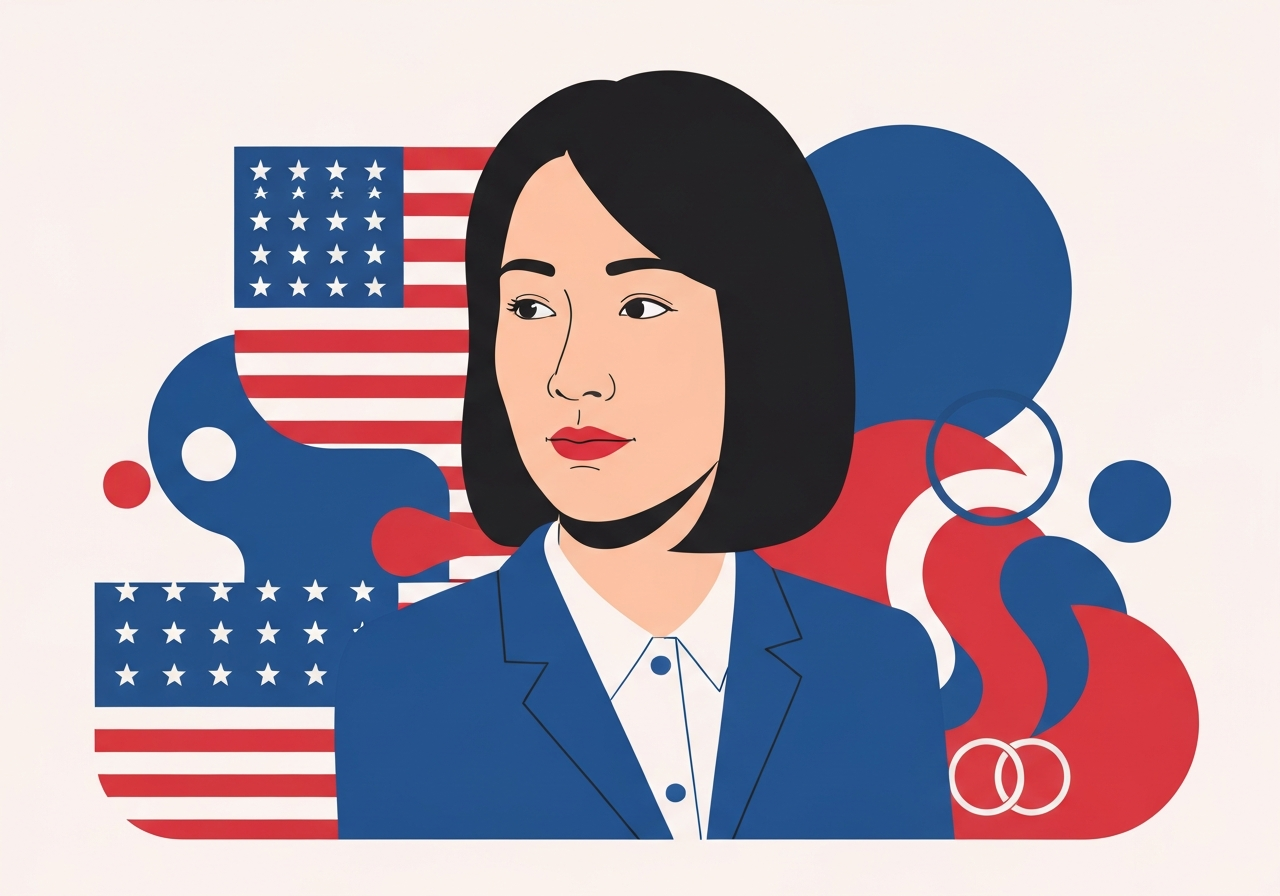
Five-time Olympic medalist Eileen Gu responded this week after Vice President JD Vance suggested she ought to be competing for the United States rather than China. Speaking on Fox News on Tuesday, Vance framed his preference around athletes who “grew up in the United States” and benefited from its institutions. Gu, who won two golds and one silver in Beijing 2022 and added two silvers in Italy in February 2026, replied with a light but pointed message via USA Today while she prepares for the women’s halfpipe final. She qualified for that final on Friday, giving her a chance to win a sixth Olympic medal on Saturday.
Key Takeaways
- Eileen Gu is a five-time Olympic medalist: two golds (halfpipe, big air) and one silver (slopestyle) at Beijing 2022, plus two silvers in Italy 2026.
- Gu, born in San Francisco in 2003 to a Chinese immigrant mother and an American father, has publicly declined to confirm her citizenship status; China does not permit dual citizenship.
- Vice President JD Vance spoke on Fox News on Tuesday, saying he would “root for American athletes” and expressing the view that those who benefited from U.S. institutions should compete for the U.S.
- Gu told USA Today, “I’m flattered. Thanks, JD! That’s sweet,” and argued that critics often conflate criticism of China with criticism of her personally.
- Gu qualified for the women’s halfpipe final in Italy and may win a sixth Olympic medal if she places in the top three on Saturday.
- The exchange highlights ongoing tensions around national identity, athlete choice, and how media and political figures frame international representation in sport.
Background
Eileen Gu’s decision to represent China has been public and consequential since she announced it ahead of the Beijing 2022 Winter Olympics. At those Games she won two gold medals and a silver, becoming one of the sport’s brightest stars and a focal point for conversations about nationality, identity, and international sport. Her family background—born in San Francisco in 2003, daughter of Yan Gu (a first-generation Chinese immigrant) and an American father—has been central to media coverage and to questions about citizenship and allegiance.
China’s nationality law, which does not allow dual citizenship, and Gu’s own decision not to disclose formal citizenship details have left space for speculation and political commentary. In 2022 she told Time she prefers “building my own pond,” and has maintained public statements that she feels both American and Chinese. The current comments from a senior U.S. official follow a pattern in which high-profile athletes’ national affiliations become proxies for larger geopolitical and cultural debates.
Main Event
On Tuesday on Fox News, Vice President JD Vance discussed his views on athletes born in the U.S. and national representation, saying he would “root for American athletes” and that people who grew up in the United States and benefited from its systems should, in his view, compete for the U.S. He added that he had “no idea what her status should be” and termed that a matter for the Olympic Committee. The remarks were reported and discussed on Feb. 20–21, 2026, amid the Olympic competitions in Italy.
When asked about Vance’s comments on Thursday, Gu replied to reporters via USA Today with a brief, jocular response—“I’m flattered. Thanks, JD! That’s sweet.”—and a fuller explanation about why some people object to her representing China. Gu argued critics too often view China as a monolith and suggested some of the backlash is tied to her success: “And also, because I win. Like if I wasn’t doing well, I think that they probably wouldn’t care as much, and that’s OK for me.”
On the sporting side, Gu advanced through qualifying to reach the women’s halfpipe final, scheduled for Saturday in Italy. That berth gives her a shot at a sixth Olympic medal and keeps the public and media attention on her performances, which in turn feed political commentary and public debate about nationality in sport.
Analysis & Implications
This exchange illuminates the tension between individual athlete choice and nationalist expectations. High-profile athletes who train, study, or are born in one country and compete for another challenge simple narratives of national belonging. For policymakers and commentators, such choices can be framed as matters of loyalty, privilege, or even national security—frames that often oversimplify athletes’ personal, familial, and career considerations.
From a rules perspective, the International Olympic Committee (IOC) sets the eligibility framework for athletes changing national representation, and national laws determine citizenship; neither is easily altered by public pressure during an ongoing Games. Vance’s comment that the matter is “up to the Olympic committee” correctly points to the IOC’s jurisdiction on eligibility, though political rhetoric can still shape public opinion and diplomatic tone.
There are also commercial and career incentives at play. Athletes and their teams consider competitive opportunities, funding, training environments, and personal identity when choosing representation. Gu’s global marketability and performance record illustrate how sport, commerce, and identity intertwine—success increases scrutiny and, paradoxically, the intensity of nationalist critique.
Comparison & Data
| Games | Gold | Silver | Bronze | Total |
|---|---|---|---|---|
| Beijing 2022 | 2 | 1 | 0 | 3 |
| Italy 2026 (so far) | 0 | 2 | 0 | 2 |
| Olympic career total (pre-final) | 2 | 3 | 0 | 5 |
The table shows Gu’s medal trajectory: three medals in Beijing 2022 and two silvers in Italy 2026, with a potential sixth medal pending the halfpipe final. Those numbers help explain why public attention and political commentary have intensified during the current Games.
Reactions & Quotes
Vance’s televised remarks prompted immediate media reporting and commentary about whether American-born athletes should represent other countries. The full context of his Fox News interview emphasized his personal preference for athletes who identify as American.
I certainly think that somebody who grew up in the United States of America, who benefited from our education system … I would hope that they want to compete with the United States of America.
JD Vance, Fox News interview (Feb. 2026)
Gu’s response, delivered through USA Today, combined humor with a pointed comment about perceptions of China and the role of performance in shaping criticism.
I’m flattered. Thanks, JD! That’s sweet. So many athletes compete for a different country … people only have a problem with me doing it because they kind of lump China into this monolithic entity, and they just hate China.
Eileen Gu, quoted to USA Today (Feb. 2026)
Unconfirmed
- Gu’s formal citizenship status has not been publicly confirmed; she has declined to state it, so any specific claims about passports or legal status remain unverified.
- Assertions that Gu’s choice to represent China reflects political allegiance are interpretations; there is no public evidence proving coercion or official direction tied to her sporting decisions.
Bottom Line
The exchange between Eileen Gu and JD Vance brought a high-profile political voice into an ongoing conversation about nationality and athlete choice. Gu’s measured public reply and her continuing success on the snow have kept attention on performance as much as on politics. While the remarks underscore how sport can become a proxy for geopolitical sentiment, the governing rules for Olympic representation remain institutional and procedural, not declarative statements from public figures.
For viewers and policymakers, the episode is a reminder that athlete identity and national affiliation are complex and often personal decisions. In the short term, attention will center on Gu’s performance in the halfpipe final and the headlines that accompany it; in the longer term, the incident may prompt renewed discussion about how societies treat transnational athletes and how political leaders frame such choices.
Sources
- The New York Times — news report on the exchange and Olympics coverage
- Fox News — broadcast interview with JD Vance (television/news)
- USA Today — outlet reporting Eileen Gu’s response (news)
- Time — prior profile and quotes from Eileen Gu (magazine/interview)
- International Olympic Committee / Olympics official site — athlete records and eligibility framework (official)