
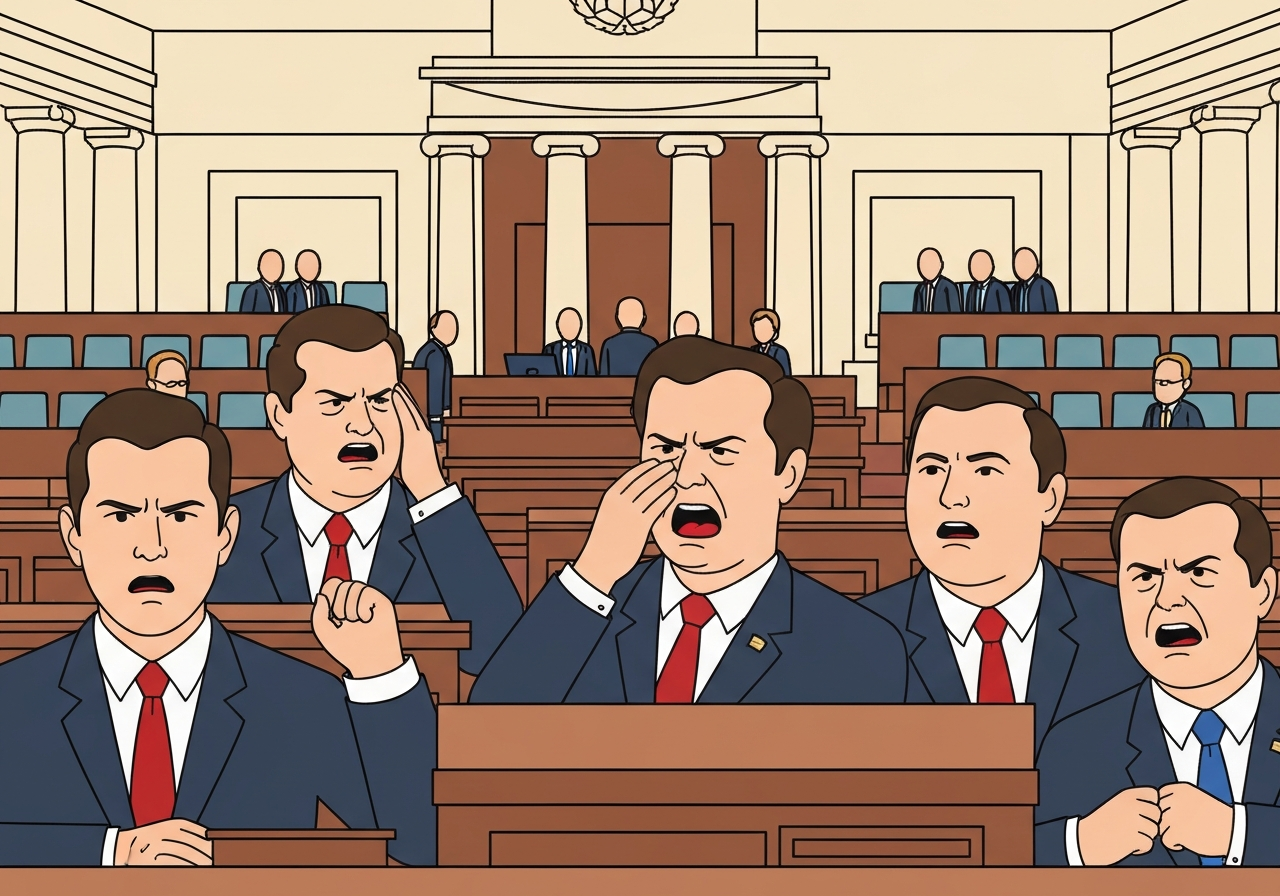
Lead: On Feb. 21, 2026, Senate Republicans confronted mounting pressure from former President Donald Trump and conservative allies to revive a decades‑old “talking filibuster” to try to pass a national voter identification bill. The push comes even as Majority Leader John Thune warned that resurrecting extended floor speeches could paralyze Senate business in an election year. Backers say the measure is central to the GOP’s electoral strategy; opponents say the tactic would ignite a protracted procedural fight with no guarantee of success. The dispute crystallized after Republicans reported 50 senators officially backing the legislation.
Key Takeaways
- 50 Senate Republicans are publicly on record supporting the voter I.D. bill, giving backers momentum but still short of the 60 votes needed to overcome cloture if Democrats unite to block it.
- Supporters are urging a return to the old‑style talking filibuster — continuous oral debate — to force Democrats to keep the floor and either expend political capital or relent.
- Majority Leader John Thune has expressed reluctance, warning the tactic could disrupt Senate operations and backfire politically during a midterm election year.
- Former President Trump publicly urged passage, saying the bill must pass “one way or the other” and invoking a talking‑filibuster theater reference to push GOP senators.
- Representative Anna Paulina Luna, a prominent federal‑level advocate, called on senators to act, framing inaction as a political liability for the party.
- If Democrats sustain a talking filibuster, legislative business could stall indefinitely, complicating other priorities and confirmations.
Background
The talking filibuster — where senators hold the floor and speak at length to block legislation — was once a common Senate tool but has fallen into disuse since mid‑20th century procedural reforms and modern cloture practices. In contemporary practice, opponents usually signal a filibuster and the majority moves to a cloture vote requiring 60 votes to advance a measure; extended continuous speeches are rare. The current dispute echoes long‑running partisan fights over voting rules, with Republicans arguing voter I.D. laws protect electoral integrity and Democrats countering they suppress turnout, particularly among minority and younger voters.
Political dynamics are further strained by the 2026 midterm calendar: Republicans view tighter voting rules as central to improving their prospects, while Democrats see obstruction of such bills as a galvanizing issue for their base. Within the GOP, there is a fissure between hard‑line members and leadership: some senators favor dramatic procedural confrontations to force a visible choice, while others, including Thune, warn of the operational and reputational costs of protracted Senate warfare. The situation is also shaped by external pressure from conservative activists and the former president, who can shift incentives for vulnerable incumbents.
Main Event
Over recent days Republican leaders reported gathering 50 votes in support of the voter I.D. proposal, a tally that party strategists say demonstrates unity but leaves the technical requirement for cloture unattainable if Democrats oppose. Advocates have escalated public calls for an old‑fashioned talking filibuster, reasoning that forcing Democrats to hold the floor continuously would increase the political cost of obstruction. Several Republican senators and outside conservative figures have publicly urged leadership to adopt that approach.
Majority Leader John Thune has been cautious, warning colleagues that staging a full talking filibuster could freeze Senate business and create unintended consequences in an already volatile political environment. Thune’s office has raised logistical questions about staffing, schedules, and whether the spectacle would produce favorable headlines or simply exhaust rank‑and‑file senators. Still, pressure grew after a social media post from Mr. Trump insisted the bill needed to pass “one way or the other,” explicitly referencing a talking‑filibuster scenario.
Representative Anna Paulina Luna publicly framed the moment as urgent for Republicans, calling in effect for senators to treat the issue as a decisive test. On the floor and in public statements, supporters have argued that a dramatic procedural gamble could force Democrats to choose between acquiescence or sustained national attention on voting rules. Opponents say that even if a talking filibuster were mounted, modern Senate rules and political calculations make it unlikely that the tactic alone would produce the 60 votes needed to change outcomes.
Analysis & Implications
The push for a talking filibuster has both immediate procedural implications and broader political meaning. Procedurally, reverting to continuous floor speeches would be a throwback that strains the Senate’s operational norms and could delay other legislation, nominations, and the calendar for weeks or months. The logistical burden — maintaining a constant presence, managing yield times, and coordinating responses — would fall heavily on both parties, but especially on the side trying to sustain the filibuster.
Politically, proponents see the tactic as a way to frame the debate on their terms, creating a visible narrative that may motivate base voters and signal toughness on election integrity. For vulnerable incumbents, the public spectacle could provide short‑term messaging gains. Conversely, critics argue the move risks alienating moderate voters and could portray the GOP as willing to paralyze governance for partisan aims, a framing Democrats will likely exploit in campaign advertising.
On the institutional level, a renewed talking filibuster would test norms developed over decades to keep the Senate functioning despite sharp polarization. If the tactic becomes respread, it could normalize sustained floor warfare as a tool for both parties, increasing legislative gridlock long term. Financial markets and administrative agendas are unlikely to react strongly immediately, but sustained dysfunction could weigh on policy predictability and the Senate’s capacity to confirm nominees.
Comparison & Data
| Feature | Talking Filibuster Era | Modern Practice |
|---|---|---|
| Primary Mechanic | Continuous floor speeches by opposing senators | Cloture motions and vote thresholds (60 votes) |
| Typical Outcome | Potential indefinite delay if sustained | Quick cloture votes followed by routine advancement or defeat |
The table summarizes the practical shift: the talking filibuster relied on literal continuous oratory, while modern practice largely sidelines extended speeches in favor of a procedural cloture threshold. Restoring a talking filibuster would not change the Senate’s cloture rule but would force more visible, time‑consuming confrontation and put pressure on both parties’ floor managers and resources.
Reactions & Quotes
Republican supporters framed the choice as political and moral leverage to press Democrats. They argue that forcing a continuous filibuster will make party positions unmistakable to voters and create pressure for compromise.
“I think at this point in time, even Thune realizes this is kind of a political hand grenade if they don’t act.”
Rep. Anna Paulina Luna (R‑FL), supporter of the bill
Democrats and some moderates cautioned that reviving the old practice would be disruptive and unlikely to change the underlying arithmetic requiring 60 votes for cloture. Leadership voices said the tactic risks creating a prolonged spectacle without changing the outcome.
“It is literally a pressure cooker, and the ball is 100 percent in their court.”
Representative Anna Paulina Luna (context: urging Senate action)
Former President Trump’s social media posts added external pressure by framing the bill as nonnegotiable and invoking cinematic imagery to rally supporters toward a talking‑filibuster strategy.
“The bill has to pass one way or the other,”
Former President Donald J. Trump (social media post)
Unconfirmed
- Whether a sustained talking filibuster will actually be attempted on the Senate floor remains unconfirmed; leadership had expressed reluctance as of Feb. 21, 2026.
- It is unconfirmed whether forcing a talking filibuster would change any senator’s vote on the underlying bill or produce the 60 votes needed to advance it.
Bottom Line
The current push reflects a high‑stakes decision point for Senate Republicans: pursue a dramatic, resource‑intensive procedural gambit that could force a political showdown, or refrain and preserve Senate operations while risking criticism from the right. With 50 senators publicly backing the bill but no guarantee of cloture, the choice is as much about messaging and momentum as it is about raw votes.
For observers and voters, the episode is a gauge of how far parties are willing to stretch institutional norms for short‑term political gain. If the talking filibuster is attempted and sustained, it will reshape expectations about Senate floor warfare going forward and could have lasting consequences for legislative productivity and public perception ahead of the midterms.
Sources
- The New York Times — news report covering Senate debate and public statements (Feb. 21, 2026).