
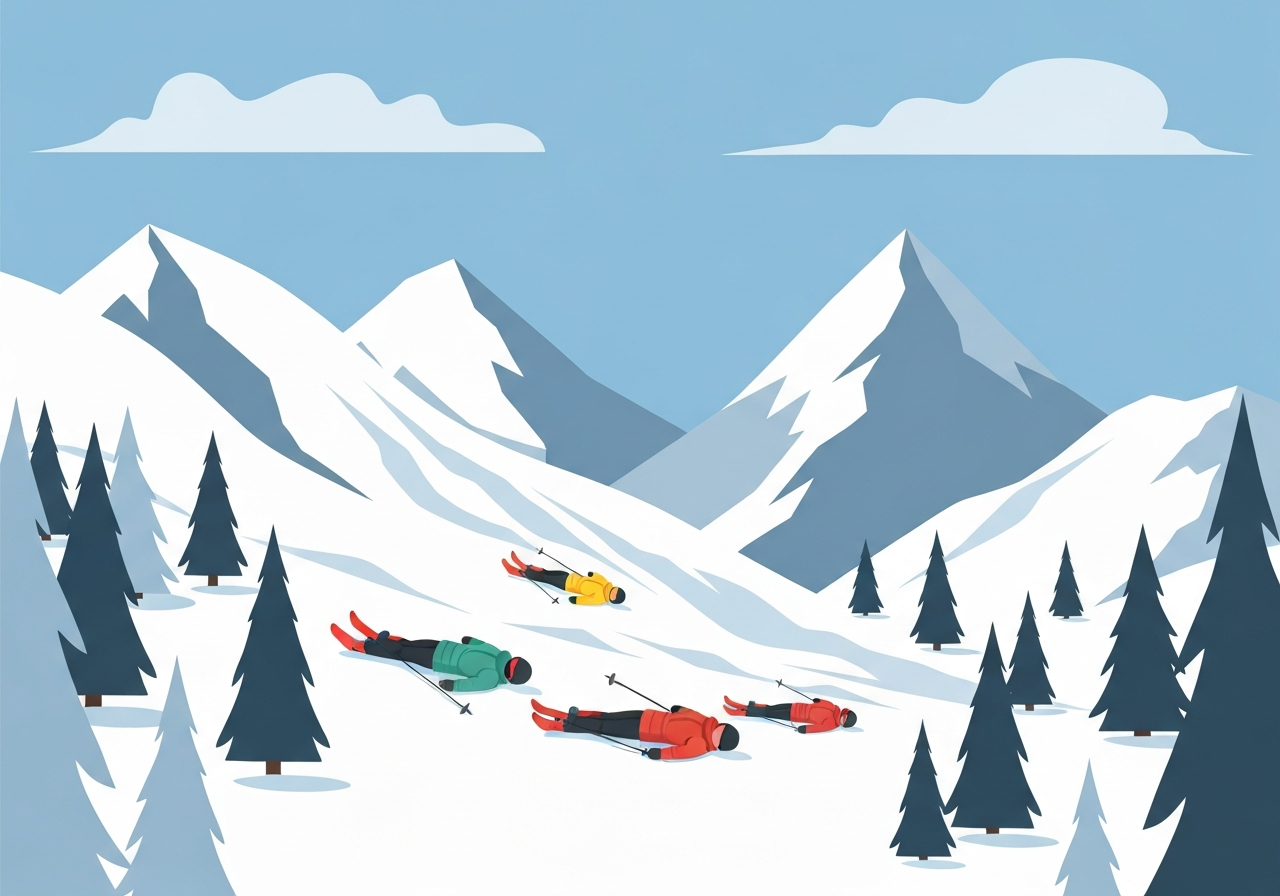
Lead: Authorities on Saturday confirmed recovery of nine bodies from an avalanche that struck a backcountry ski party near Castle Peak in the Sierra Nevada this week, the deadliest such event in modern California history. The group of 15—including four professional guides—had set out last Sunday as the region braced for a major blizzard and an avalanche forecast showed a “high” danger level. Search operations were slowed by hazardous weather, and officials said two skiers at the rear of the party were not swept away. Recoveries completed on Friday and Saturday brought the multi-day rescue to a close.
Key Takeaways
- Nine bodies were recovered from the avalanche site near Soda Springs/Castle Peak; recoveries occurred on Friday and Saturday, authorities said.
- The party numbered 15 people total, including four professional guides; by arithmetic, six people survived the incident.
- An avalanche forecast had declared “high” danger for travel in avalanche-prone terrain before the party departed on Sunday.
- Search-and-rescue efforts were delayed and complicated by severe weather conditions and ongoing avalanche risk.
- Officials described the avalanche as powerful enough to displace a house-size volume of snow, striking when many members were grouped in one area.
- The Nevada County Sheriff’s Office and local emergency teams led recovery operations and held public briefings on Friday and Saturday.
Background
The group departed on a three-day backcountry trip last Sunday toward Castle Peak, a remote ridge in the Sierra Nevada near Lake Tahoe. Backcountry skiing trips in this region often span multiple days and rely on guides for route-finding, snowpack assessment and emergency procedures. Avalanche forecasting services had issued a “high” danger level ahead of the storm that brought the season’s first major blizzard to parts of the Sierra Nevada.
Sierra backcountry terrain can be especially hazardous during rapid loading from heavy snowfall and wind, which can create unstable layers in the snowpack. Professional guides regularly brief clients on conditions, but the accuracy of on-the-ground stability tests and the timing of storm cells can alter risk quickly. Local authorities, volunteer search-and-rescue teams and county agencies coordinate responses to avalanches, but severe weather can significantly slow access and recovery.
Main Event
Officials said the avalanche struck on Tuesday while many members of the party were gathered together, and that two skiers at the rear were not swept away. Lt. Dennis Haack of the Nevada County Sheriff’s Office briefed reporters Friday that five victims were recovered during that day’s operations and that a previously missing ninth victim had also been located. The sheriff’s office reported four additional recoveries Saturday morning, completing recovery of all nine fatalities.
Search-and-rescue teams worked under challenging conditions, with hazardous weather limiting helicopter use and complicating ground access along steep, remote approaches to the avalanche path. Personnel described the avalanche as a large, destructive descent of snow that overwhelmed the group’s position. Authorities have not publicly identified the victims or released detailed timelines of the rescue for privacy and investigative reasons.
Local officials emphasized coordination between county search teams, state avalanche forecasters and volunteer organizations in mounting the multi-day response. Medical examiner or coroner procedures typically follow such recoveries and can take time before families are notified and identifications are released. Officials said they were grateful to conclude the recovery phase and return the deceased to their families.
Analysis & Implications
This event underscores ongoing tensions in Sierra backcountry recreation: increasing participation in multi-day guided excursions collides with volatile winter weather driven by large storm systems. Even professionally guided groups face acute risk when avalanche danger is assessed as high; decision windows can be narrow and conditions may change faster than anticipated. The loss of nine lives will likely prompt renewed scrutiny of guide decision-making, risk communication and trip planning under imminent storm forecasts.
Beyond immediate questions about trip-level choices, the incident raises policy and preparedness issues for search-and-rescue capacity in remote mountain terrain. Heavy snowfall and avalanche cycles strain helicopter availability, ground crew safety and local emergency resources. Counties and state agencies may evaluate whether additional investment in rapid-response assets, public forecasting tools or mandatory trip-reporting systems could reduce response time or improve prevention.
Economically and socially, the tragedy may affect the local outdoor industry, including guiding companies, winter tourism operators and park management. Liability concerns, insurance practices, and client screening procedures could become areas of regulatory attention. At the same time, experts caution that no measure can eliminate risk entirely; improving layered safety—education, conservative decision rules, and real-time hazard monitoring—remains the pragmatic focus.
Comparison & Data
| Metric | Value |
|---|---|
| Group size | 15 people (including 4 guides) |
| Fatalities recovered | 9 |
| Survivors (calculated) | 6 |
| Recovery timeline | Recoveries on Friday and Saturday following Tuesday avalanche |
The table above summarizes the factual, reported counts from local authorities. Officials described recoveries occurring in two principal phases—five victims located on Friday (including a previously missing ninth) and four additional victims recovered on Saturday morning—after weather and avalanche risk initially impeded operations. These figures come from Nevada County briefings and media reporting by Feb. 21–22, 2026.
Reactions & Quotes
“While we wish we could have saved them all, we are grateful that we can bring them home.”
Shannan Moon, Nevada County Sheriff
Sheriff Moon offered this comment at a public briefing, framing the recovery’s emotional closure for families while acknowledging the limits of rescue under dangerous conditions.
“A ninth victim who had been missing was found and recovered along with four other victims on Friday.”
Lt. Dennis Haack, Nevada County Sheriff’s Office
Lt. Haack provided the operational update that described the staggered recovery sequence and the challenges teams faced accessing the avalanche site.
“Forecasters had warned of a ‘high’ avalanche danger before the storm arrived, a condition that elevates the risk for large, destructive slides.”
Avalanche forecasting service (public statement)
Officials and forecasters reiterated that the regional forecast had flagged elevated danger, a factor that will be central to subsequent inquiries into trip planning and risk assessment.
Unconfirmed
- Whether specific tactical choices by the guides or clients (route selection, timing) directly contributed to the group being in the avalanche path remains under review.
- Detailed identities and hometowns of the victims have not been publicly released pending family notifications and coroner processes.
- Any single triggering mechanism for the slide (human-triggered versus natural release at a particular weak layer) has not been publicly confirmed by investigators.
Bottom Line
The recovery of nine victims near Castle Peak closes a tragic chapter in a major Sierra Nevada avalanche that authorities have described as the deadliest in modern California history. The incident highlights that even guided groups face severe peril when a combination of heavy snowfall, wind-loading and elevated avalanche danger converges.
Expect local and state agencies to review forecasting communication, guide practices and emergency response capabilities. For backcountry participants, the event is a stark reminder to reassess decision thresholds, travel discipline and rescue readiness when forecasts indicate “high” avalanche danger.
Sources
- The New York Times — News report summarizing official briefings and recovery operations (media)
- Nevada County Sheriff’s Office — Official county law enforcement and public safety statements (official)